Technology comparison: Geely E5 and its advanced equipment
 Iván Navarro
3 May 2026
8 min.
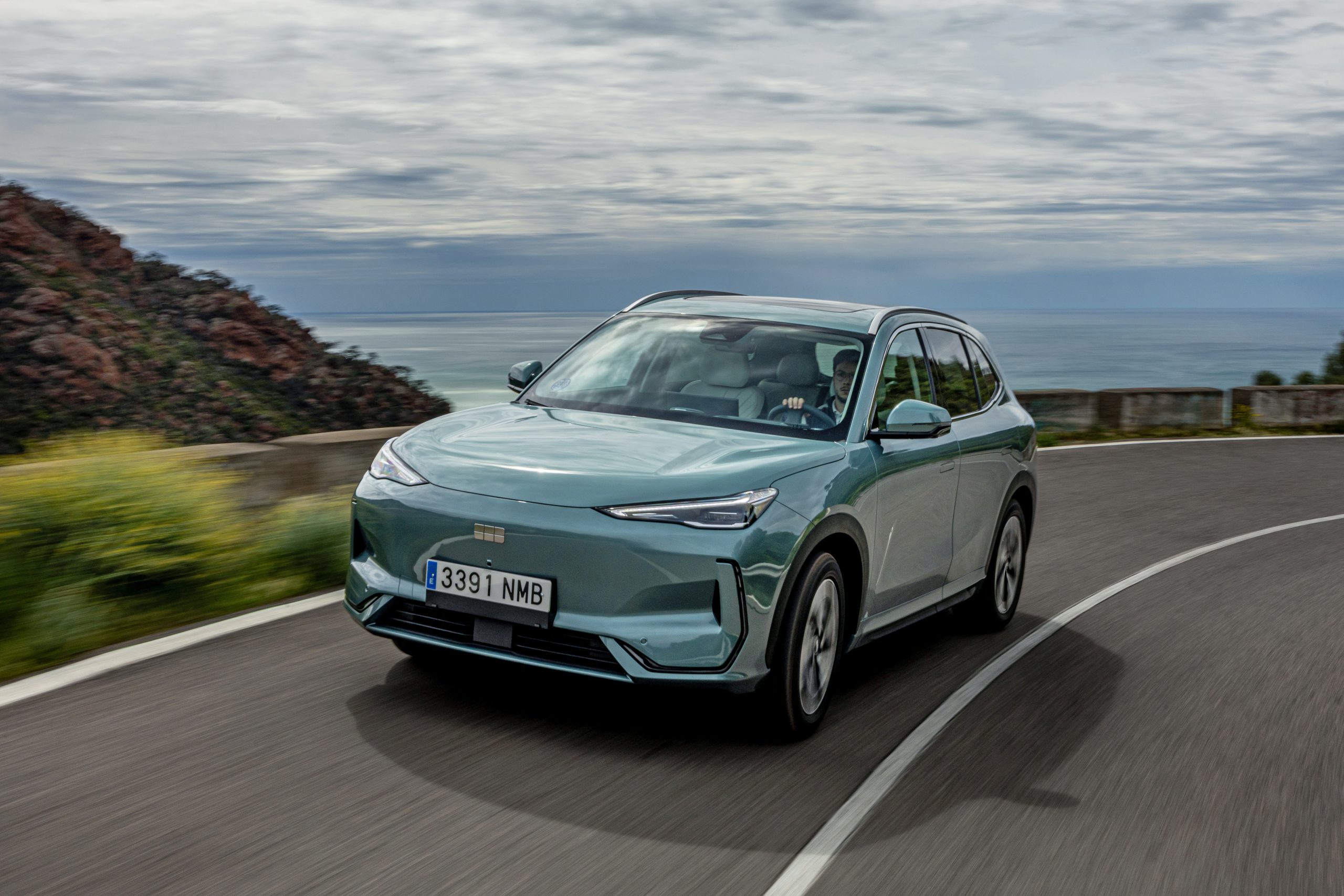
The Geely E5 represents the Chinese brand’s ambition to dominate the international market, meeting the most demanding safety standards in dozens of countries.
The Geely E5 is the new compact electric car from the Chinese brand, aimed at offering an ambitious technology package at a competitive price in the Spanish market. In this analysis we focus on its equipment: ultra-rapid charging systems, driving assistance, connectivity and the on-board experience. We also address key aspects for the buyer —WLTP range, interior comfort, boot capacity and starting price— and compare how it stands against electric alternatives in the segment. The aim is to offer a technical and practical overview that helps decide whether the Geely E5 deserves attention in a market that values technology and efficiency.
What kind of car the Geely E5 is and where it sits
The Geely E5 sits in the compact electric segment, aimed at customers looking for a practical alternative for urban use and regular motorway trips. It competes with models such as the Hyundai Kona Electric, the Volkswagen ID.3 or the electric version of the MG4: all of them offer a combination of sufficient range for everyday use and advanced connectivity solutions. Its value proposition is built on abundant technology equipment —digital screens, remote connectivity and driver assistants— and an aggressive value-for-money ratio. The target buyer is mainly a young family buyer or a professional who values technology, fast charging and a contained total cost of ownership.
Geely E5 in detail: complete technical analysis
The Geely E5 range revolves around a battery of approximately 64 kWh and an electric motor that, in its most relevant version, delivers close to 204 CV (150 kW) with front-wheel drive. The configuration chosen for our analysis is the one that offers the best balance between performance and range: 64 kWh and 204 CV, which provides adequate acceleration for daily use and stable behaviour on the motorway. The electric platform is clearly geared towards maximising interior space and energy efficiency, with a low centre of gravity and suspension calibrated for comfort.
As for charging, one of the car’s strong points is its ultra-rapid charging capacity: it accepts DC power of up to 150 kW, which translates into typical recoveries from 10 to 80% in around 25-30 minutes on high-power chargers. This places the model in a good position against segment rivals that offer similar or slightly lower figures.
The homologated electric consumption (WLTP) stands at around 16.5 kWh/100 km, while in real-world use figures close to 18.5 kWh/100 km are common, depending on the type of route and the weather.
The announced WLTP range is around 450 km in the 64 kWh version, a competitive figure that allows long stretches between charges without penalising interior space.
Inside, the perceived quality improves over previous generations: materials with a soft touch in frequently touched areas, acceptable panel fit and ergonomics designed for intuitive use. The digital instrument cluster and central screen —with smartphone integration and OTA functions— are the core of the infotainment system; the interface is fast and allows user profiles. In terms of ADAS it features lane-keeping assist, adaptive cruise control with Stop&Go function, automatic emergency braking and blind-spot monitoring, all with a correct level of performance for its segment.
In terms of space and cargo,
the cabin is reasonably roomy for four adults and the boot offers around 420 litres, sufficient for family use. Visibility and getting in and out are comfortable thanks to a body height within the segment standard. We recommend the 64 kWh and 204 CV version as the most balanced: a good compromise between range, performance and cost.
The best
- Energy efficiency and competitive WLTP range.
Ultra-rapid charging capacity (up to ~150 kW).
Complete technology equipment and ADAS for its price.
To be improved
- More agile dynamic behaviour on winding roads.
Some material finishes still behind premium rivals in the segment.
Who this model is for
The Geely E5 is designed for those seeking a compact electric car with sufficient real-world range for frequent trips, fast charging and a broad technology package without paying premium-brand prices. It suits small families and professionals who prioritise connectivity and reduced running costs.
Main technical data
| Figure | ||
|---|---|---|
score out of 10 based on the criteria analysed in this article
Alternatives to the Geely E5
Hyundai Kona Electric (64 kWh): electric version with a similar approach to range and charging. Power around 150 kW in its most powerful version and WLTP range between 400-480 km depending on configuration. Its dynamics and service network make the Kona a solid alternative, with prices slightly higher in some versions but a good reputation for reliability.
MG4 EV (64 kWh): a direct rival in size and battery package. It offers versions with 170-204 CV, WLTP range of around 430-450 km and a very competitive value-for-money ratio. It stands out for its dedicated platform and agile handling, although the driver-assistance offering may be less complete in basic versions.
Volkswagen ID.3 (58-77 kWh version): offers an alternative more focused on comfort and chassis tuning. Versions with a similar battery capacity offer ranges between 350 and 550 km depending on battery and configuration; its set-up and interior quality tend to be its strong points, with prices that can sit above the Geely in some configurations.
Quick technical comparison against its rivals
| Model | Consumption / range | Top speed | Price | ||
|---|---|---|---|---|---|
| Hyundai Kona Electric | 150-204 CV | 15.5-16.0 kWh / 400-480 km | 167-185 km/h | approx. €35,500 | 8.6 |
| MG4 EV | 170-204 CV | 15.8 kWh / 430-450 km | 160-180 km/h | approx. €31,000 | 8.4 |
| Volkswagen ID.3 | 150-204 CV | 15.0-17.0 kWh / 350-550 km | 160-180 km/h | approx. €33,000 | 8.3 |
The assessment places the best-balanced model as the one that combines good range, fast charging and competitive pricing: within this group, the Geely E5 and the Kona stand out for their balance, while the MG4 is the alternative with the best price-to-equipment ratio.
FAQ — Frequently asked questions
What is the real range of the Geely E5?
The WLTP range is around 450 km in the 64 kWh version; in real use, with air conditioning and mixed driving, figures of around 350-420 km should be expected depending on conditions.
How long does it take to charge from 10% to 80%?
On an ultra-rapid charger of around 150 kW, charging from 10-80% takes roughly 25-30 minutes. On 7.4 kW domestic AC chargers, a full charge can take more than 8-9 hours.
Does the Geely E5 include advanced driver-assistance systems?
Yes: adaptive cruise control with Stop&Go, lane-keeping assist, automatic emergency braking and blind-spot monitoring are part of the ADAS package, with different equipment levels depending on the version.
What electric consumption can I expect in the city?
In efficient urban driving the real consumption can drop to 13-15 kWh/100 km, depending on air-conditioning use and driving style, which helps significantly increase range on urban journeys.
Which Geely E5 version do you recommend for mixed use (city + motorway)?
The mid/high version with the 64 kWh battery and 204 CV offers the best balance between range, performance and cost. It allows quick motorway overtaking recoveries without sacrificing charging capacity or comfort.
Final verdict: why choose the Geely E5
Reasons to choose it:
- Technical reason: competitive WLTP range and ultra-rapid charging capacity (~150 kW).
- Practical reason: spacious interior, adequate boot and a complete ADAS package for everyday use.
- Economic reason: technology offer and equipment below the prices of some traditional alternatives.
The Geely E5 stands out for offering an ambitious technology package in a compact format: good range, fast charging and assistants that simplify daily driving. If you value connectivity, reduced charging time and a proposition that balances cost and performance, the model deserves consideration against alternatives such as the Hyundai Kona, the MG4 or the Volkswagen ID.3. For buyers who prioritise a more sporty dynamic behaviour or premium interior finishes, there are more established options; for those seeking technology and efficiency at a good price, it is one of the most attractive options in the segment.
 Peugeot E-208 GTi: a battery-powered toy that revives the spirit of the 1980s sports cars
 New Lexus ES: luxury grows and goes electric
 First contact with the Dacia Sandero Hybrid 155: power and efficiency from €19,890
Deja un comentario