Tesla's "Solar Charging" arrives in Spain and other European countries
 Javier Cantagalli
1 March 2024
3 min.
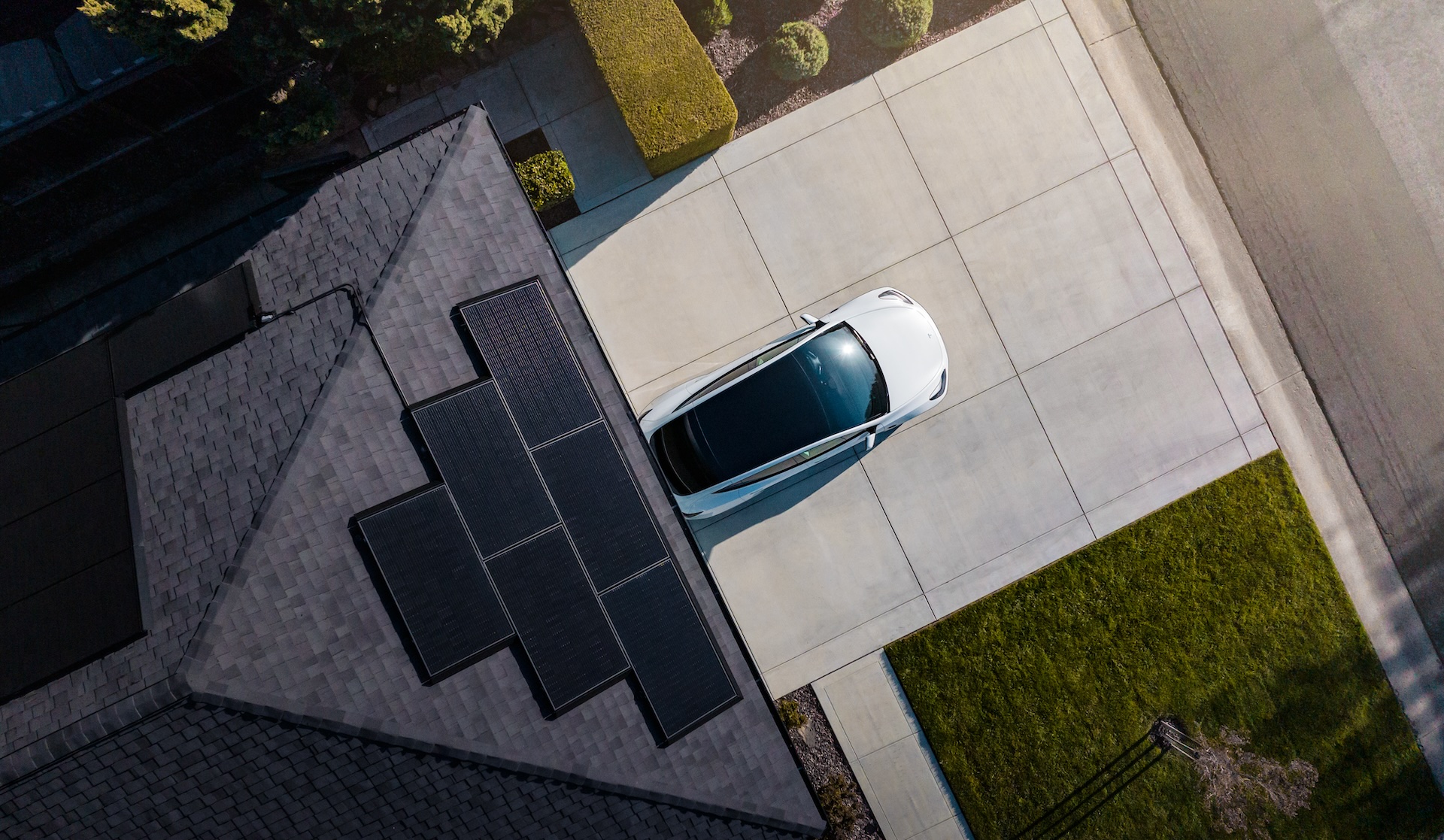
“Solar Charging” lets you reduce the cost of every kilometre driven in a Tesla vehicle by using the surplus energy generated by your home’s solar panel system
Tesla is not a conventional car manufacturer. This is nothing new. Elon Musk himself has explained on numerous occasions that the ultimate goal of the company he leads is to promote electric mobility but only as a means of driving the transition to renewable energy, which is what really matters, leaving behind the economic system of recent decades that has been built on oil.
Tesla’s new “Solar Charging” feature is one more step forward in keeping with precisely that philosophy, one that very few other car manufacturers could offer without at least the collaboration of other companies.
The first thing to keep in mind is that, to make the most of this new feature, you will not only need a Tesla vehicle -it is compatible with virtually any reasonably recent model-, but you will also need a Tesla Powerwall and a wallbox from the brand -the Tesla Wall Connector-. In addition, you will also need a solar panel installation, although since the American firm does not sell its own panels in the European market, these can come from a third party.
Once you have all this equipment, which is no small investment, the final requirement will be to update the Tesla mobile app to version 4.30.5. The Tesla vehicle must also be updated to version 2023.32 or later, and the Powerwall to version 23.12.10 or later.
So now we have everything… What does Tesla’s “Solar Charging” offer me?
According to the company itself, “Solar Charging” allows any Tesla vehicle to be charged by giving priority to the excess energy produced by the owner’s solar panel system. This is very useful because, instead of feeding that surplus energy into the grid and receiving payment from our electricity company for it, which is normally at derisory prices, it is used to charge the vehicle’s battery pack, with the corresponding savings that this entails.
Using a slider in the Tesla mobile app, the user can also configure “Solar Charging” to their liking. By setting a minimum and a maximum level. For example, you can specify that the vehicle always has a minimum charge level of 40 percent and a maximum of 80 percent. This means the system will always charge the vehicle up to 40 percent, using any energy source, whether solar or the grid itself, to guarantee the range needed for daily travel. Above that 40 percent, however, only surplus solar energy not needed to charge the Powerwall will be used, and charging will finally stop at 80 percent, as configured, in order to avoid degradation of the vehicle’s battery pack.
“Solar Charging” is available in Spain and in other European countries such as Germany, Italy, Portugal, Switzerland and the United Kingdom. Outside Europe, customers in Taiwan, Japan, Thailand, Australia and New Zealand will also be able to make the most of this new functionality.


 The seven finalists for the 2027 European Car of the Year (COTY) are exclusively electric
 Peugeot E-208 GTi: a battery-powered toy that revives the spirit of the 1980s sports cars
 New Lexus ES: luxury grows and goes electric
Deja un comentario