The 10 most anticipated electric SUVs of 2026: ranking by buzz
 Javi Vicente @javivicente
12 May 2026
7 min.
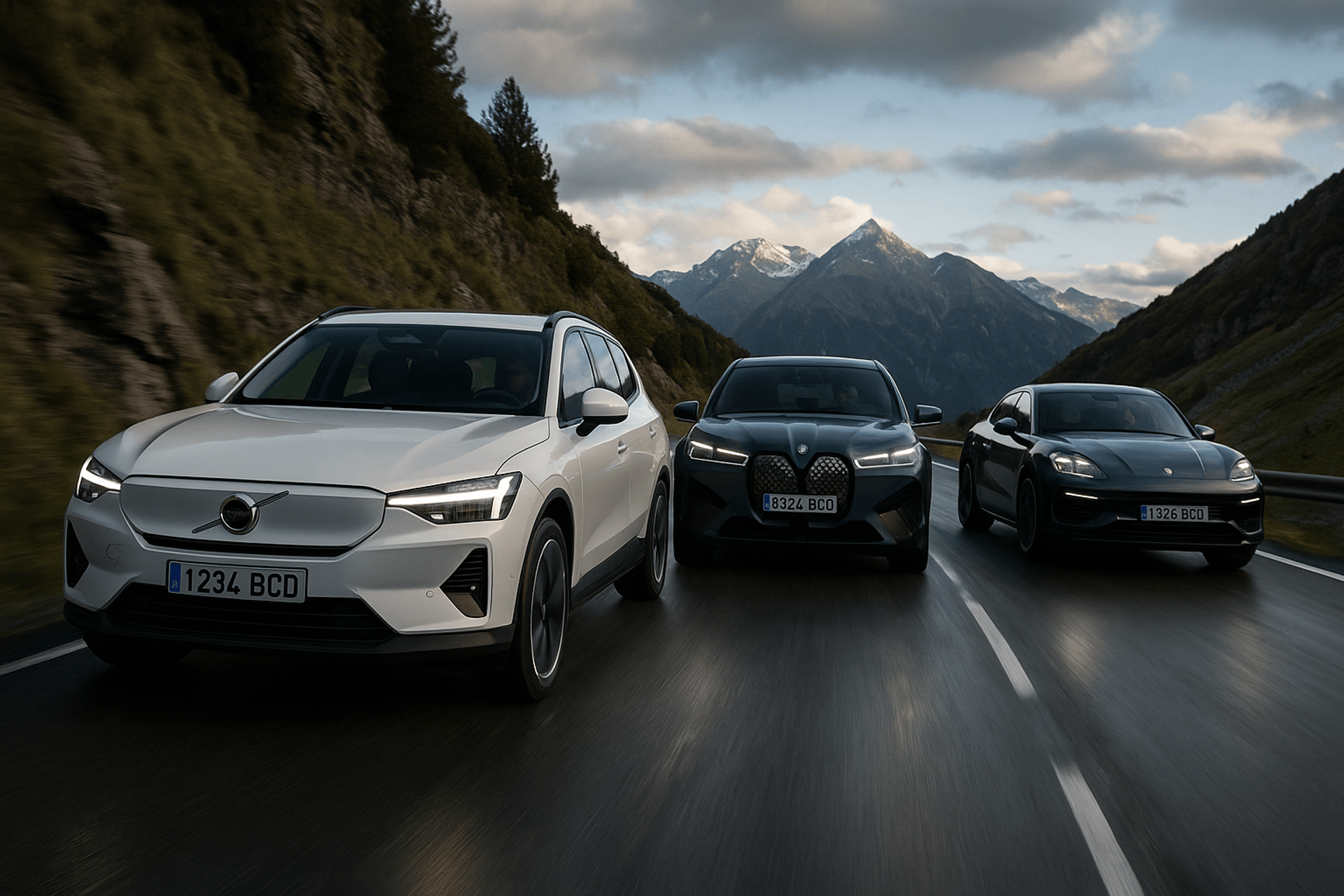
We review the 2026 electric SUVs that will make their mark in Spain, with technical data, WLTP range and indicative prices to build the definitive ranking.
The launch calendar for the coming year paints a fascinating picture. On one hand, Geely’s premium offensive with Volvo and Zeekr consolidates a technological proposition that will be hard to match. On the other, the German response —BMW and Porsche— defends historic territory. And, in between, a wave of mainstream models (Kia, Hyundai, Renault, Peugeot, Skoda) democratises electrification with increasingly reasonable ranges and prices.
We have drawn up this ranking of 2026 electric SUVs based on three measurable criteria: media buzz, technical specifications (WLTP range, power, platform) and commercial relevance for the Spanish market. Important: all prices cited are manufacturer’s recommended retail price (RRP), not including dealer offers, one-off campaigns or purchase aid under the Plan Moves scheme.
How we built the 2026 electric SUV ranking
Buzz is not an abstract concept. We quantified it by cross-referencing three variables: search volume and editorial coverage over recent months, technical ambition relative to the previous generation (kWh, 800 V architecture, charging times) and positioning within the segment. The result is a classification that combines the best 2026 electric SUVs, from premium entry-level to six-figure performance models.
10. Skoda Elroq — from approximately €34,000
The first native Skoda electric with ambitions as a compact urban SUV opens the ranking. Built on the MEB platform, it offers configurations starting at around 170 kW and ranges approaching 560 km WLTP in its largest-battery version. Its great asset is practicality: a generous boot, carefully considered ergonomics and a price that positions it as the gateway to the Czech electric world.
| Power kW | Power CV | Top speed | WLTP range | Consumption | Label | Fuel |
|---|---|---|---|---|---|---|
| 210 kW | 286 CV | 180 km/h | ~560 km | ~15.5 kWh/100 km | 0 emissions | Electric |
9. Peugeot E-3008 GT Long Range — from approximately €49,000
The French feline has opted for a fastback silhouette that breaks with the segment C orthodoxy. The Long Range version makes the most of a 96 kWh battery to approach the homologated 700 km WLTP, a figure that makes it one of the benchmarks in 2026 electric SUV range. The curved panoramic i-Cockpit remains its signature.
| Power kW | Power CV | Top speed | WLTP range | Consumption | Label | Fuel |
|---|---|---|---|---|---|---|
| 170 kW | 231 CV | 170 km/h | ~700 km | ~15.9 kWh/100 km | 0 emissions | Electric |
8. Renault Scenic E-Tech 87 kWh — from approximately €41,000
Renault has managed to reinvent a historic name, turning it into an electric crossover with a family-oriented approach. The 87 kWh variant claims close to 625 km WLTP and keeps the diamond brand at the front of efficiency. European Car of the Year, it remains a strong argument in any segment C electric SUV ranking.
| Power kW | Power CV | Top speed | WLTP range | Consumption | Label | Fuel |
|---|---|---|---|---|---|---|
| 160 kW | 218 CV | 170 km/h | ~625 km | ~16.3 kWh/100 km | 0 emissions | Electric |
7. Hyundai Ioniq 5 N — from approximately €73,000
The N division of Hyundai has shown that an electric SUV can be thrilling. With 478 kW (650 CV) in N Grin Boost mode, an 800 V architecture and optional synthesised sound, it redefines what a performance electric car can be. Its homologated range sits at around 450 km, a sacrifice consistent with its radical nature.
| Power kW | Power CV | Top speed | WLTP range | Consumption | Label | Fuel |
|---|---|---|---|---|---|---|
| 478 kW | 650 CV | 260 km/h | ~450 km | ~21.2 kWh/100 km | 0 emissions | Electric |
6. Kia EV9 GT-Line AWD — from approximately €76,000
The Korean manufacturer’s flagship takes the three-row SUV concept to another level. E-GMP 800 V platform, up to 540 km WLTP with the 99.8 kWh battery and a boxy design that polarises opinion. For families who need seven genuine electric seats, it is an obligatory reference among the new 2026 electric SUVs.
| Power kW | Power CV | Top speed | WLTP range | Consumption | Label | Fuel |
|---|---|---|---|---|---|---|
| 283 kW | 385 CV | 200 km/h | ~505 km | ~22.8 kWh/100 km | 0 emissions | Electric |
5. Volvo EC40 Twin Ultra — from approximately €62,000
The updated Swedish crossover keeps its Scandinavian aesthetic purity and refines what already worked. The Twin Ultra variant combines 300 kW (408 CV), permanent all-wheel drive and 550 km WLTP with the 82 kWh battery. Volvo shows that premium electrification needs no flashiness to convince, relying on sustainable materials and increasingly mature software.
| Power kW | Power CV | Top speed | WLTP range | Consumption | Label | Fuel |
|---|---|---|---|---|---|---|
| 300 kW | 408 CV | 180 km/h | 550 km | ~17.5 kWh/100 km | 0 emissions | Electric |
4. BMW iX3 Neue Klasse — from approximately €70,000
Munich’s big technological bet arrives with the new Neue Klasse platform, Gen6 cylindrical cells, an 800 V architecture and an efficiency the brand promises will be revolutionary. Preliminary figures point to more than 800 km WLTP range in the 50 xDrive version and ultra-fast charging capable of adding over 350 km in ten minutes. It is possibly the greatest German threat to Asian dominance.
| Power kW | Power CV | Top speed | WLTP range | Consumption | Label | Fuel |
|---|---|---|---|---|---|---|
| 345 kW | 469 CV | 210 km/h | ~805 km | ~15.1 kWh/100 km | 0 emissions | Electric |
3. Zeekr 7X — from approximately €55,000
Geely’s premium brand makes a strong entry into Spain with a mid-size SUV that surprises with an 800 V electric architecture, up to 480 kW in its Performance version and spectacular fast charging: from 10 to 80% in roughly 13 minutes. Zeekr offers ranges approaching 615 km WLTP in the rear-wheel-drive long-battery variant. It is the model that best embodies the new Asian wave arriving without complexes to compete with BMW and Mercedes.
| Power kW | Power CV | Top speed | WLTP range | Consumption | Label | Fuel |
|---|---|---|---|---|---|---|
| 310 kW | 421 CV | 210 km/h | ~615 km | ~17.8 kWh/100 km | 0 emissions | Electric |
2. Volvo EX90 — from approximately €105,000
The Swedish flagship SUV represents the new era of Volvo‘s software. It shares the SPA2 platform with its sibling §9Porscheh362§, has a 111 kWh gross battery, up to 600 km homologated WLTP and a centralised electronic architecture with Nvidia Drive enabling constant updates. It is also the logical prelude to the upcoming EX60 that Volvo is preparing as a premium compact. The Swedish brand thus consolidates its transition toward a coherent zero-emission lineup.
| Power kW | Power CV | Top speed | WLTP range | Consumption | Label | Fuel |
|---|---|---|---|---|---|---|
| 380 kW | 517 CV | 180 km/h | ~600 km | ~20.9 kWh/100 km | 0 emissions | Electric |
1. Porsche Cayenne Electric — from approximately €115,000
It tops the ranking for its symbolic weight: the Cayenne, the model that once saved Porsche, now embraces full electrification without giving up its essence. It shares the PPE platform with the Macan Electric, has an 800 V architecture, top versions will exceed 600 kW and performance that promises to rewrite the rules of the sporty SUV. Estimated range sits above 600 km WLTP, with ultra-fast charging able to accept more than 350 kW.
| Power kW | Power CV | Top speed | WLTP range | Consumption | Label | Fuel |
|---|---|---|---|---|---|---|
| 450 kW | 612 CV | 260 km/h | ~620 km | ~21.5 kWh/100 km | 0 emissions | Electric |
Summary table and overall score
Please note that the prices indicated are indicative and correspond to the manufacturer’s recommended RRP. The score assesses range, power, equipment, positioning and value-for-performance ratio.
| Position | Model | Power | WLTP range | Price from | Score |
|---|---|---|---|---|---|
| Porsche Cayenne Electric | 612 CV | ~620 km | ~€115,000 | 9.5 | |
| Volvo EX90 | 517 CV | ~600 km | ~€105,000 | 9.2 | |
| Zeekr 7X | 421 CV | ~615 km | ~€55,000 | 9.0 | |
| BMW iX3 Neue Klasse | 469 CV | ~805 km | ~€70,000 | 9.3 | |
| Volvo EC40 Twin | 408 CV | 550 km | ~€62,000 | 8.6 | |
| Kia EV9 GT-Line | 385 CV | ~505 km | ~€76,000 | 8.4 | |
| Hyundai Ioniq 5 N | 650 CV | ~450 km | ~€73,000 | 8.3 | |
| Renault Scenic E-Tech | 218 CV | ~625 km | ~€41,000 | 8.1 | |
| Peugeot E-3008 LR | 231 CV | ~700 km | ~€49,000 | 8.2 | |
| Skoda Elroq | 286 CV | ~560 km | ~€34,000 | 7.9 |
Conclusion: the year of electric maturity
2026 will be the year the electric SUV stops being an alternative and becomes the default choice in many segments. Volvo consolidates its premium transition with the renewed EC40 and the EX90 at the head, while Zeekr bursts onto the scene with technologically disruptive proposals. The German response arrives with an BMW iX3 aiming for 800 km of range and a Porsche Cayenne Electric set to redefine the family sports SUV. Below them, mainstream brands such as Kia, Hyundai, Renault, Peugeot and Skoda complete a rich and accessible ecosystem.
Frequently asked questions
Which electric SUV will have the most range in 2026?
Preliminary figures make the BMW iX3 Neue Klasse 50 xDrive the reference, with a homologated range close to 805 km WLTP thanks to its 800 V architecture and new Gen6 cylindrical batteries.
Does the Volvo EC40 replace the XC40 Recharge?
Yes. Volvo renamed its electric range: the former XC40 Recharge is now called EC40, keeping the same technical base but adding improvements in range (up to 582 km WLTP in the Extended Range version) and efficiency.
**Which brand lid


 Peugeot E-208 GTi: a battery-powered toy that revives the spirit of the 1980s sports cars
 New Lexus ES: luxury grows and goes electric
 First contact with the Dacia Sandero Hybrid 155: power and efficiency from €19,890
Deja un comentario