E5 Geely Starray Electric Cars Hybrid Cars ECO Technology
The best-kept secret of Geely lies under the bodywork: this is the GEA architecture that makes the Geely E5 and the Starray EM-i more efficient and safer
 Antonio Roncero @roncero_antonio
12 May 2026
8 min.
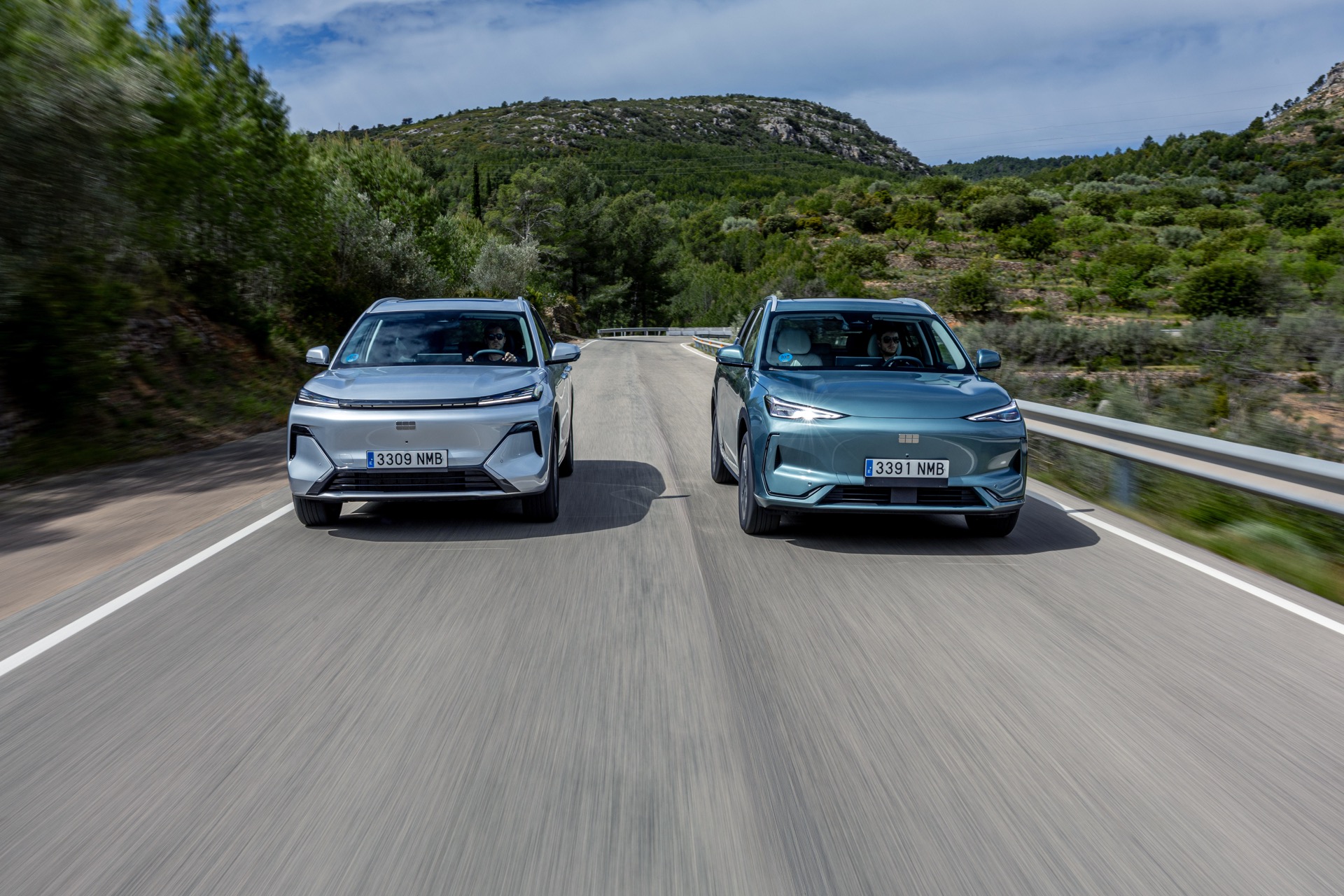
Until recently, when we talked about the efficiency of an electric or plug-in hybrid car, almost everything boiled down to three figures: battery capacity, engine power and homologated consumption. But the new generation of electrified vehicles has changed the rules of the game. Now hardware and software matter just as much, along with the battery and the way the car manages energy, safety, interior space or even remote updates. And that is precisely Geely’s approach with its GEA, a name that corresponds to the acronym Global Intelligent New Energy Architecture.
And what is GEA? It is the technological basis on which Geely Auto is developing models such as the Geely E5 and the Starray EM-i, with which the brand has just arrived in our market. And it is worth keeping one idea in mind: GEA is not simply a platform for building electric cars, it is a complete ecosystem that integrates structure, battery, electronics, software… and yes, artificial intelligence too.
GEA: much more than a platform for electric cars
The key to the GEA architecture is that Geely does not design the bodywork, battery, electrical system, control electronics and software separately. What it does is integrate everything from the very beginning on a single technical base. As a driver, you may not see this as an advantage. But think about it this way: if all these elements of the car are designed to work together, energy can be used better, weight can be reduced, interior space can be gained and dynamic behaviour can be improved.
In the case of the Geely E5, for example, this architecture makes it possible to use Cell-to-Body technology, a solution that, incidentally, is not exclusive to Geely. We have seen it, for example, in many models from BYD, and it consists of the battery not simply being housed under the floor, but forming part of the vehicle’s own structure. This helps to increase rigidity, lower the centre of gravity and make better use of the available space.
One of the most interesting effects of this architecture is precisely in the interior. By integrating the battery and other structural components better, more space can be freed up for occupants and for the boot without needing to make cars ever bigger. This is how the Geely E5 achieves outstanding interior space. Specifically, the brand speaks of a space utilisation rate of 67.2%, a very high figure for its class. One only has to look inside the Geely E5, sit in the rear seats or see how spacious the boot is, with its more than 460 litres, to understand it.
Also for the Starray EM-i: more integrated plug-in hybrids
Another important point of the GEA architecture is that efficiency does not depend solely on the battery or the electric motor, but also on how all the vehicle’s systems are managed. Geely speaks of intelligent battery management capable of monitoring the state of the cells in real time, optimising charging and discharging processes and predicting their useful life. Added to this is integration with high-efficiency propulsion systems, such as the so-called 11-in-1 propulsion system, the Short Blade Battery and electric motors designed to make better use of every kilowatt. In practice, the idea is clear: reduce losses, improve range and make the car more efficient in different conditions of use. Not only in the homologation cycle, but also in real driving situations.
And this applies both to a fully electric car and to a plug-in hybrid or an extended-range vehicle, because the GEA architecture has been conceived to be compatible with different types of propulsion: BEV, PHEV and EREV. In my particular case, I have been able to live with the Geely Starray EM-i for a few days, and I can assure you that this efficiency is real. With the top-of-the-range version of the two available, with the larger-capacity battery, I had no problems exceeding 100 km of range in electric mode and even reaching the more than 130 km homologated. And when the battery runs out, the Starray EM-i works like a conventional hybrid and still makes do with very little petrol, between 6 and 7 l/100 km, depending on the driving.
The versatility of GEA is one of its great strengths. It is not limited to pure electric vehicles such as the Geely E5. It also serves as a basis for plug-in hybrid models such as the Starray EM-i. And the same applies to a high-roofed SUV as to a low-slung saloon. In the case of plug-in hybrids the architecture has an additional challenge: to safely and efficiently integrate two worlds that coexist in the same car, the electric and the thermal. That is why Geely highlights solutions such as independent channels for fuel and electricity, as well as an optimised separation between the petrol tank and the battery.
Safety: the architecture matters too
Safety is precisely another of the pillars of the GEA platform. Geely speaks of a reinforced structure, multi-layer protection systems for the battery and specific energy-absorption solutions in the event of impact. So far, nothing new that other manufacturers don’t do. But the way you combine these elements must count for something, when the result is a torsional stiffness of the bodywork that reaches 31,000 Nm/deg in the Geely E5, a figure more typical of some renowned sports cars.
And note that this rigidity not only helps in the event of an accident; it also influences driving precision, ride comfort and the feeling of solidity in the car. This construction must have something to do with the fact that the two models Geely already sells in our market have obtained five stars from Euro NCAP and ANCAP, two of the leading international safety bodies. Looking back, not so long ago the Euro NCAP test was a real “torture” for Chinese models, which did not exactly pass with good marks. What a change that is.
But the GEA architecture does not stop at the structural part. Geely also uses artificial intelligence in simulation and virtual tuning processes, which makes it possible to refine the car’s behaviour even before it reaches the road. And here comes another interesting fact: the brand speaks of a yaw frequency close to 1.7 Hz, a reference that points to a faster and more natural response in changes of direction. And again I go by the sensations: of all the Chinese SUVs arriving on the market, the Starray EM-i I have driven seems to me one of the most balanced in terms of comfort, composure and steering feel.
GEA’s other great strength is its electronic architecture. Geely calls it GEEA 3.0 and it is based on a high-performance central processor that coordinates different vehicle subsystems: driving, ADAS driver aids, infotainment, energy management and connectivity. This allows the car to function as an intelligent device and opens the door to remote OTA updates, with which the vehicle can receive software improvements without going to the workshop. Something that today can no longer be missing from a modern car.
The 10 keys to Geely’s GEA architecture
We can summarise all the advantages of Geely’s GEA architecture in 10 key points, which are as follows:
- Integrates structure, battery, electronics, software and artificial intelligence.
- Is compatible with electric cars, plug-in hybrids and extended-range vehicles.
- Allows different models and bodies to be developed on a single global base.
- Improves energy efficiency and can help increase range.
- Uses intelligent, predictive battery management.
- Makes better use of interior space without necessarily increasing exterior size.
- Improves structural rigidity and dynamic behaviour.
- Reinforces safety from the very design of the vehicle.
- Supports OTA remote updates.
- Reduces technical complexity by integrating more functions into fewer systems.
Video: Geely Auto’s GEA architecture
https://www.youtube.com/watch?v=6l8I3u8XSgg
The arrival of Chinese brands in Europe can no longer be analysed only by price or equipment. More and more manufacturers arrive with their own developments in batteries, software, electronics and modular platforms. And Geely Auto wants to play that game with its architecture designed to scale globally. GEA is therefore one of the keys to understanding why models such as the Geely E5 or the Starray EM-i can combine efficiency, space, safety, connectivity and a more refined driving experience. Because the secret of a modern electrified car no longer lies only in the engine, but in how everything around it is designed.
Image gallery – Geely’s GEA architecture
Technical specifications of the cars in this article


 Kia offers an electric range of 10 models, 50 versions and 400 possible combinations
 The seven finalists for the 2027 European Car of the Year (COTY) are exclusively electric
 Peugeot E-208 GTi: a battery-powered toy that revives the spirit of the 1980s sports cars
Deja un comentario