The best cars from companies that have disappeared
 Mónica Redondo @MonicaRedondoD
5 February 2020
6 min.
Many models deserve to go down in history, but today we are going to review those that belong to companies that have disappeared.
Times change, markets evolve and, sometimes, the companies that rule the roost get stuck in a ditch and never recover. Some of the brands that are no longer with us are gladly forgotten, while others leave us wonderful memories of past days of motoring.
We recommend that you don’t miss this selection of the best cars from companies that have already disappeared.
Austin-Healey: 3000 (1959)
When it debuted in 1959, the Austin-Healey 3000 stood out with a 3.0-litre engine and front disc brakes. The big Healey was a force to be reckoned with at European rallies, but convertible-hungry buyers in North America took most of the production. It was one of the best British sports cars of its era, and it was continuously updated throughout the 1960s.
So, what happened to Austin-Healey? The agreement between Austin and Healey ended in 1972 after 20 years. Since then there has been talk of a revival, even under the ownership of BMW Austin’s successor company, Rover, but nothing ever appeared. The name itself is now owned by China’s SAIC.
Autobianchi: A112 Abarth (1971)
When Volkswagen is credited with pioneering hot hatchbacks, it overlooks the Autobianchi A112 Abarth. It is true that the A112 was easy to miss because of its Matchbox-like dimensions. It was introduced in September 1971 (before anyone knew what a Golf was) as a more affordable version of Autobianchi’s successful Mini-punching model. Early examples used a 57 hp four-cylinder engine, although power later rose to 69 hp during production.
So, what happened to Autobianchi? The company was a joint venture between the bicycle maker Bianchi, Pirelli and Fiat. Fiat took full control in 1968, and then doubled the operation in Lancia. The badge disappeared in 1995.
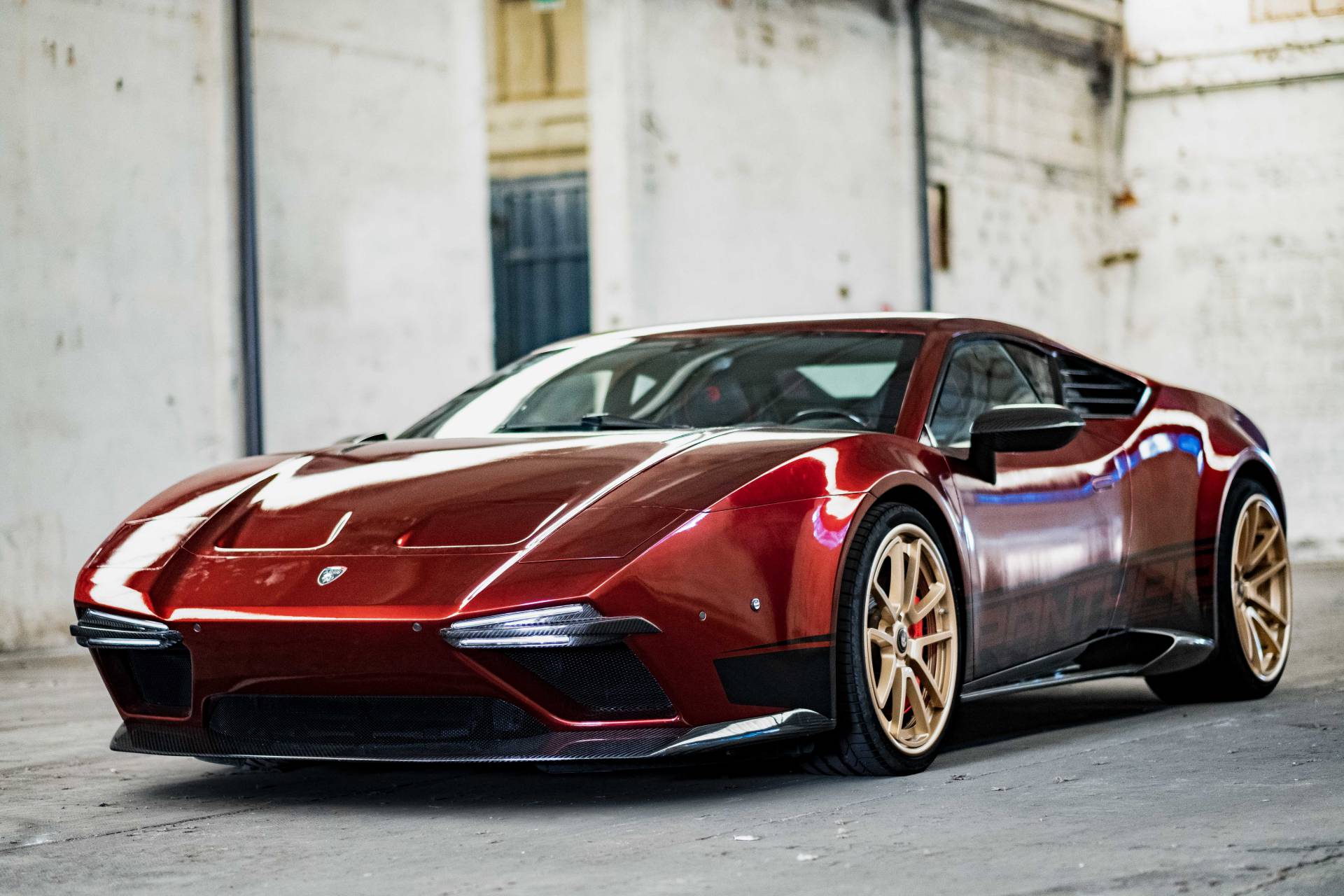
De Tomaso: Pantera (1971)
Ferruccio Lamborghini went through the unbearably difficult process of developing a complete car from scratch to take on Ferrari.
Alejandro De Tomaso took a simpler route: he designed an incredibly beautiful car and bought a V8 from Ford to place behind the seats. America’s appetite for high-performance models ensured a steady cash flow for De Tomaso despite the Pantera’s quality problems.
Its lack of reliability led Elvis Presley to shoot his Pantera on numerous occasions, presumably as a punishment. It is not known whether this helped. Ford stopped importing the car into the United States in 1975, but production continued for other markets (including Europe) until 1992.
So, what happened to De Tomaso? De Tomaso merged with Maserati in 1975 and that brand was always more prolific, but De Tomaso sales continued in small numbers until 2004, when the company died. The brand was sold and a De Tomaso prototype appeared at the 2011 Geneva Motor Show, but nothing has been heard of it since.
Hudson: Hornet (1951)
The Hudson Hornet dispels the myth that all American cars looked alike in the 1950s. Sure, it had big round headlights and enough chrome trim to be seen from outer space, but the similarities with its peers stopped there.
It boasted a long, sloping roofline that flowed into a pontoon-like rear end. If built today, it would be classified as a four-door coupé in the same vein as the Mercedes-Benz CLS. It was also fast, powered by its ‘Twin H’ inline-six engine; the Hornet in modified form dominated NASCAR racing in the early 1950s. It is a mythical model, and younger viewers may recognise it from the children’s animated film Cars.
So, what happened to Hudson? It merged with Nash-Kelvinator in 1954 to form American Motors Corporation (AMC). The Hudson badge survived until 1957.
Saab: 99 (1968)
The 99 marked the beginning of a new chapter in the history of Saab. The Swedish brand abandoned the design inspired by the 92 of earlier cars in favour of a more contemporary look characterised by a wraparound windscreen, while a four-cylinder engine of Triumph origin consigned the two-stroke engine derived from DKW in the 96 to the history books once and for all. The 1978 Turbo remains the best-known evolution of the 99. It paved the way for every high-performance Saab from that point on.
So, what happened to Saab? General Motors acquired all of Saab in 2000. Saab was sold to Spyker in 2010, but stopped making cars in 2011. A Chinese company called NEVS bought Saab’s automotive assets, but it seems the brand will not be used on any vehicle. This is a complex and controversial area, since the military aircraft manufacturer that bears the name still uses the Saab name; cars and aircraft were under the same ownership until 1990.
Simca: 1000 Rallye (1970)
Abarth worked its magic on the Simca 1000, but it is the three factory-built Rallye models that replaced the Renault and NSU in the hearts of enthusiasts seeking rear-engined driving thrills. Although aerodynamically challenged, the Simca 1000 was the ideal base for a high-performance saloon aimed at budget-conscious buyers. The first two Rallye editions were hot-rod production cars, but the Rallye 3 was a fully-fledged racing car legal for homologation purposes. All three models are still widely used in hill-climb events today.
So, what happened to Simca? Simca was bought by Chrysler in 1970, then by PSA Peugeot-Citroën in 1979, and the badge died thereafter in favour of Talbot. PSA’s facilities were housed in Madrid, specifically on Calle Eduardo Barreiros in Villaverde. In that factory, numerous vehicles were built under the Barreiros brand, which was later acquired by Chrysler. Numerous vehicles that contributed to our country’s automotive development were manufactured there.
Talbot: Samba Cabriolet (1982)
The Talbot Samba Cabriolet made the Volkswagen Golf Cabriolet look like a Rolls-Royce. Based on one of Europe’s cheapest cars, it gave young, cash-strapped motorists a way to go topless without breaking the bank. It also tried to give the Talbot brand its own identity by separating the Samba from the Peugeot 104 and the Citroën LNA with which it shared DNA. The Peugeot 205 CJ took up the torch from the Samba Cabriolet after Talbot sank six feet under.
So, what happened to Talbot? When PSA Peugeot-Citroën bought Chrysler Europe in 1979, it used the Talbot badge on earlier Chrysler and Simca models. Its use on cars continued until 1987, and on vans until 1994.


 Peugeot E-208 GTi: a battery-powered toy that revives the spirit of the 1980s sports cars
 New Lexus ES: luxury grows and goes electric
 First contact with the Dacia Sandero Hybrid 155: power and efficiency from €19,890
Deja un comentario