The best city cars with an ECO label and affordable price in 2026
 Carlos Romero
20 March 2026
7 min.
The urban market in 2026 continues to be characterised by the search for practical solutions with low operating costs: the ECO label has established itself as a relevant criterion for those who prioritise everyday city mobility without giving up lower emissions and maintenance costs. The ECO label makes it easier to manage low-emission zones and offers occasional tax advantages. Real-world urban range, cost per kilometre and ease of use in dense environments are the pillars of the purchase decision. The balance between price and efficiency is key.
This buying guide is for…
This guide is aimed at urban drivers who cover short or daily journeys — commuting to work, errands and light family mobility — and who are looking for a compact, efficient car with a moderate purchase price. It is also suitable for those who need access to emissions-restricted areas and want a model with an ECO label that reduces administrative hassle and running costs.
It is not suitable for users who prioritise long daily distances without charging points, large boots or sporting performance: for those profiles it is worth considering alternatives in a higher segment or diesel/electric vehicles with greater range.
Common options within the segment
Within the urban segment there are several approaches coexisting: electric microcars, light hybrids (48 V), full non-plug-in hybrids and LPG-adapted versions. Each solution involves a different trade-off between weight, consumption and usage planning. Hybrids offer operational simplicity in the city; mild-hybrids reduce consumption and entry cost; pure electrics eliminate local emissions but require infrastructure and a larger initial budget.
At the price end, the most affordable models tend to be mild-hybrid or downsized-engine versions; at the efficiency end, full hybrids or electrics, with rising purchase costs and lower variable costs.
Key criteria for choosing well
Realistic range versus homologated range: in the city range is not the critical factor except for electrics; for hybrids the homologated figure indicates combined efficiency, but what matters is consumption in urban cycle. Charging power and speed: for electrics and plug-in hybrids the charging power defines the experience; for hybrids the combustion engine’s reserve and responsiveness in traffic matter.
Stability and comfort on the road: suspension and insulation matter even in the city if fast roads are used. Genuinely useful technology: urban driver assistance, connectivity to avoid fines and efficient air conditioning define daily usability. Total cost of purchase and use: add up taxes, maintenance, insurance and depreciation rather than focusing only on the initial price.
It depends on how you drive
If you mainly make short trips and stop the engine frequently, a non-plug-in hybrid will deliver immediate benefits. If you use motorways every day, the urban hybrid advantage is diluted. Climate affects consumption and range: cold winters penalise electric efficiency and increase use of the combustion engine in hybrids.
Urban use demands manoeuvrability, a tight turning circle and visibility; for small families the boot and ISOFIX anchorages are relevant. The practical profile prioritises operating cost over pure performance.
Real price: what you should know
Cash price versus financed price: financing offers can lower the initial instalment but increase the final cost through interest and linked insurance. The “from” price indicates the base version without optional equipment: it is a useful reference for comparisons, not the usual final price.
Equipment increases the price and may change the label or homologation; some public grants require specific versions. VAT, registration taxes and agency fees affect the final cost and can raise it by several thousand euros compared with the “from” price.
Benchmark models on the market
Toyota Yaris (from 21,200 €*)
Full hybrid compact designed for urban and suburban use; its self-charging system prioritises efficiency in the urban cycle without the need to plug in, ideal for daily journeys and low-emission zones.
The best
Low urban consumption and a proven hybrid system; excellent for journeys with frequent stops.
The less good
Boot and rear-seat space are limited compared with compact rivals; the base price can rise with desirable equipment.
Renault Clio E‑Tech (from 21,900 €*)
Hybrid gently oriented to the city that combines low consumption with a wide range of connectivity; suitable for drivers who alternate between city driving and short intercity trips.
The best
Efficient approach in real urban use and a good comfort-to-price ratio in mid-range versions.
The less good
Acceleration response is not as sprightly as that of some hybrids Toyota; standard equipment is limited in the cheapest version.
Honda Jazz e:HEV (from 23,500 €*)
Very well-used cabin and a hybrid system geared to smooth urban driving; good visibility and ergonomics for frequent urban journeys.
The best
Interior versatility and economy in the urban environment thanks to the hybrid system’s behaviour.
The less good
Entry price somewhat higher than some competitors and a more conservative styling.
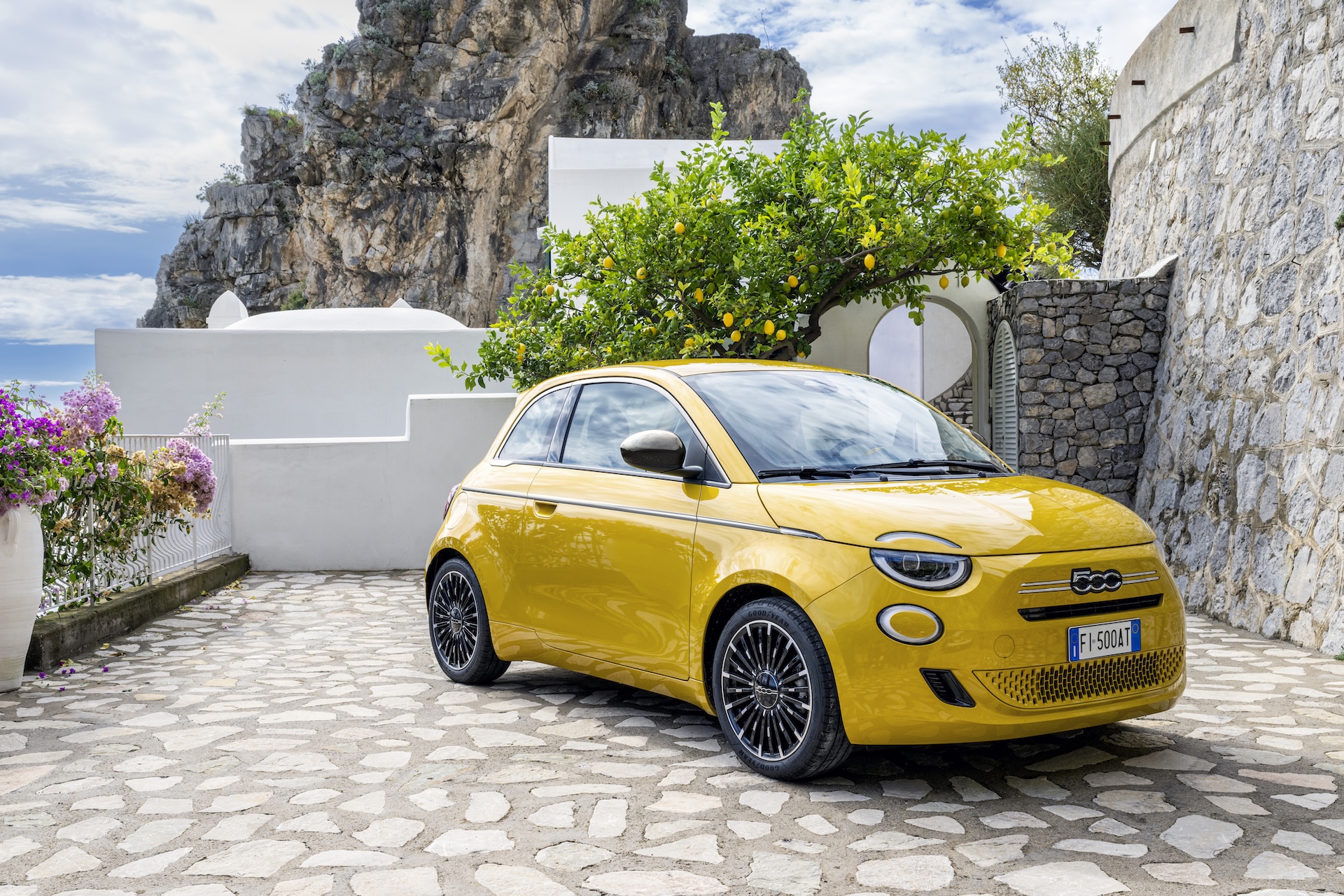
Fiat 500 Hybrid (from 15,900 €*)
City microcar with mild-hybrid technology, designed for those seeking a moderate purchase cost and ease of manoeuvring on narrow roads and in tricky parking.
The best
Attractive entry price and compact dimensions that make getting around the city centre easy.
The less good
Limited platform and interior space for frequent family use; performance modestly oriented towards economy.
Hyundai Bayon 48V (from 18,900 €*)
Compact SUV with a 48 V mild-hybrid system offering an elevated driving position without sacrificing urban efficiency; a good alternative for those seeking greater versatility in the city.
The best
Versatility and comfort on urban roads, greater interior space than a pure city car.
The less good
Weight and consumption slightly higher than equivalent hatchbacks; mid-level entry cost.
Kia Rio MHEV (from 17,900 €*)
Compact hatchback with mild-hybrid assistance to reduce real-world city consumption; a balanced approach between cost, equipment and urban dynamics.
The best
Good equipment-to-price ratio and stable behaviour in urban traffic.
The less good
Efficiency does not match that of full hybrids on very urban routes; some relevant options are sold as packs.
Purchase grants
The Plan Auto+ 2026 replaces the previous MOVES programmes and establishes a new system of direct grants for buying electrified vehicles in Spain. This initiative seeks to accelerate the renewal of the fleet towards lower-emission models and to support the local industry.
Main amounts of the Plan Auto+ 2026
– Direct grants of up to €4,500 for electric passenger cars.
– Up to €5,000 for light vans in category N1.
– Retroactive effect from 1 January 2026.
– Approximate budget allocation of 400 million euros.
Who can benefit and priority criteria
Beneficiaries: private individuals, self-employed workers and companies. The EEE criterion (Electric, Economical and European) applies, which prioritises pure battery electric vehicles (BEV) over plug-in hybrids (PHEV). Vehicles priced below €35,000 receive a larger grant; those between €35,000 and €45,000 qualify for a reduced grant. There will be a maximum incentive when the final assembly or the batteries come from the European Union.
Additional requirements and tax advantages
A mandatory minimum discount of €1,000 from the dealer is required. There is a 15% deduction on personal income tax (IRPF) up to a maximum of €3,000. The tax validity of these advantages is set until 31 December 2026.
Management and possible regional grants
Management is coordinated by the Ministry of Industry together with the Autonomous Communities. Additional regional programmes may exist; for example, the Plan Cambia 360 in the Community of Madrid. At the time of writing, it is not officially confirmed whether these regional grants are compatible with the Plan Auto+ 2026.
Common buying mistakes
– Looking only at the list price (“from”) and not calculating total costs: taxes, insurance and maintenance can change the decision.
– Underestimating the impact of climate and daily usage cycle on real efficiency.
– Choosing by brand or styling without checking interior space and boot capacity for real use.
– Not verifying whether the specific version qualifies for public grants or discounts required by current programmes.
With the information and criteria set out, the reader now has a framework for assessing urban alternatives with an ECO label and moderate costs. The logical next step is to compare these models with up-to-date equipment and price data to make a detailed comparison based on real use.


 Peugeot E-208 GTi: a battery-powered toy that revives the spirit of the 1980s sports cars
 New Lexus ES: luxury grows and goes electric
 First contact with the Dacia Sandero Hybrid 155: power and efficiency from €19,890
Deja un comentario