The best electric and compact cars by price in 2026
 Iván Navarro
19 April 2026
8 min.
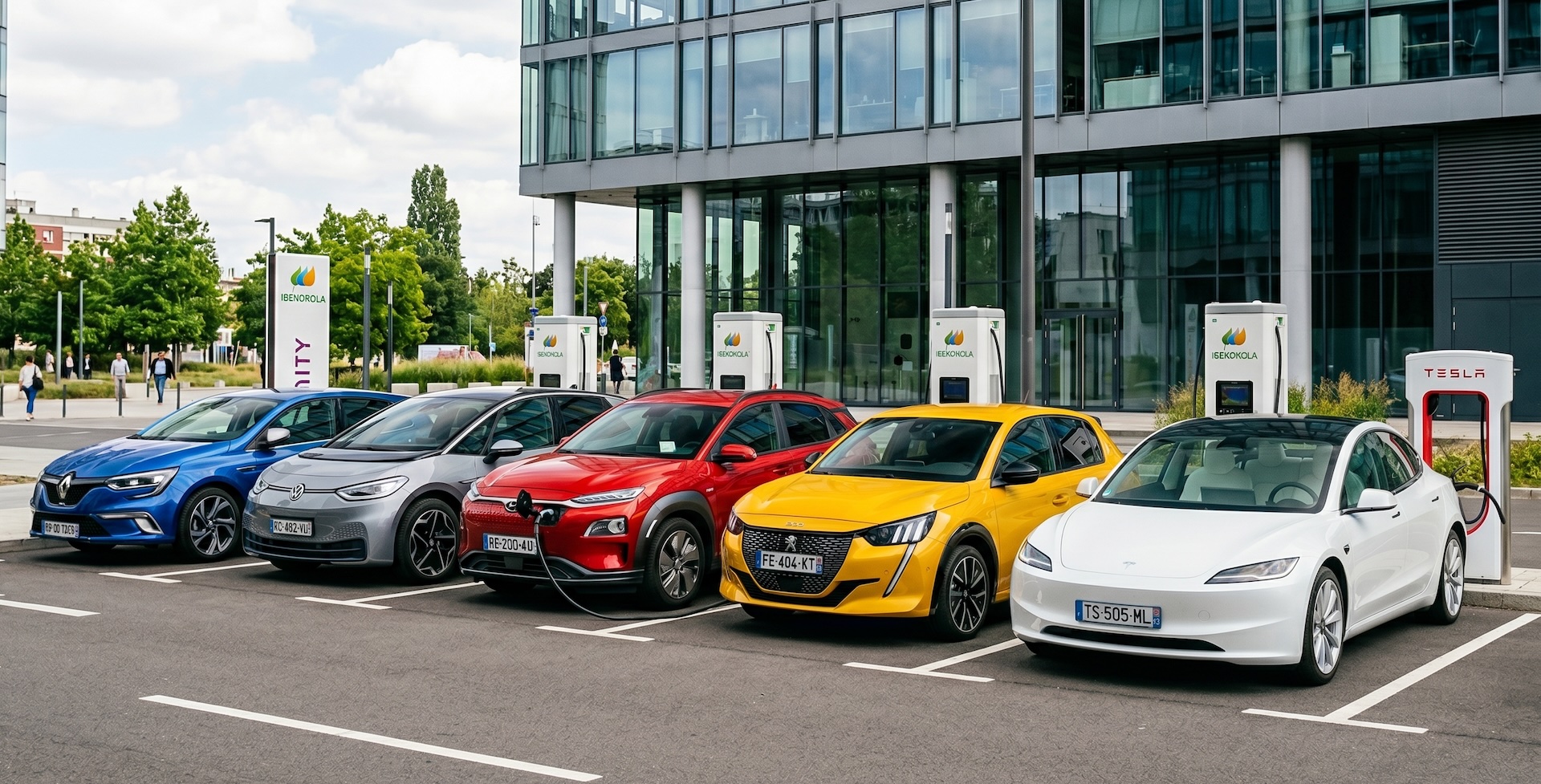
Join us as we discover which of these innovative vehicles represents the best choice by price in Spain.
The market for compact electric cars in 2026 shows a more mature and competitive offering: some models clearly balance price, range and urban space, while others focus on high performance or larger batteries. In a context where demand for efficient mobility coexists with the need to keep costs reasonable, this selection compares real, available alternatives that help you choose according to everyday use, travel range and total cost of ownership. Below you will find representative models in the segment, with practical information on why they stand out, who they suit best and what their technical and commercial limitations are.
Who is this ranking for?
This ranking is based on market data, official specifications and published road tests. It is designed for buyers who value the relationship between entry price and electric performance in compact passenger cars: people who want efficient daily mobility without giving up some range for occasional trips.
If you drive many kilometres every day, range and efficiency matter most; if you prioritise spending less each day, look at consumption and charging cost; if you want a compact car for the city with occasional weekend getaways, prioritise the balance between usable battery capacity and purchase price.
What details have we analysed?
We have considered market positioning, official technical data such as WLTP range and power, homologated consumption, dimensions and expected real-world use, and the relationship between price and technical approach that determines value for money. We have also taken into account versatility for urban use versus longer trips, and the standard equipment associated with the entry price.
Ranking of the best electric and compact cars by price in 2026
Renault Mégane E-Tech Electric (from 34,990 €*)
Indicative price before applying public aid or the brand’s commercial discounts.
Why it’s here: A compact version with a medium-high capacity battery, offering good WLTP range for its category and a practical package for urban families. Its layout combines a conventional passenger-car chassis with the Renault electric system, with power options that balance efficiency and responsiveness.
Ideal for: Drivers looking for a balance between reasonable range and an adjusted price for mixed city and road use.
Pros:
- Competitive range for compact models.
- Wide range of trim levels and battery options.
- Good interior space for its class.
Cons:
- Slightly higher consumption in more powerful variants.
- Variable residual value on the used-car market.
Volkswagen ID.3 (from 33,450 €*)
Indicative price before applying public aid or the brand’s commercial discounts.
Why it’s here: A benchmark compact in the ID range with several battery options and good technological integration. Its dedicated electric platform allows a balance between interior roominess and the driving dynamics of a compact at a moderate price.
Ideal for: Drivers who value ergonomics, on-board technology and a range of versions to match range to budget.
Pros:
- Electric platform optimised for interior space.
- Wide range of batteries and power outputs.
- Good driving experience in the city.
Cons:
- Final price can rise with added equipment.
- Some versions have limited range compared with higher-spec alternatives.
Hyundai Kona Electric (from 35,600 €*)
Indicative price before applying public aid or the brand’s commercial discounts.
Why it’s here: A compact crossover with a practical approach and one of the best efficiencies in its category. It offers a solid combination of range per charge and competitive entry cost among compact electric SUVs.
Ideal for: Those who want the raised driving position of a crossover without giving up efficiency and reasonable range.
Pros:
- Good balance between range and consumption.
- Higher driving position and practicality.
- Wide charging and equipment options.
Cons:
- Tighter rear space than compact saloons.
- Slightly higher price in larger-battery versions.
Peugeot e-208 (from 30,900 €*)
Indicative price before applying public aid or the brand’s commercial discounts.
Why it’s here: A compact city car with good efficiency and an affordable entry price, aimed at customers who prioritise manoeuvrability and low running costs in town without giving up a modern design.
Ideal for: Mostly urban use with occasional short intercity journeys.
Pros:
- Ideal dimensions for city driving and parking.
- Efficient consumption on urban routes.
- Competitive entry price.
Cons:
- Shorter range than compacts with larger batteries.
- Slightly smaller boot for certain family needs.
Tesla Model 3 (from 46,990 €*)
Indicative price before applying public aid or the brand’s commercial discounts.
Why it’s here: Although its entry price is higher, it offers range and efficiency among the best in the compact/large-compact segment, together with a proprietary charging network that improves usability on long journeys.
Ideal for: Drivers who want to combine high range with access to a broad charging infrastructure.
Pros:
- Leading range in higher versions.
- Charging network and efficient driving experience.
- Generous interior space for its exterior size.
Cons:
- Entry price higher than most compacts.
- Equipment and interior trim can be sparse depending on version.
The prices shown in this ranking are indicative and do not apply public aid or the brand’s commercial discounts.
Technical comparison
| Model | Range | ||||
|---|---|---|---|---|---|
| Renault Mégane E-Tech | up to 470 km (WLTP) | 96–160 kW | 16–18 kWh/100 km | 160–180 km/h | 34,990 €* |
| Volkswagen ID.3 | 348–549 km (WLTP) | 110–150 kW | 15–18 kWh/100 km | 160–180 km/h | 33,450 €* |
| Hyundai Kona Electric | 452 km (WLTP) | 150 kW | 14–15.5 kWh/100 km | 167 km/h | 35,600 €* |
| Peugeot e-208 | 362 km (WLTP) | 100 kW | 15.6 kWh/100 km | 150 km/h | 30,900 €* |
| Tesla Model 3 | up to 602 km (WLTP) | varies by version | ~14 kWh/100 km | 233 km/h | 46,990 €* |
These data are official and taken from the brands’ official websites.
Purchase aid in 2026: Plan Auto+ and tax benefits
The Plan Auto+ 2026 replaces the previous MOVES programmes and establishes a new system of direct aid for buying electrified vehicles in Spain.
Main amounts of Plan Auto+ 2026
– Direct aid of up to €4,500 for electric passenger cars.
– Up to €5,000 for N1 light vans.
– Retroactive from 1 January 2026.
– Approximate budget allocation of €400 million.
Who can benefit and priority criteria
Beneficiaries are private individuals, self-employed workers and companies. The EEE criterion (Electric, Economic and European) applies, with greater incentives for pure electric vehicles compared with PHEVs. Vehicles priced below €35,000 receive higher aid; those between €35,000 and €45,000 qualify for reduced aid. Maximum incentive applies if the final assembly or the batteries are of European Union origin.
Additional requirements and tax advantages
The Plan requires a mandatory minimum discount of €1,000 from the dealer. There is also a 15% personal income tax (IRPF) deduction up to a maximum of €3,000. The tax validity extends until 31 December 2026.
Management and possible regional aid
Management is coordinated by the Ministry of Industry together with the Autonomous Communities. Additional regional programmes may exist, for example the Plan Cambia 360 in the Community of Madrid. At the time of writing, it is not officially confirmed whether these regional aids are compatible with Plan Auto+ 2026.
FAQ · The 5 questions everyone asks
What real range can I expect on the road?
WLTP range is indicative; at high speeds and with air conditioning in use you will see lower figures. For frequent travel, consider a realistic reduction of 15–25% compared with WLTP depending on driving style and conditions.
Which model offers the best price-to-range ratio?
Models such as the Renault Mégane E-Tech and the Volkswagen ID.3 strike a good balance between entry price and battery options, offering value for money in mid-range driving. The Peugeot e-208 is cheaper but has a shorter reach.
Is it worth paying more for a Tesla Model 3?
If you value higher range and access to an extensive charging network, the Model 3 may justify the premium. For urban use or short journeys, cheaper alternatives may be more cost-efficient overall.
How does size affect my choice if I have a family?
If you travel often and need space, the Mégane E-Tech and the Model 3 offer better interior room than small cars such as the e-208. The Kona provides a raised driving position and versatility if you want something in between.
What should I check first when comparing prices?
Check the real entry price and what standard equipment is included, the WLTP range of the specific version, and estimated charging costs based on your electricity tariff. Public aid can also change the equation.
Expert conclusion
This group of models shows that in 2026 it is possible to find compact electric cars offering a good balance between price and performance: some prioritise range and charging network, others entry cost and urban efficiency. For the buyer, this ranking means having clear alternatives depending on budget and use, avoiding buying on brand alone without comparing versions and real running costs.
If you want to stretch your money, first check the real entry price and what comes as standard. If you prefer to play it safe, choose models with stronger market traction and support network: they tend to be easier to sell later. And if your use is mainly long-distance, prioritise WLTP range and efficiency; if you drive many kilometres, energy cost and efficiency matter more than the power figure.


 Peugeot E-208 GTi: a battery-powered toy that revives the spirit of the 1980s sports cars
 New Lexus ES: luxury grows and goes electric
 First contact with the Dacia Sandero Hybrid 155: power and efficiency from €19,890
Deja un comentario