The Koenigsegg Agera RS bids us farewell, and we say goodbye to it with tears in our eyes.
 Javier López @jlopezbryan96
6 April 2018
3 min.
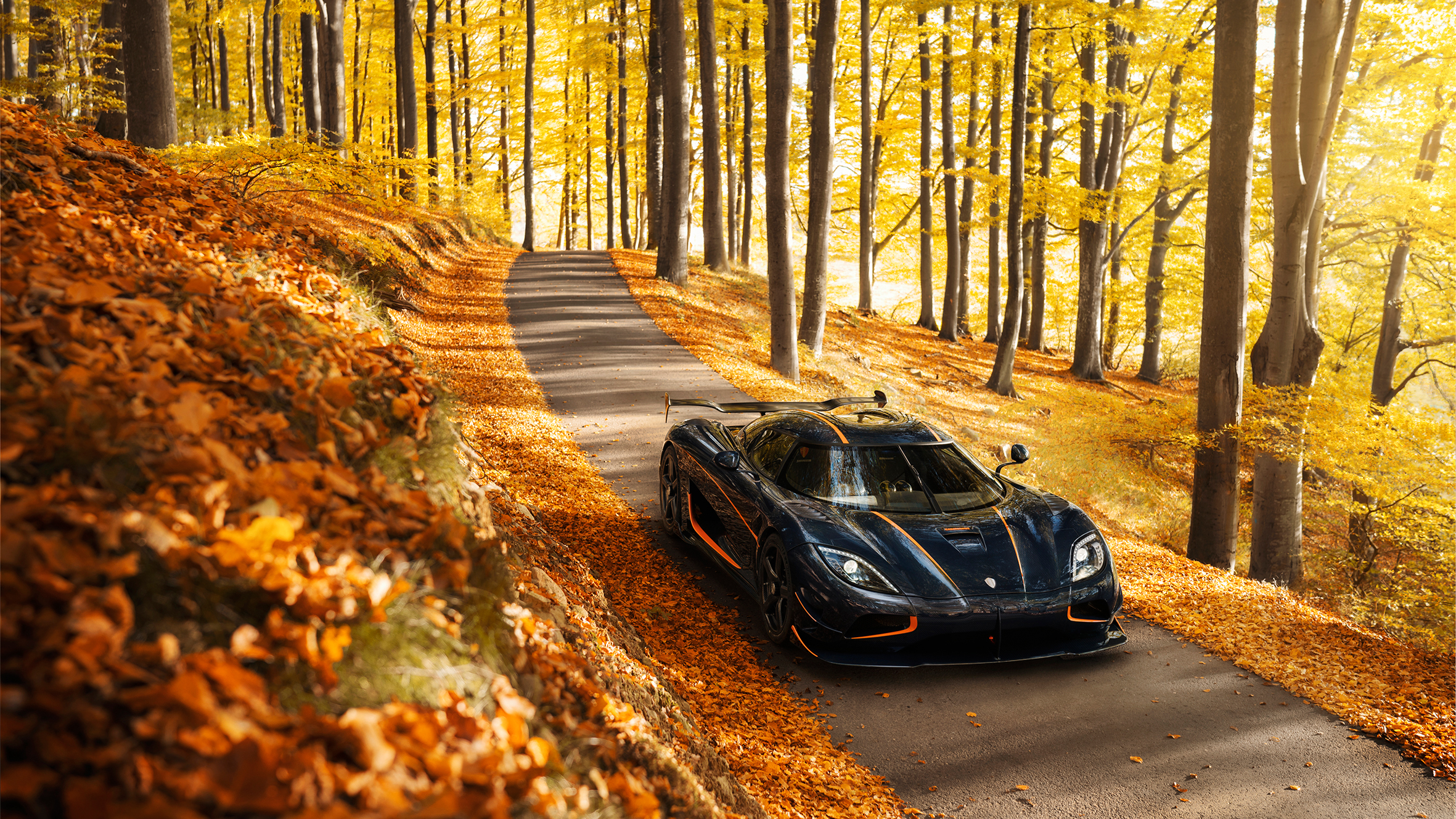
Koenigsegg is ending production of one of its most iconic models, the Agera RS. After three years of production, the time has come to say goodbye.
If we stop to think about the vehicles that have marked a before and after in the automotive world, many will surely come to mind but, without a doubt, Koenigsegg cars are among them. The Swedish firm has been creating some of the best supercars in the world since 2002, a period that has given it enough experience for its models to rank among the fastest in the world. The Agera was a clear example of this and, after eight years on the market, it is saying farewell to us.
That’s right, dear readers, one of the vehicles that has left the deepest mark on the motoring world is bidding farewell for good, and that is why we are going to review the innovations that the Koenigsegg Agera RS has brought us and, of course, its other souped-up versions. As we told you, it was in 2010 that Christian’s firm opened production of the vehicles that would catapult it directly to success and today we tell you how it all began.
When Koenigsegg presented the Agera, it did so with the responsibility of kicking off the replacement for the CCX, one of the models with which the brand took its first steps. However, the reception this vehicle received among motoring enthusiasts and potential customers meant its life was full of feats and great achievements, something that would not have been possible without its impressive tuning.
The Swedish brand had it very clear: they wanted to create the fastest production vehicle in the world, and they did. The initial version of the Agera had an overwhelming and groundbreaking design, since it didn’t resemble any other model ever built. Its slender silhouette exuded sportiness and aggressiveness everywhere, which is logical when we consider what this Koenigsegg hid beneath its skin.
A 5.0-litre supercharged V8 was responsible for unleashing the 960 CV of power and 1,000 Nm of torque it was capable of producing, but the Swedish engineers did not sit idle. A year later, Koenigsegg presented the R variant of the Agera, which comfortably exceeded 1,000 CV. After further experiments with the Swedish supercar, the firm culminated the versions of this model with the RS -of which only 25 units were made- and the One:1, which delivered total outputs of 1,341 and 1,361 CV respectively.
As painful as it is, the time has come to say goodbye to the Koenigsegg Agera RS but, given the level at which the brand operates, we won’t have to wait long to meet the successor to this relentless supercar. For now the Swedish firm has not made any statements on the matter, but its next creation may well turn to hybrid propulsion, as is the case with the Regera.


 Kia offers an electric range of 10 models, 50 versions and 400 possible combinations
 The seven finalists for the 2027 European Car of the Year (COTY) are exclusively electric
 Peugeot E-208 GTi: a battery-powered toy that revives the spirit of the 1980s sports cars
Deja un comentario