Carmen Hispano Suiza Electric Cars Supercars
This is how the Hispano Suiza Carmen Sagrera is built in five steps: it seems simple, but it is luxury
 Victor Alós Yus @sepelaci
16 January 2025
3 min.
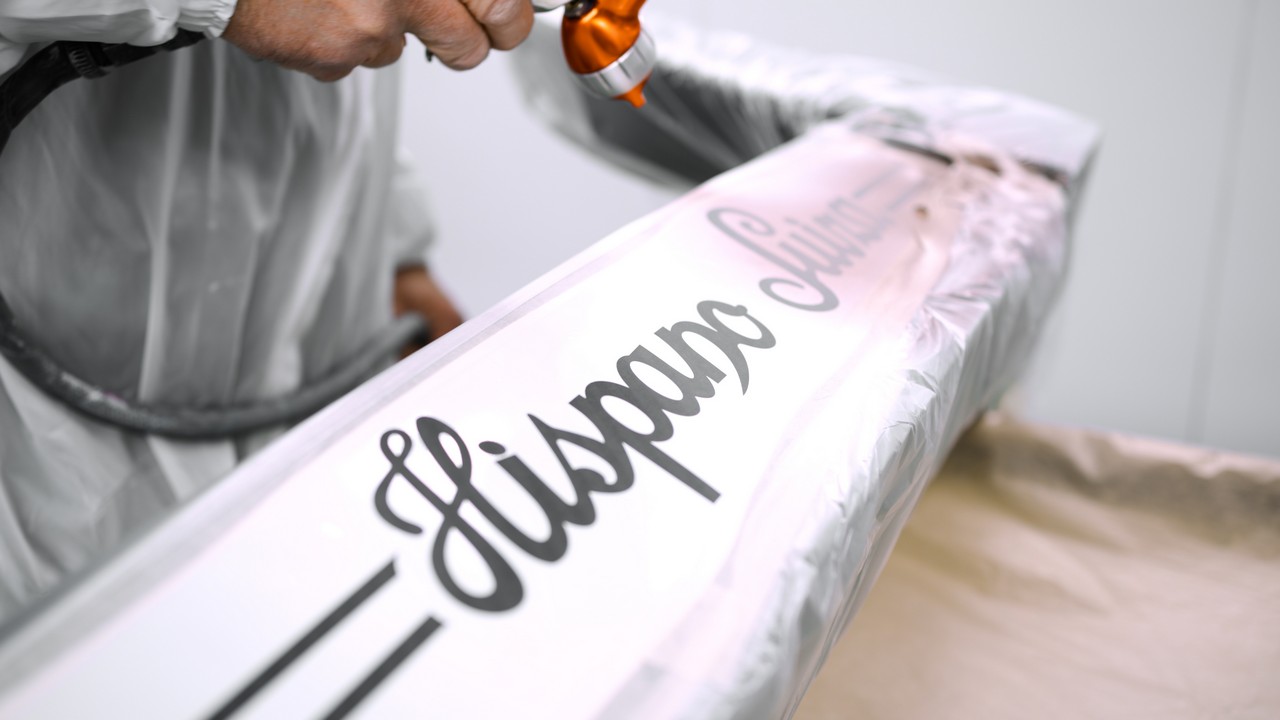
The Hispano Suiza Carmen Sagrera is the model created to celebrate the 120th anniversary of the Catalan brand, and this is how this model is manufactured.
In 2024 the 120th anniversary of Hispano Suiza was celebrated, so during the month of June, when this very special moment was marked, the Hispano Suiza Carmen Sagrera was presented. This hypercar electric features four electric motors. Together they produce a total output of 1,114 CV. With them, the Carmen Sagrera manages to reach 100 km/h in just 2.6 seconds.
The manufacture of this model is carried out by hand at the company’s headquarters in Barcelona. It is a meticulous process that combines innovation, design and craftsmanship. To shape one of these supercars, five different processes must be completed. In this article we want to show you, through a video provided by the brand, how one of these cars is built.
Step 1: Pre-assembly of components and battery production
The Hispano Suiza Carmen Sagrera first requires the customer’s preferences. This is when the customer chooses the configuration their vehicle will have. Each vehicle is unique and personalised, which is the brand’s strong point. The company’s design team keeps regular contact with the customer and informs them of progress on production.
The pre-assembly of several sets of elements, such as the front and rear subframes, the four suspensions, the driveshafts and the interior panel. The steering goes on the front subframe and the inverter bracket goes on the rear one, together with the propulsion system.
Galería de fotos -
HISPANO SUIZA CARMEN SAGRERA
The 103 kWh battery is also built here, and it is of in-house design and manufacture. It debuts on the Hispano Suiza Carmen Sagrera. It offers a range of up to 480 kilometres. The wiring harness is also manufactured at this stage and is left ready for fitting into the car.
Step 2: Chassis assembly
The various body panels are fitted onto the monocoque chassis. All the elements are made from carbon fibre. This process is carried out by hand, with great care and attention to detail.
Step 3: Painting, upholstery and rolling chassis assembly
Once the preliminary and final adjustment of all parts has been completed, the bodywork is painted according to the customer’s instructions. Hispano Suiza specialists also take care of the final treatment of the parts. The wiring, cooling system, steering, brackets and mounts are then fitted. Next, the front and rear subframes and the rolling chassis components are adjusted: suspension, brakes and wheels.
At this stage the interior is also upholstered with high-quality materials, again according to the customer’s instructions.
Step 4: Final assembly and adjustment
In the penultimate step before the Hispano Suiza Carmen Sagrera is complete, the chassis is already assembled and almost ready to roll. The interiors are fitted and adjusted, including the infotainment system technology of the hypercar and the comfort systems. The decorative body details are added, and the car is prepared for the final stage of manufacture.
Step 5: Final validation and delivery
The fifth step brings the production process of the hypercar to an end. It has taken around eight months from the start of the process. The moment of validation of the whole car arrives, through tests on a controlled circuit and on public roads. These tests are carried out at the Circuit de Montmeló, located next to the brand’s facilities. When everything is ready and nothing is found to be faulty, the car is handed over to its owner, who can now enjoy their vehicle.
https://youtu.be/Msq0lKZCzpc


 The seven finalists for the 2027 European Car of the Year (COTY) are exclusively electric
 Peugeot E-208 GTi: a battery-powered toy that revives the spirit of the 1980s sports cars
 New Lexus ES: luxury grows and goes electric
Deja un comentario