Volvo Electric Cars Technology
Volvo experiments with inductive charging for electric vehicles
 Fernando Alvarez
28 October 2013
2 min.
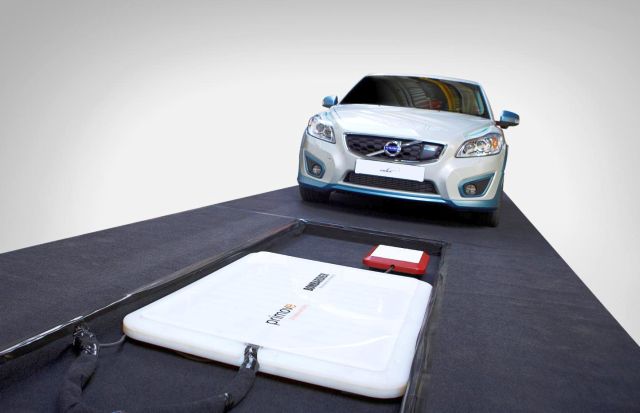
Volvo Car Group has taken part as a partner in an advanced research project that studied the possibilities of inductive charging for electric vehicles, and the results have shown that this technology for transferring energy through an electromagnetic field has a promising future. Lennart Steglan, Vice President of Electric Propulsion Systems at Volvo Car Group, has promised to continue the research and evaluate the feasibility of the technology in new battery electric and hybrid car projects.
Wireless charging uses an electromagnetic field instead of a cable to transfer energy between the charger and the vehicle. An induction coil creates an alternating electromagnetic field from a base charging station. A second induction coil in the portable device picks up energy from the electromagnetic field and converts it into electrical energy that charges the battery.
With inductive charging, you simply park the car over a charging unit and charging starts automatically. Volvo has considered inductive charging to be one of the factors that could most increase consumer acceptance of electric vehicles.
The inductive charging experiments are being carried out in partnership with Inverto, Bombardier Transportation and the bus manufacturer Van Hool, in Belgium, among others. The project has been partly financed by the Belgian government. Volvo Cars has been responsible for supplying the car for the inductive charging project: an electric Volvo C30 with a power output of 120 horsepower.
Tests have shown that the electric Volvo C30 can be fully charged without a power cable in 2.5 hours. In parallel, research has also been carried out into slow, regular charging, with promising results that could be applied to future models.
Source | Volvo


 Peugeot E-208 GTi: a battery-powered toy that revives the spirit of the 1980s sports cars
 New Lexus ES: luxury grows and goes electric
 First contact with the Dacia Sandero Hybrid 155: power and efficiency from €19,890
Deja un comentario