What car should I buy if I'm looking for a hybrid with a long range in 2026?
 Iván Navarro
24 March 2026
8 min.
The range of hybrid models is currently so wide that choosing is not simple. In the following analysis we propose some options that we believe may be of interest to you.
What car should I buy if I’m looking for a hybrid with a long range in 2026? In a market where SUVs and crossovers continue to dominate registrations, many drivers ask for hybrid vehicles capable of covering long journeys without range anxiety or the need to refuel or recharge. Hybrids with a long range combine efficient combustion engines and reasonable batteries, offering low consumption and real-world range for frequent travel. According to ANFAC, in 2025 SUVs accounted for a very significant share of total sales, and within that context hybrids continue to gain market share by offering versatility and economy on the road. The typical buyer looks for space, comfort, low real-world consumption and a competitive cost per kilometre; the average price of the models analysed ranges from mid-level figures in the mainstream market to premium options that trade price for refinement and technology. Trends point to growing demand for hybrids that achieve consumption below 6 l/100 km in combined use and a total range above 800–900 km on mixed routes.
These are the most balanced models if you are looking for range and efficiency.
If range is your priority, choose efficient combustion engines or PHEVs with a reasonable electric range: both approaches solve long journeys in different ways. The first offers continuity without depending on charging; the second reduces cost per km in daily use.
What a car needs to meet this requirement
A hybrid designed to cover many kilometres should combine low real-world consumption, a large tank or a battery with useful electric range (in PHEVs), good aerodynamics and a setup oriented to comfort on the road. Look for transmissions that keep the combustion engine in efficient operating ranges and for effective energy recovery in mixed traffic. It is important to check the WLTP range and verify real consumption in road tests; for long journeys also consider boot space and driving ergonomics. As for price, the most capable hybrids start around €35,000–40,000 in base versions; premium alternatives rise above €50,000.
Model selection
Toyota RAV4 Hybrid
The Toyota RAV4 Hybrid is a solid option if you are looking for reliability and total range. Its self-charging hybrid system prioritises economy on the road and allows long journeys without depending on charging points.
Why it is a good choice
- Low real-world consumption on motorways and main roads.
- Reliable maintenance and an extensive service network.
- Boot and interior space suited to family trips.
Ideal if you are looking for
A practical hybrid SUV for long journeys without the need for plugs.
| Data | Value |
|---|---|
| Engine | Hybrid |
| Environmental label | ECO |
| Power | 218 CV |
| Range | ≈ 900 km |
| Consumption | 5.6 l/100 km (WLTP combined) |
| Price from | €39,000 |
Hyundai Tucson Hybrid
The Hyundai Tucson Hybrid combines thermal efficiency and comfort. It is one of the most balanced hybrids in its segment in terms of equipment versus range, and it is a practical alternative for those who drive many kilometres each year.
Why it is a good choice
- Suspension tuned for comfort on the road.
- Low consumption and ergonomics designed for long journeys.
- Full technology equipment in mid-level versions.
Ideal if you are looking for
A comfortable and efficient SUV for covering long distances without surprises.
| Data | Value |
|---|---|
| Engine | Hybrid |
| Environmental label | ECO |
| Power | 230 CV |
| Range | ≈ 850 km |
| Consumption | 6.1 l/100 km (WLTP combined) |
| Price from | €36,000 |
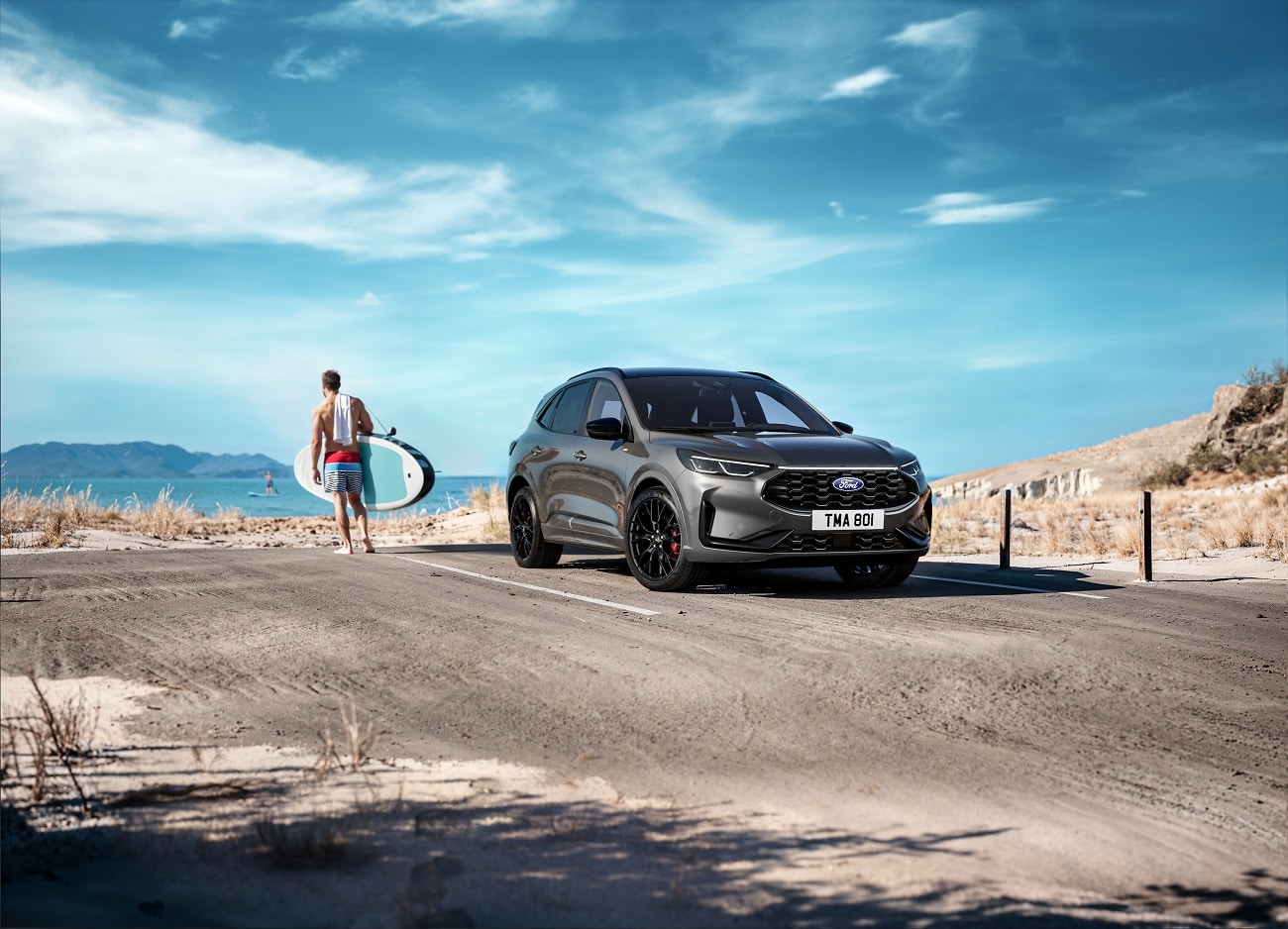
Ford Kuga PHEV
The Ford Kuga PHEV offers the advantage of a useful electric range for everyday use and a combustion engine that extends range for long journeys. It is one of the most versatile PHEVs if you alternate between city and motorway driving.
Why it is a good choice
- Electric range sufficient for daily commuting.
- Very low consumption if charged frequently.
- Good dynamics and comfort on the road.
Ideal if you are looking for
Reducing cost per kilometre in urban use without giving up range on long trips.
| Data | Value |
|---|---|
| Engine | PHEV |
| Environmental label | CERO |
| Power | 225 CV |
| Range | ≈ 56 km electric (WLTP) |
| Consumption | 1.6 l/100 km (WLTP combined with charging) |
| Price from | €41,000 |
Volvo XC60 Recharge
The Volvo XC60 Recharge is a premium PHEV option that combines power and comfort for long journeys. Its electric range covers daily commuting in zero-emission mode and, with the combustion engine, allows long trips without limitations.
Why it is a good choice
- Premium-segment finish and refinement.
- Electric range well suited to urban routes.
- Advanced safety systems and driver assistance.
Ideal if you are looking for
A premium SUV that reduces consumption in daily use and keeps range for travelling.
| Data | Value |
|---|---|
| Engine | PHEV |
| Environmental label | CERO |
| Power | 350 CV |
| Range | ≈ 50–55 km electric (WLTP) |
| Consumption | 2.1 l/100 km (WLTP combined with charging) |
| Price from | €68,000 |
Lexus NX 350h
The Lexus NX 350h is a premium self-charging hybrid that prioritises comfort and thermal efficiency. Its setup is oriented towards very controlled consumption on motorways and long distances.
Why it is a good choice
- Finish and insulation for long routes.
- A combination of efficiency and responsiveness on the road.
- Reliability and low long-term running costs.
Ideal if you are looking for
A comfortable premium hybrid for travelling without giving up efficiency.
| Data | Value |
|---|---|
| Engine | Hybrid |
| Environmental label | ECO |
| Power | 246 CV |
| Range | ≈ 900–1,000 km |
| Consumption | 5.9 l/100 km (WLTP combined) |
| Price from | €51,000 |
Which car to choose according to your situation
If you do a lot of city driving
Choose a PHEV with a real electric range above 40 km or a very efficient hybrid. The Ford Kuga PHEV is a balanced option: it reduces cost per kilometre in daily use and keeps range for weekend getaways.
If you cover many kilometres
Prefer self-charging hybrids with low consumption and large tanks, such as the Toyota RAV4 Hybrid or the Lexus NX 350h, which offer high total range and comfort on the road.
If you are looking to save
A well-used PHEV (charged daily) minimises costs: models such as the Ford Kuga PHEV or the Volvo XC60 Recharge reduce average consumption if charged frequently.
If you want technology
Premium brands such as Lexus or Volvo offer safety assistants and superior materials; if you also want a CERO label and driving aids in the city, a premium PHEV is recommended.
Interesting alternatives within the same budget
Within the price range and intent described, it is also worth considering the Hyundai Santa Fe Hybrid, the Kia Sportage PHEV, the Peugeot 3008 Hybrid and the Honda CR-V Hybrid. Not all of them offer the same balance between range and cost, but each presents a valid option depending on whether space, consumption or price is your priority.
FAQ – FREQUENTLY ASKED QUESTIONS
What is the practical difference between a hybrid and a PHEV?
A self-charging hybrid does not need a plug and optimises thermal consumption; a PHEV can run in electric mode for tens of kilometres, reducing cost per km in daily use.
Are PHEVs better for long journeys?
It depends: on long trips the combustion engine comes into play and the electric advantage diminishes, but a well-designed PHEV offers flexibility for both uses.
How does the DGT label affect the choice?
If you drive in cities with restrictions, the CERO or ECO label may be relevant; PHEVs with a wide electric range usually qualify for CERO.
What additional maintenance does a hybrid require?
Hybrids usually do not require significantly more maintenance than a combustion car; they have electric components and a battery, but manufacturers have spent years optimising their durability.
What is the criterion for assessing real-world range?
Check real consumption in road tests, the capacity of the tank or battery, and your usage patterns: motorway and dual-carriageway driving penalise range more than mixed urban driving.
Expert opinion
Beyond the official figures, the choice depends on real use and charging habits. If you cover many kilometres and few short urban trips, a self-charging hybrid such as the Toyota RAV4 Hybrid or the Lexus NX 350h offers the best balance between total range and running cost: they do not depend on charging points and keep consumption low on motorways. Conversely, if your daily routine includes many short trips and you can charge at home or at work, a PHEV such as the Ford Kuga PHEV or the Volvo XC60 Recharge reduces daily spending and in many cases earns a CERO label.
On a tight budget, models such as the Hyundai Tucson Hybrid demonstrate that one of the most balanced hybrids can combine comfort, space and efficiency without driving up the initial bill. If your priority is saving in the long run, assess your real usage cycle: a PHEV that is not charged frequently can end up costing more than an efficient hybrid.
My final recommendation: for frequent long journeys, opt for an efficient self-charging hybrid; if you combine urban and motorway driving and can charge daily, a PHEV offers the best cost per kilometre. In any case, test drive in real conditions and compare your own consumption with WLTP data and independent tests before deciding. Models such as the Toyota RAV4 Hybrid, the Hyundai Tucson Hybrid or the Ford Kuga PHEV represent different solutions and are good starting points for anyone seeking range without giving up efficiency.


 Peugeot E-208 GTi: a battery-powered toy that revives the spirit of the 1980s sports cars
 New Lexus ES: luxury grows and goes electric
 First contact with the Dacia Sandero Hybrid 155: power and efficiency from €19,890
Deja un comentario