What does the Hyundai Inster offer in terms of quality and price for the urban driver?
 Carlos Romero
23 March 2026
8 min.
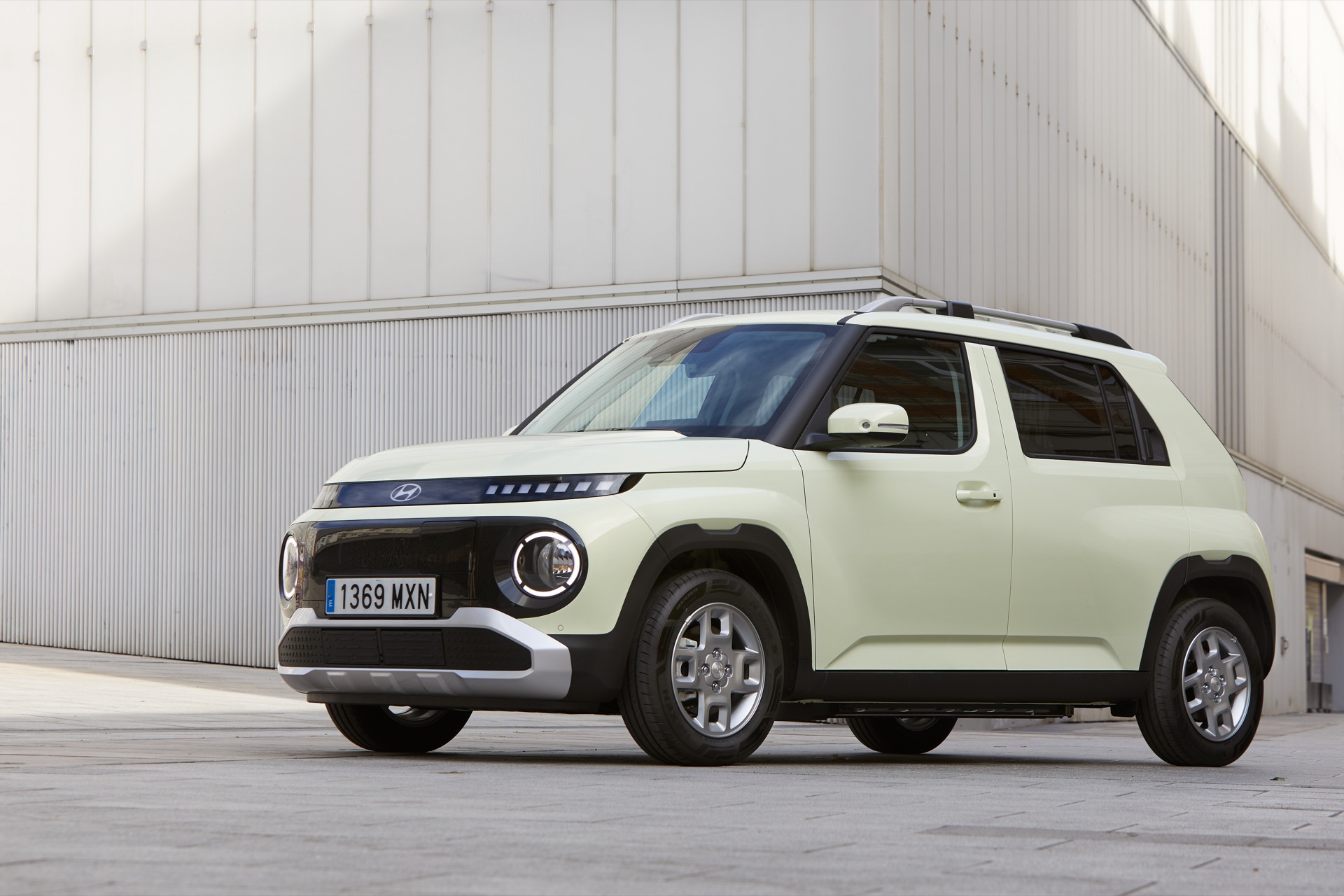
With a proposition geared toward urban use and a clear commitment to electrification, the Hyundai Inster arrives as a practical alternative for those looking for a compact car with efficient performance and careful finish. The model offers a 100% electric powertrain, a combined output close to 150 kW and an announced WLTP range of 320 km; its price starts at €28,990 (without aid or discounts) and sits in a competitive range compared with rivals in its segment. How does that range translate into real-world journeys around town and on country roads? Does the relationship between equipment and price compensate compared with established alternatives? What running and maintenance costs should be expected in the medium term? The analysis addresses those questions with spec-sheet data, sales figures and observations on urban behaviour, anticipating a review of real figures, behaviour and costs that helps assess whether the Inster fits as a primary vehicle for day-to-day life.
The essentials of the Hyundai Inster
The Hyundai Inster is an electric city car that seeks to balance quality and price: good interior fit and finish, technology equipment appropriate to its segment and a useful range for most metropolitan journeys. It is worth considering if most trips are urban or peri-urban and if comfort and running economy are prioritised over sportier or longer-range solutions. For drivers who frequently need long journeys, there are alternatives with larger batteries; for urban drivers, the Inster offers a coherent and competitive package.
Technical sheet and main features
| Engine | Electric, front motor |
| Power | 97/115 CV |
| WLTP range | 370 km |
| Battery / Capacity | 42 and 49 kWh usable |
| Homologated consumption | 14.5 kWh/100 km (WLTP combined) |
| 0-100 km/h acceleration | 10.6 s |
| Length | 3.82 m |
| Boot | 350 litres |
| Price from | €28,990 (without aid or discounts) |
Hyundai Inster sales 2025
In 2025 the Hyundai Inster consolidated its presence in the electric city car segment in Spain with moderate figures compared with more established models; according to ANFAC data and industry sources, its acceptance has been solid in urban settings with fleets and private buyers who prioritise efficiency. The figures reflect intense competition between electric compacts and niche models.
| Model | Sales 2025 (Spain) |
| Hyundai Inster | 3,200 |
| Peugeot e-208 | 6,500 |
| Fiat 500e | 4,200 |
| Renault Mégane E-Tech | 2,800 |
Design and market positioning
The Inster has a contemporary, urban aesthetic, with compact lines designed for manoeuvrability and visibility in the city. The exterior finish seeks to be recognisable without resorting to extravagance; in the market it positions itself as a practical and well-equipped option for users who value a balance between design and functionality, placing it, by price and performance, between entry-level models and smaller-volume premium compacts.
Interior, space and technology
The interior features durable materials and careful finishes, with ergonomics focused on comfort over short trips. Space in the front seats is generous for its size and the rear seats are sufficient for two adults on urban journeys; the 350-litre boot makes daily use easy. The technology provision includes a central touchscreen, basic driver assistance and modern connectivity; it is a configuration suited to regular urban use.
Engine, real-world range and behaviour
In real city conditions the range approaches the announced WLTP figure, easily reaching between 280 and 320 km with efficient driving and frequent use of energy recovery. On the motorway the figure drops, and real-world figures close to 220–250 km at sustained speeds are common. The behaviour is agile and comfortable in urban environments thanks to its electric response and its size; the suspension prioritises comfort over sporty firmness.
Charging, efficiency and running costs
The Inster accepts AC charging up to 11 kW and fast charging up to 100 kW, which allows recovering 10–80% in around 30–40 minutes at fast stations. Running costs depend on the charging profile: with overnight home charging the cost per 100 km can be below €3 depending on the electricity tariff; with fast charging the cost per kilometre rises, which is worth considering for those who plan frequent motorway trips.
Price, versions and equipment
The Inster is offered in several versions that combine equipment levels and battery options. The entry version keeps a reasonable package of safety and comfort, while the higher trims add advanced assistants, better sound systems and more refined interior finishes. The reported starting price is from €28,990 (without aid or discounts), placing the Inster in a mid-range band compared with alternatives with a longer tradition in the segment.
Purchase incentives
- Direct aid: discount applied at the dealership.
- Amount: up to €4,500 electric / €3,375 PHEV.
- Retroactivity: from 1 January 2026.
- Price limits: normally up to €45,000.
- Beneficiaries: private individuals, self-employed and companies.
Who this car is for
The Hyundai Inster is especially suited to urban and peri-urban drivers who want a comfortable, efficient car with contained running costs. It is also suitable for small families who do not make long journeys frequently. It is not the best choice for those demanding maximum range or sporty performance, but it is for those who prioritise a balance between practicality, technology and daily economy.
The good and the improvable
The good
Well-finished interior for its segment, agile response in town, sufficient range for daily use and a balanced equipment offer relative to its price.
The improvable
Motorway range limited compared with rivals with larger batteries, a fast-charging system with medium-high power but not a leader in the category, and some equipment options that quickly raise the final price.
Alternatives on the market
Peugeot e-208 (from €29,500)
A rival with a similar approach: an urban focus with good dynamic behaviour and a well-resolved interior. Its driving experience and customer network are a strong point against the Inster.
Fiat 500e (from €27,900)
A more compact and urban option, with distinctive design and orientation towards city mobility. Less interior space than the Inster but very agile in dense traffic.
Renault Mégane E-Tech (from €33,200)
An alternative with greater range and size, suited to those who need more capacity for frequent trips out of the city, at a higher price.
Frequently asked questions about the Hyundai Inster
Is the Hyundai Inster worth it compared with an equivalent diesel?
On urban and peri-urban journeys the electric version of the Inster usually pays off through lower energy and maintenance costs; compared with a diesel, it offers better response in town, lower cost per km when charging at home and fewer local emissions, although for continuous long journeys a diesel may be practical due to range and refuelling times.
What real range does the Hyundai Inster offer on the motorway?
On the motorway at sustained speeds the real range usually sits between 220 and 250 km, depending on speed, load and weather conditions; planning charging stops is necessary on long routes.
What happens if the battery is not recharged?
If the battery is not recharged the vehicle loses range and, once it reaches zero, it is immobilised like any electric car; recovery requires towing or assistance. It is advisable to maintain regular charging habits to preserve daily availability.
Is it a good option as the only family car?
It can be a good option if most journeys are urban and long trips are occasional; for families who need to travel frequently without stops, a model with greater range or a second vehicle may be more suitable.
What warranty does Hyundai offer for the battery?
Hyundai usually offers specific warranties for the battery (for example, 8 years or 160,000 km on many electric models), which provides peace of mind about degradation and coverage against defects; it is advisable to confirm the specific conditions at the dealership.
Expert opinion
The Hyundai Inster represents a coherent proposition for the urban driver who values comfort, finish and sufficient range for daily use. From a positioning perspective, it competes on perceived quality and a balanced equipment-to-price relationship. Its technical proposition — electric motor, mid-size battery and acceptable charging capabilities — fits well with the contemporary urban mobility pattern, although it trails some alternatives in road range. For 2026, its greatest value lies in the coherence of the offer: if actual use is mostly urban, the Inster is a sensible choice; if long routes must be covered regularly, it is worth evaluating alternatives with larger batteries.


 Peugeot E-208 GTi: a battery-powered toy that revives the spirit of the 1980s sports cars
 New Lexus ES: luxury grows and goes electric
 First contact with the Dacia Sandero Hybrid 155: power and efficiency from €19,890
Deja un comentario