Which Asian car should I buy in 2026: top options
 Carlos Romero
24 February 2026
8 min.
Buying the cheapest version on impulse without assessing real usage needs: range or equipment may turn out to be insufficient.
The Spanish car market in 2026 offers a wide range of vehicles of Asian origin that combine industrial reliability, technological commitment and more mature designs than a decade ago. For many buyers, the manufacturer’s origin is a relevant criterion due to perceived quality, maintenance costs and network availability; that explains why doubts arise between models with hybrid solutions, pure electric cars or traditional combustion engines. Three anchor points worth considering: real-world range versus official range, total cost of ownership and compatibility with local infrastructure. These factors are decisive when prioritising an Asian brand over other options on the European market, especially if you expect varied use between city driving and long journeys.
This buying guide is for…
This guide is aimed at drivers who value long-term reliability, a balance between technology and running costs, and who prefer offerings from Asian manufacturers for their experience with hybrids and electric cars. It makes sense if you are looking for a car with good engineering, predictable maintenance and a well-established service network in Spain. It is not the best guide for those who want a purely luxury premium option or a limited-production exclusive model; in those cases, European or American offerings may be a better fit. The focus is on real use: daily urban commutes, weekend trips on the open road and moderate expectations of value retention.
Common options within the segment
In 2026 several approaches repeat among Asian manufacturers: efficient compacts with mild hybridisation, mid-size SUVs with electric versions and saloons with batteries optimised for real-world range. Typical trade-offs include reduced boot space in electric versions due to the battery, greater weight than an equivalent combustion model and the need to plan charging on long journeys. The starting price usually rises significantly with the equipment level and battery capacity, so it is common to find very competitive base versions with limited range.
Key criteria for choosing well
Realistic range versus official range: check real-world tests and range in mixed conditions, not just WLTP. Power and charging speed: for frequent travel, DC charging capacity (kW) matters more than the engine’s maximum power. Stability and comfort on the road: the chassis and electronic management influence dynamic behaviour on Spanish roads. Useful technology: prioritise assistance systems that genuinely improve safety and comfort, not just screens and apps. Total cost: add purchase price, consumption, maintenance and any eventual battery or component replacement, plus expected depreciation.
It depends on how you drive
If you mainly drive in the city and make short trips, a hybrid or a small electric car can save you money and hassle. Anyone who regularly travels on motorways should prioritise batteries with good thermal management and robust fast-charging systems. Climate: in cold areas real-world range can drop; in areas with mild winters the impact will be smaller. For families who need space, choosing an Asian SUV with modular solutions may be more practical than a sporty saloon.
Real price: what you should know
There is a difference between the financed price and the cash price; financing offers often include conditions tied to maintenance or insurance packages. Equipment has a big influence: the “from” version usually omits elements that increase safety and comfort. Interpreting “from” correctly: it indicates the basic approved configuration, not the most useful one for daily use. The final price may vary due to taxes, registration, accessories and dealership discounts; for electric cars, whether a home charger and batteries with extended warranty are included also changes the bill.
Reference models on the market
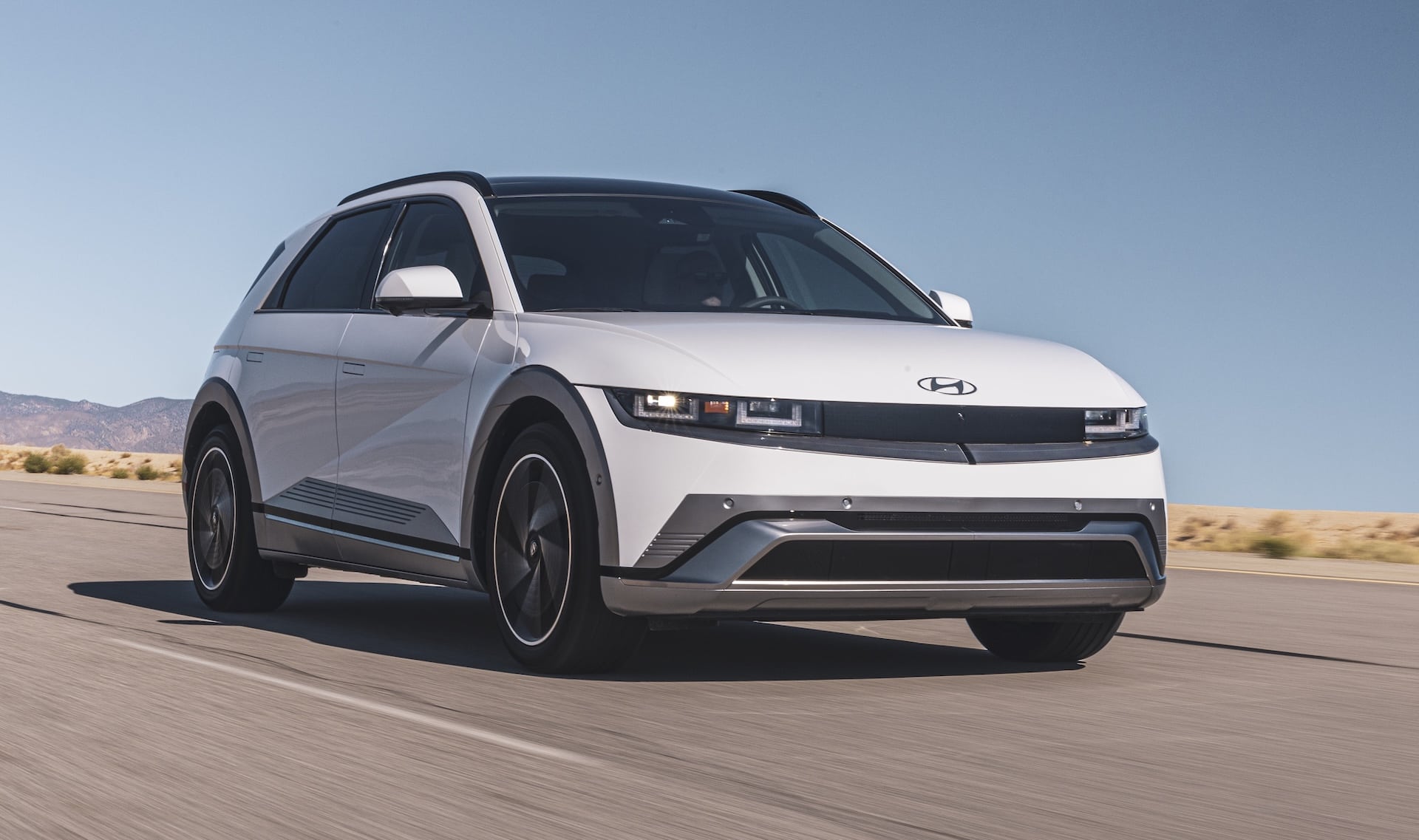
Hyundai Ioniq 5 (from €44,990*)
Electric approach on a dedicated architecture, aimed at users who want generous interior space, fast charging and a driving experience designed for travel. It suits those who make mixed journeys and value quick recharging at public points.
The best
Fast-charging system and interior ergonomics that make long trips easier without sacrificing comfort.
The less good
Weight and cost of versions with larger-capacity batteries; the price rises with desirable equipment.
Kia EV6 (from €48,490*)
EV with a dynamic approach and good technological integration, designed for those who prioritise balanced performance and contemporary styling. Suitable for drivers seeking an electric experience with agile response and reasonable range.
The best
Balance between performance and efficiency, with effective fast charging on the road.
The less good
Price of the top versions and consumption in sporty driving can reduce real-world range.
Toyota RAV4 Hybrid (from €39,500*)
Traditional hybrid SUV focused on efficiency and reliability, designed for mixed use and customers who prioritise fuel savings without depending on charging infrastructure. Ideal for families and users seeking low running costs.
The best
Moderate consumption in real use and an extensive service network in Spain.
The less good
Smaller electric capacity compared with PHEV or BEV; not the best choice if you frequently want fully electric driving.
Honda HR-V e:HEV (from €31,900*)
Modern hybrid options with a practical approach, aimed at urban drivers who need versatility and moderate running costs. A good choice for metropolitan areas and occasional intercity journeys.
The best
Compact, efficient and with dynamic tuning designed for everyday driving.
The less good
Cargo space and advanced equipment may be limited in entry-level versions.
Mazda CX-60 PHEV (from €47,500*)
PHEV combining refined driving with electric capacity for short journeys, designed for buyers who want saloon-level comfort in SUV format and useful electric range for everyday use.
The best
Superior finish and perceived quality in its category, with good driving feel.
The less good
Price and weight of the plug-in hybrid system; the battery limits cargo volume.
Purchase aid
The Plan Auto+ 2026 replaces the previous MOVES programmes and establishes a new system of direct aid for buying electrified vehicles in Spain. Its aim is to encourage fleet renewal and prioritise models with a greater national component in the value chain.
Main amounts of the Plan Auto+ 2026
- Direct aid of up to €4,500 for electric passenger cars.
- Up to €5,000 for light N1 category vans.
- Retroactive effect from 1 January 2026.
- Approximate budget allocation of €400 million.
Who can benefit and priority criteria
Beneficiaries: individuals, self-employed workers and companies. The EEE criterion (Electric, Economic and European) applies to prioritise purchases with greater added value in the EU. There is a greater incentive for pure electric vehicles (BEV) than for plug-in hybrids (PHEV). Vehicles priced below €35,000 receive higher aid; those priced between €35,000 and €45,000 qualify for reduced aid. An additional incentive is provided if the final assembly or the batteries come from the European Union.
Additional requirements and tax advantages
The Plan requires a mandatory minimum discount of €1,000 from the dealership on the transaction. In addition, a 15% deduction on income tax (IRPF) is provided, up to a maximum of €3,000. These tax advantages are valid until 31 December 2026.
Management and possible regional aid
Management is coordinated by the Ministry of Industry together with the Autonomous Communities. Additional regional programmes may exist; for example, the Plan Cambia 360 in the Community of Madrid. At the time of writing, it is not officially confirmed whether these regional aids are fully compatible with the Plan Auto+ 2026.
Common buying mistakes
Buying the cheapest version on impulse without assessing real usage needs: range or equipment may turn out to be insufficient.
Confusing WLTP range with real-world range under different weather or charging conditions from laboratory tests.
Not planning for the cost of public charging or for installing a home charging point when buying an electric car.
Ignoring the difference between battery warranty and vehicle warranty, and how they affect medium-term costs.
Not comparing the total cost of ownership (fuel/energy, maintenance, insurance and depreciation) across hybrid, plug-in and electric alternatives.
With the information on criteria, indicative prices and current aid, the buyer’s natural next step is to compare these models with analyses based on their own use and up-to-date rankings that consider equipment and final cost; this way they can clearly decide which Asian car best suits each need.
 Peugeot E-208 GTi: a battery-powered toy that revives the spirit of the 1980s sports cars
 New Lexus ES: luxury grows and goes electric
 First contact with the Dacia Sandero Hybrid 155: power and efficiency from €19,890
Deja un comentario