Why does the car vibrate when braking?
 Mónica Redondo @MonicaRedondoD
29 May 2019
3 min.
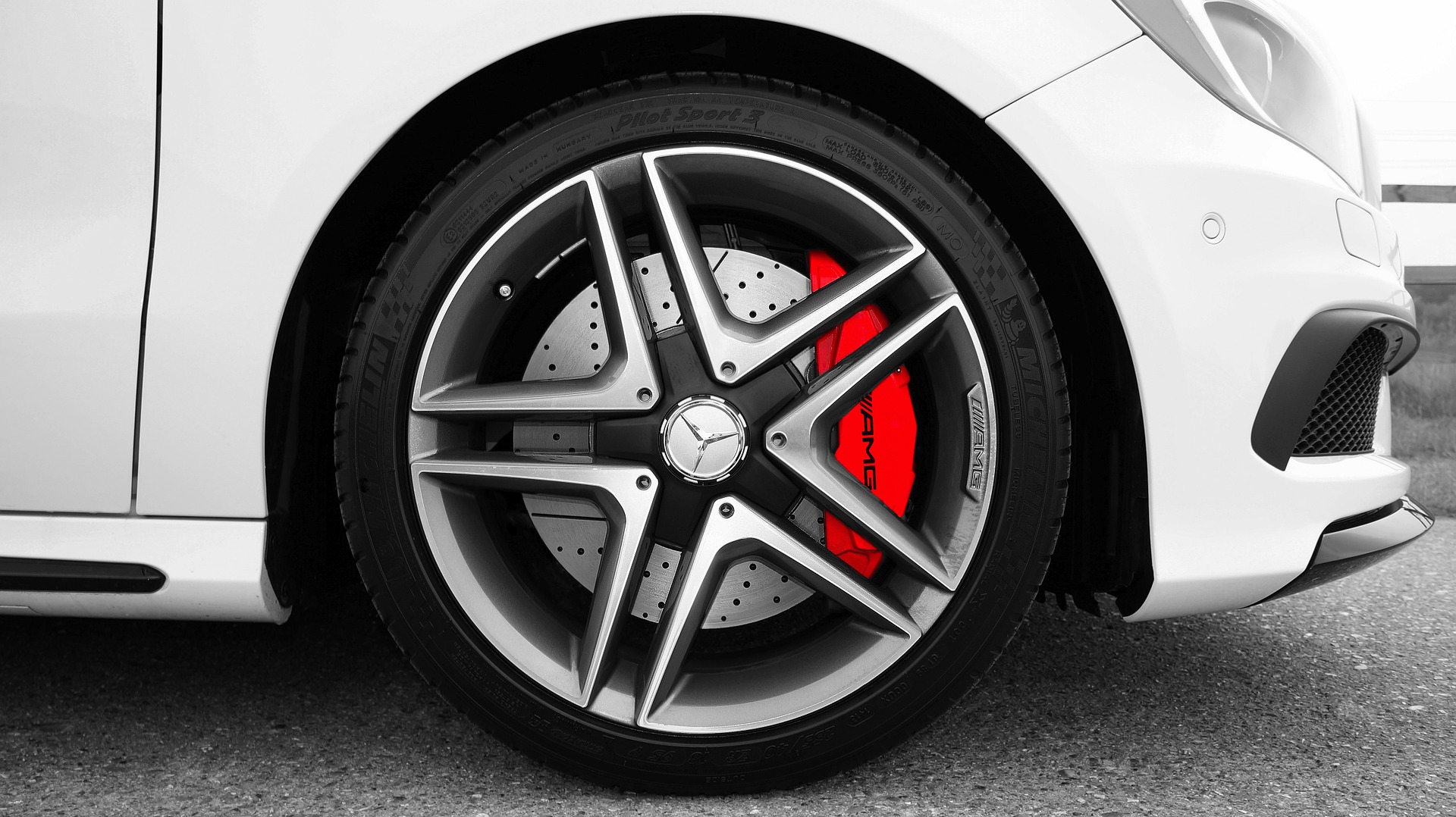
Vibrations when braking can have many causes. The most common ones are brake discs, bushings or bearings.
Why does the car vibrate when braking? Surely many drivers ask themselves this question every day, and these annoying vibrations are symptoms that the vehicle in question has some fault that may be in several parts of it.
Before making any decision, you must confirm that the vibrations only occur when the brake pedal is pressed, since if they occur while the vehicle is driving, the problem is probably caused by other parts. The causes that generate vibrations when braking are the following.
Vibrations when braking: brake discs
One of the most common parts that can cause vibrations when braking is the brake discs. These can ‘warp’ or buckle due to a sudden change in temperature. This usually happens when the braking system is subjected to intensive use, for example driving in traffic jams or driving with fear and not lifting the foot off the brake pedal.
Remember that the disc is the brake component that rotates. Braking occurs when the caliper brings the pad against its surface. If the disc deformation is quite noticeable, a loss of braking effectiveness may be noticed. To detect the fault, the first step is to remove a wheel to see whether the disc is bent or the pads are very worn.
If so, the most advisable thing is to replace the discs and pads with new ones.
Vibrations when braking: worn bushings
Worn bushings are also a reason for vibrations when braking, since this part is attached to the brake disc. Rust, hitting a curb or even poor installation can cause this part to suffer anomalies and not rotate correctly. If this part has deteriorated, the disc may also be damaged.
It is recommended to remove the rust or dirt, but if the problem persists, the best option will be to replace it. Keep in mind that both bushings on the axle must be replaced: right and left side.
Vibrations when braking: bearings
Defective bearings can also cause possible vibrations when braking, but they are quite difficult to detect since the fault does not appear constantly. Sometimes the bearing failure may appear when braking, but it may not be the cause.
Bear in mind that this fault is usually accompanied by a noise when the vehicle enters a bend or during hard braking. The solution is to fit new bearings; as with the bushings, both bearings on the axle must be replaced.
Vibrations when braking: other causes
Vibrations when braking may also be caused, though less likely, by driving with unbalanced tyres, wear of the ball joints, wear of the suspension mounts, bent rims or even worn shock absorbers.
To avoid these faults, it is recommended to carry out the appropriate maintenance at least once a year, and a special one before taking a long journey. Do not forget to take the car for its MOT inspection periodically.


 The seven finalists for the 2027 European Car of the Year (COTY) are exclusively electric
 Peugeot E-208 GTi: a battery-powered toy that revives the spirit of the 1980s sports cars
 New Lexus ES: luxury grows and goes electric
Deja un comentario