A390 Alpine Electric Cars Concepts
Alpine explains and showcases two innovations of its A390_β prototype
 David Lopez @espacionblanco
24 January 2025
3 min.
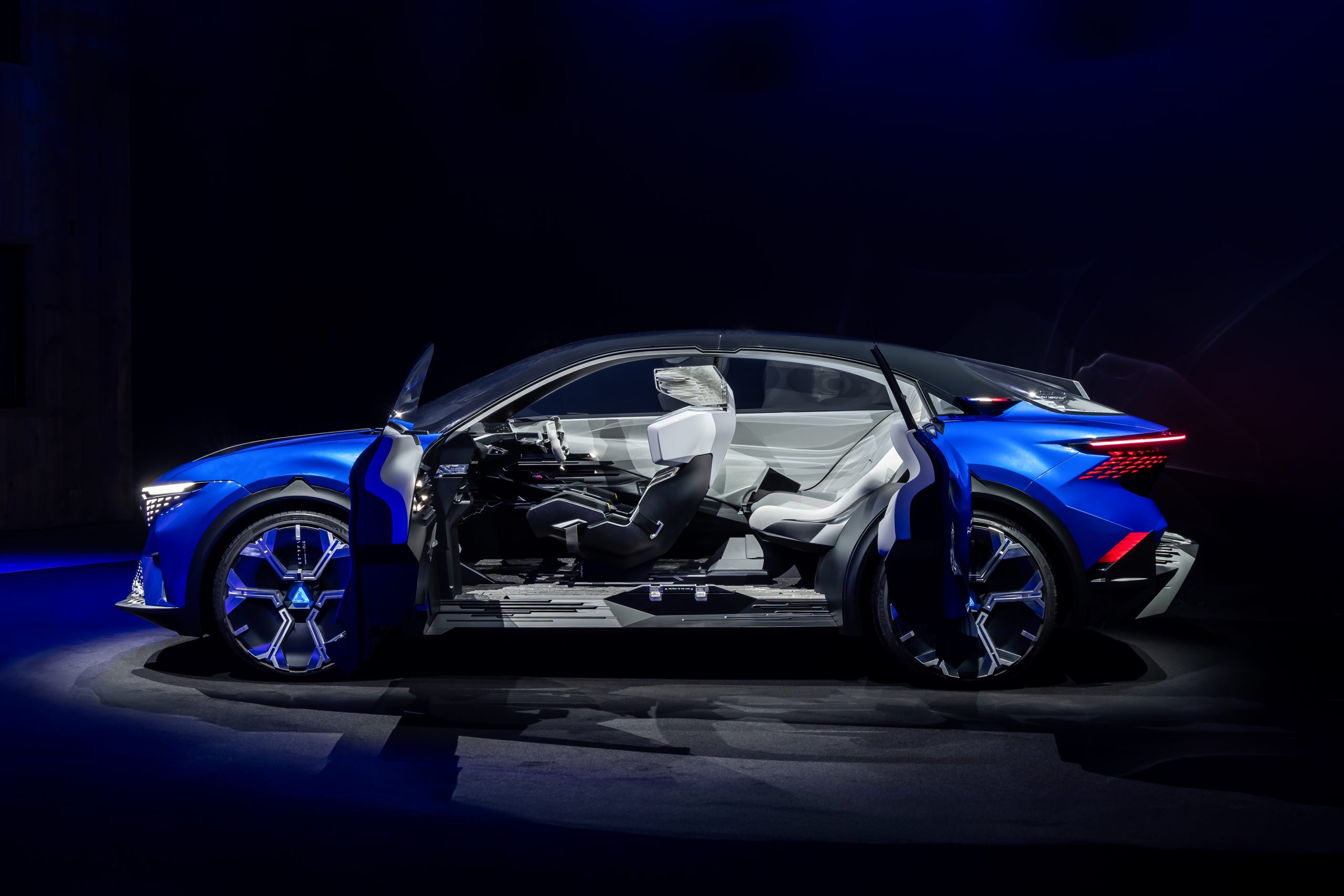
Alpine explains how two unique and exclusive design elements were created using sustainable materials featured on the A390_β prototype
When a brand brings a concept or show-car to a presentation, we tend to focus on the spectacular or eye-catching aspects of its exterior and interior design. However, on many occasions these vehicles also feature creative solutions, and sometimes surprising ones, regarding the use of materials that are tested and may eventually be used in the production version or in future models.
In this latter case, manufacturers usually partner with experienced brands that have a broad technological capacity for adapting and processing new materials, which in most cases must be strong and lightweight while also being environmentally friendly. This allows the partner brands to push their proposals to the limit, since it will not be a production vehicle, while the manufacturers test how those materials and designs might fit into future production models.
As you will surely know, Alpine presented the A390_β last October, a prototype with a futuristic design, especially in its interior, and which could be accessed with complete ease thanks to the “suicide doors” fitted to it. Alpine highlights that to create key elements of the A390_β it partnered with two renowned French brands, Erpro Group and Lavoisier Composites, with the former responsible for the headrests and various 3D prints and the latter for something as important as the floor.
The interior of the Alpine A390_β is undoubtedly truly spectacular, and as the brand itself said at the time, it was inspired in some way by the cockpit of a Formula 1 car, especially the steering wheel and the front seats, which really look taken from a Formula 1 car except for one truly striking piece: the headrest, made from a single piece with a transparent effect that even looks like ice.
This is one of the pieces created by Erpro Group and was made through 3D printing with a bio-based elastomer, Pebax Rnew from Arkema, produced partly from castor seeds. Several samples were created until the ideal thickness was achieved, one that looked lightweight while retaining the strength and flexibility needed in the event of an impact. Creating this piece alone required numerous meetings and three weeks of full-time work.
Lavoisier Composites, for its part, is a start-up specialised in developing and manufacturing composite parts of ecological origin, which it achieves through processes such as compression moulding that allow the use of materials with a high carbon fibre content to obtain very specific geometries. The work of this company was to give the A390_β’s floor the importance it deserved, with a mineral aesthetic designed by Alpine, so that it is built from a multitude of triangular-section elements whose faces reveal the depth of the carbon and the sheen of the silicon. This work demonstrates specialisation in material reuse, making it possible to manufacture structural parts with a low environmental impact.
Technical specifications of this car


 Peugeot E-208 GTi: a battery-powered toy that revives the spirit of the 1980s sports cars
 New Lexus ES: luxury grows and goes electric
 First contact with the Dacia Sandero Hybrid 155: power and efficiency from €19,890
Deja un comentario