Chinese manufacturers are now going after the supercar market
 Javier Cantagalli
5 August 2024
4 min.
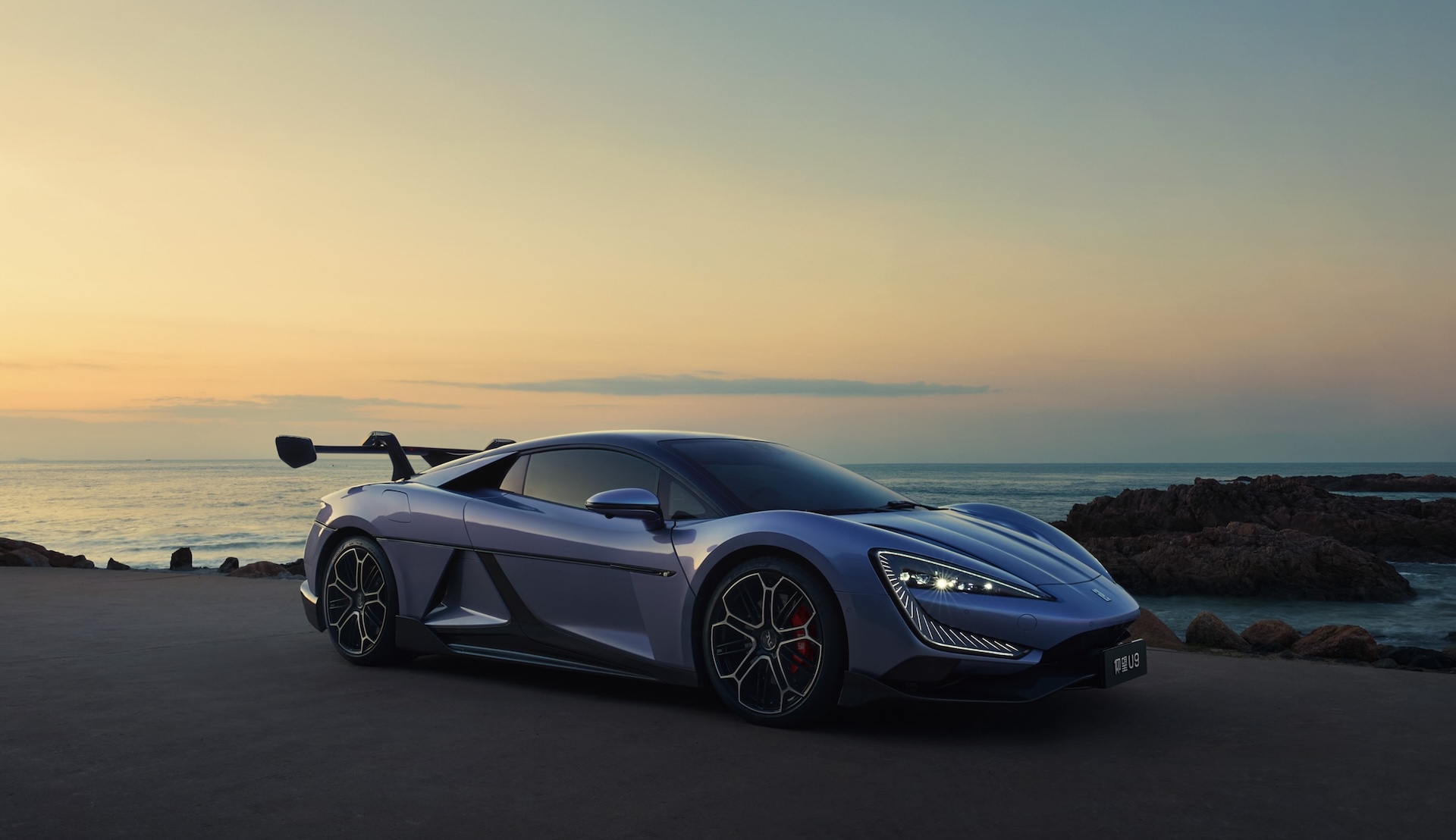
The automotive industry has changed a great deal in recent years with the emergence of Chinese manufacturers, which already offer models capable of competing head-to-head with Western brands in almost every market segment. Two of them seemed, however, that they might perhaps remain outside the Chinese threat: the high-luxury vehicles and supercars. Nothing could be further from the truth.
Two new electric supercars have begun rolling off production lines, marking an important milestone for the Chinese automotive industry, which is now also set to take on renowned European manufacturers. On the one hand, the Yangwang U9, a model that has generated great anticipation, has started production, with first deliveries to customers in China scheduled for late August. On the other hand, the Hyper SSR, under the Hyptec sub-brand, has also begun to be manufactured with the aim of conquering international markets.
The Yangwang U9 is a fully electric supercar that stands out for its impressive performance. Equipped with four electric motors, each with a power output of 240 kW, the vehicle achieves a combined total power of 960 kW, which allows it to accelerate from 0 to 100 km/h in just 2.36 seconds and reach a top speed of 309 km/h. With these performance figures, this Chinese supercar ranks as one of the fastest electric vehicles in its category.
One of the most notable innovations of the Yangwang U9 is its fast-charging system. The vehicle incorporates a Blade-type battery pack with a capacity of 80 kWh, which offers a range of up to 450 kilometres under the rather generous Chinese CLTC homologation cycle. A figure that may seem low—and indeed it is—but which must be understood in context.
With a battery pack of limited capacity like this one, the Yangwang U9 manages to reduce its weight and therefore increase its performance. But what really makes the difference is its ability to charge with two cables simultaneously, allowing the battery charge to rise from 30 to 80 percent in just ten minutes, thus supporting charging peaks of up to 500 kW.
As for its design, as can be seen in the images, the Yangwang U9 features an aerodynamic and sporty aesthetic. It measures 4.97 metres long, 2.03 metres wide and just 1.29 metres high, with a wheelbase of 2.90 metres. Although it shares certain design elements with the Yangwang U7 saloon, the differences in the bodywork are notable, which reinforces its distinctive character as a supercar.
Chinese supercars are beginning to leave their domestic market
Additionally, production of the Hyper SSR has also begun under the Hyptec sub-brand, previously known as Hyper. This model is aimed at international markets, and the first units are expected to be delivered at the end of this month in some countries of Southeast Asia, the Middle East, South America and Europe.
The Hyper SSR stands out for its avant-garde design with gull-wing doors and a three-electric-motor configuration that generates a total power of 900 kW. The vehicle measures 4,583 mm long, 1,988 mm wide and 1,238 mm high, with a wheelbase of 2,650 mm. Its NMC battery has a capacity of 74.7 kWh, which provides a range of up to 506 kilometres under the CLTC cycle. In its most advanced version, the Hyper SSR can accelerate from 0 to 100 km/h in just 1.9 seconds and reaches a top speed of 251 km/h. All this with a kerb weight of close to 2 tonnes.
Although the exact differences between the domestic-market version and the export version have not been detailed, the Hyper SSR is shaping up as a solid contender in the global electric supercar market, one that will surely attract the attention of many of the regular customers of the major European manufacturers of this type of vehicle.


 Peugeot E-208 GTi: a battery-powered toy that revives the spirit of the 1980s sports cars
 New Lexus ES: luxury grows and goes electric
 First contact with the Dacia Sandero Hybrid 155: power and efficiency from €19,890
Deja un comentario