Classic Cars: Mercedes-Benz 190 E 2.5 16
 Fernando Alvarez
21 October 2012
3 min.
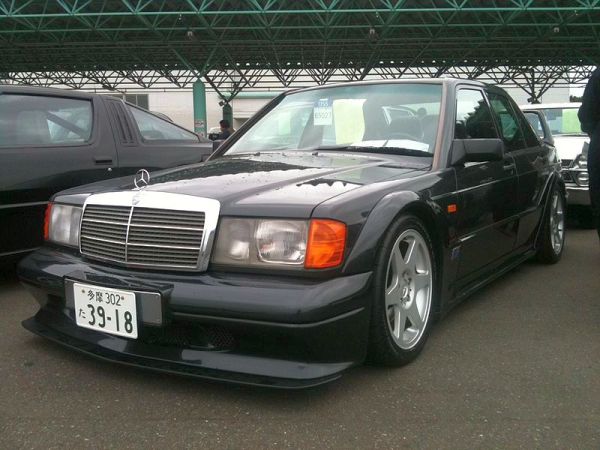
the Mercedes-Benz 190 E 2.5 was one of the most representative models from the early days of AMG as an associated tuner and a worthy rival to the first BMW M3s.
The case of the Mercedes-Benz 190 E 2.5 16, like the 190 E 2.5 Evolution or the version with the 2.3-litre engine, is the same as that of the first examples of the BMW M3; both models have won over a legion of true enthusiasts, who value them even more than the newer models in their respective series. Personally, this model is one of my all-time favourites from the house of the star.
Now let’s look at how this Mercedes came to be. The origin of the 190 E 2.5 comes from the model with the 2.3-litre engine, for the simple reason that Mercedes presented an evolution of the previous one. Following this, the Evolution model was intended to homologate 500 vehicles for Group B of the German touring car championship.
Although Mercedes had plenty of six-cylinder engines, it continued developing the four-cylinder engine for its sports models; these engines could afford to have a larger displacement per cylinder and greater torque than the engines of their six-cylinder siblings. Compared with the 2.3, though, improvements had arrived; for example, longer connecting rods and a lighter flywheel, which made it easier for the engine to rev up. We cannot fail to mention the cylinder head made by Cosworth, which gave the 190 E 2.5 16 more than 81 CV/litre.
The 190 E 2.5 16 reached a top speed of 240 km/h according to the manufacturer, with acceleration that was not as good as that of some other sports cars of the time.
The 16-valve models had their own styling, aided by body kits, achieving a drag coefficient of just 0.32, very good for a saloon. Inside, a five-speed Getrag gearbox was fitted (with first gear to the left and down), coupled to a limited-slip differential and one of the first yaw control systems on each rear wheel.
The suspension had to be prepared to cope comfortably with a track, so a new anti-roll bar and firmer suspension were adopted, together with a hydraulic system that levelled the suspension even when the car was loaded.
After its obligatory stint by Mercedes in the DTM, BMW was preparing to present its evolution of the M3, to which Mercedes responded with the 190 E 2.5 Evolution, in 1989. A gigantic rear spoiler (which has never been proven to be truly effective) was the model’s main feature; a year later the Evolution II appeared, with an even more spectacular bodykit.
In the final months of production of the 190 E 2.5 AMG, the engine’s power was increased, reaching 260 horsepower. The impressive 3.2-litre AMG 190 E (the first model sold in partnership with Daimler) reached 260 km/h, making it the fastest saloon in the world at the time.
Source | Wikipedia, Piel de toro

 The seven finalists for the 2027 European Car of the Year (COTY) are exclusively electric
 Peugeot E-208 GTi: a battery-powered toy that revives the spirit of the 1980s sports cars
 New Lexus ES: luxury grows and goes electric
Deja un comentario