Ë-Berlingo Berlingo Citroen E-Transit Ford Partner Peugeot Transit Electric Cars Furgonetas Buying Guides
How to Choose an Electric Van for Urban Delivery in 2026: Real-World Range, Fast Charging and Load Volume
 Iván Navarro
28 November 2026
7 min.

A practical guide for self-employed drivers and fleet managers looking for the best 2026 electric van for last-mile delivery, with real-world range data, DC charging and load volume in m³.
Buying an electric van for urban delivery in 2026 is no longer a gamble for early adopters. For a good share of SMEs and self-employed drivers working in low-emission zones, it is the option that makes the most economic sense. But the Spanish market offers so many combinations of battery, charging power and volume that choosing without clear criteria ends up costing money. Here are the data that really matter, without filler.
What “real-world range” means in an electric van for urban delivery
The WLTP figure serves as a reference, but in urban delivery real-world range varies considerably: constant stops, cold starts, the climate control running for eight hours and variable load in the cargo area. In the city, with smooth traffic and moderate temperatures, it is usual to lose between 10% and 20% compared with the homologated figure. With a full load and adverse weather, that margin can grow to 30%.
For last-mile delivery—parcels, courier services, local retail distribution—there is no need to chase 400 km. Most daily routes of an urban courier do not exceed 120-150 km. What is critical is that the van can cover that distance with a safety margin in winter, without depending on a midday recharge.
Fast charging: the DC power that makes the difference over the working day
Here is, in our view, the criterion most underestimated when comparing models. A van with 50 kW DC charging needs almost twice as long as one with 100 kW to recover the same percentage of battery. And in urban logistics that time is paid for in productivity: a 45-minute midday stop instead of 20 can mean one route fewer per day.
The reasonable standard in 2026 is to require at least 80 kW in direct current. Below that, the van works well for short routes with overnight recharging at base, but not for intensive operations with several shifts.
Load volume and MAM: the figure that decides whether the goods fit
Load volume in m³ and the maximum authorised mass (MAM) are the two numbers that most condition the purchase, even above range. A compact van with 3.3 m³ serves light parcel delivery and short routes; for palletised goods or bulky loads, you need to move up to the mid-size category, with 5-6 m³ and a MAM above 3,000 kg.
It is also advisable to check the real payload, not just the gross volume: the battery adds weight, and in some electric versions the payload capacity falls compared with the equivalent diesel variant. It is a nuance that many fleet managers discover too late.
ZBE, Plan Auto+ and TCO: the regulatory and economic context that weighs on the decision
Low Emission Zones now cover practically all Spanish municipalities with more than 50,000 inhabitants, and unrestricted access is, for many couriers, the decisive argument for electrifying the fleet. Added to this is the Plan Auto+, the current public aid for buying low-emission vehicles, whose amount should always be checked on the official website because it varies by autonomous community and type of applicant.
The TCO (total cost of ownership) of an electric van usually pays off from 25,000-30,000 km per year, thanks to lower maintenance costs and an energy cost per kilometre considerably below that of diesel. For fleets with shorter routes, the equation is tighter and it is worth running the numbers before signing. Anyone who wants to compare directly against the combustion alternative can consult our ranking of diesel mid-size vans to check entry prices.

Renault Kangoo E-Tech Electric — from €37,765
The benchmark compact option for light parcel delivery in the city. With 301 km homologated it offers enough margin to cover urban working days without worry.
| Power kW | Power CV | Range | Consumption | Label | Fuel |
|---|---|---|---|---|---|
| 90 kW | 122 CV | 301 km (WLTP) | 18.4 kWh/100 km | ZERO | Electric |

Peugeot e-Partner — from €33,638
The most affordable list price in the comparison and DC charging up to 100 kW, an important step up from earlier generations of the compact segment.
| Power kW | Power CV | Range | Consumption | Label | Fuel |
|---|---|---|---|---|---|
| 100 kW | 136 CV | 336 km (WLTP) | 18.5 kWh/100 km | ZERO | Electric |

Citroën ë-Berlingo — from €34,329
Platform sibling of the e-Partner, with identical performance and a 336 km WLTP range at a very similar entry price.
| Power kW | Power CV | Range | Consumption | Label | Fuel |
|---|---|---|---|---|---|
| 100 kW | 136 CV | 336 km (WLTP) | 18.5 kWh/100 km | ZERO | Electric |
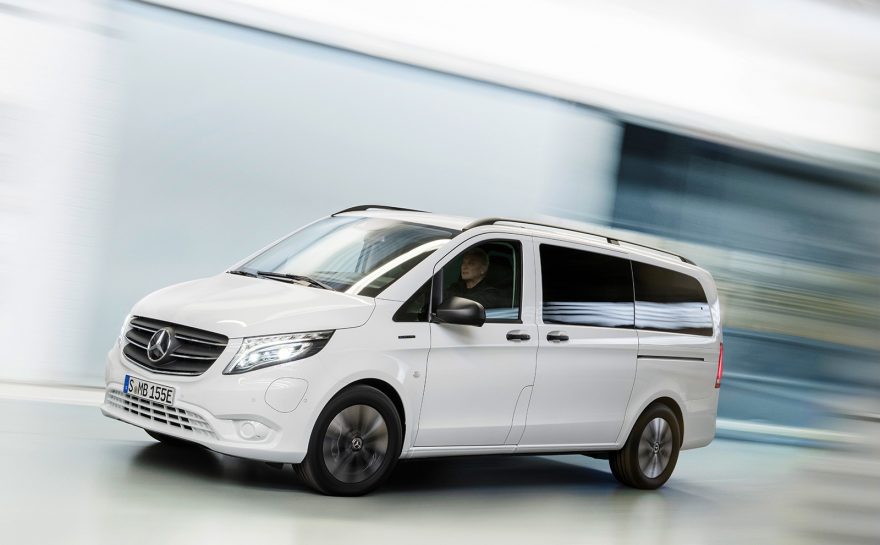
Mercedes-Benz eVito Van — from €61,800
For those who need more volume and heavy-duty robustness, backed by the star’s service network. Its starting price is the highest in the group.
| Power kW | Power CV | Range | Label | Fuel |
|---|---|---|---|---|
| 85 kW | 116 CV | 305 km (WLTP) | ZERO | Electric |
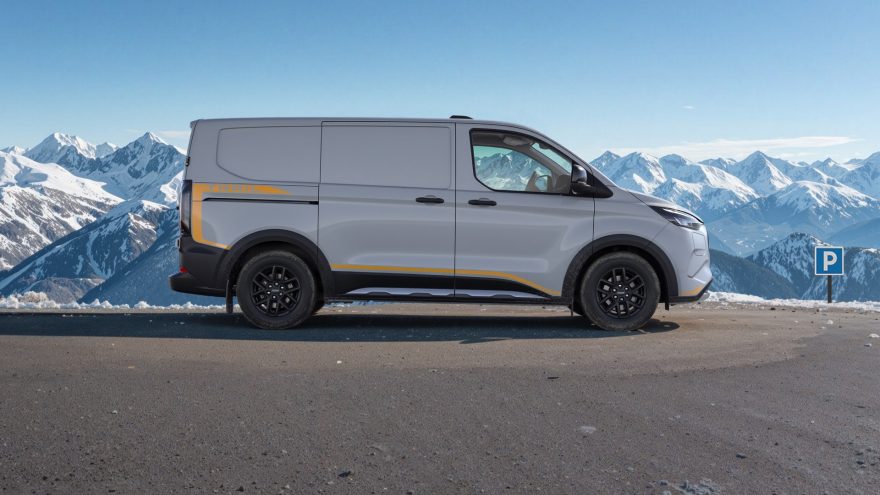
Ford E-Transit Custom — from €54,155
Probably the most balanced proposal in the mid-size group: 125 kW DC charging, a comfortable range of up to 350 km and competitive load volume.
| Power kW | Power CV | Range | Label | Fuel |
|---|---|---|---|---|
| 160 kW | 218 CV | 350 km (WLTP) | ZERO | Electric |

Maxus eDeliver 3 — from €44,339
A compact alternative with a load volume that surprises for its class, and which usually comes with aggressive sales campaigns against its official price.
| Power kW | Power CV | Range | Label | Fuel |
|---|---|---|---|---|
| 118 kW | 160 CV | 269 km (WLTP) | ZERO | Electric |
2026 comparison: score by urban delivery criterion
| Model | Real-world range | Fast charging | Load volume | Price/TCO | Overall score |
|---|---|---|---|---|---|
| Renault Kangoo E-Tech Electric | 7 | 6 | 6 | 7 | 6.5 |
| Peugeot e-Partner | 8 | 8 | 6 | 8.5 | 7.6 |
| Citroën ë-Berlingo | 8 | 8 | 6 | 8.3 | 7.6 |
| Mercedes-Benz eVito | 7 | 6 | 8.5 | 4.5 | 6.5 |
| Ford E-Transit Custom | 8.5 | 9 | 8 | 6 | 7.9 |
| Maxus eDeliver 3 | 6.5 | 5.5 | 8 | 6.5 | 6.6 |
Actionable selection criteria for self-employed drivers and fleets
Before signing, it is worth going through this order of priorities:
- Real daily route§h375;, not the catalogue range: measure average kilometres over two weeks before deciding battery size.
- Minimum DC charging power of 80 kW if the van works several shifts a day.
- Load volume matched to the product, not the maximum available — paying for m³ that are never used raises the TCO unnecessarily.
- MAM and payload with the battery installed, a figure that some sales brochures gloss over.
- Access to ZBE and Plan Auto+ aid in force in your autonomous community, which can shift the decision by several thousand euros.
It is not a universal panacea either: if operations require more than 300 km a day without long stops, the electric van is still not the most convenient solution. For everything else, in 2026 it already competes head to head with diesel.
Frequently asked questions
What is the best 2026 electric van for urban delivery in Spain?
For most last-mile operations in the mid-size segment, the Ford E-Transit Custom offers the best balance between fast charging (125 kW), real-world range and load volume. If budget is the priority in the compact segment, the Peugeot e-Partner and Citroën ë-Berlingo are the most competitive entry options by official list price.
What real-world range do I need for city delivery?
With routes of 100-150 km a day, which is typical in urban parcel delivery, a van homologated between 270 and 330 km WLTP is enough, leaving a margin for winter.
Does the TCO of an electric van pay off compared with a diesel?
From 25,000-30,000 km/year the total cost of ownership usually favours the electric van, especially in cities with an active ZBE, where unrestricted access has direct economic value.
What DC charging power is enough to avoid losing operating time?
A minimum of 80 kW lets you recover a good part of the battery during the midday break. Above 100-125 kW, as in the Stellantis models or the Ford E-Transit Custom, the stop time is reduced noticeably.
Technical specifications of the cars in this article

 Kia offers an electric range of 10 models, 50 versions and 400 possible combinations
 The seven finalists for the 2027 European Car of the Year (COTY) are exclusively electric
 Peugeot E-208 GTi: a battery-powered toy that revives the spirit of the 1980s sports cars
Deja un comentario