Citroen Ducato Fiat Ford Jumper Master Mercedes Renault Sprinter Tipo Transit Furgonetas Buying Guides Rankings
Ranking 2026: the 6 large diesel vans with the greatest cargo volume for logistics companies
 Iván Navarro
28 November 2026
7 min.
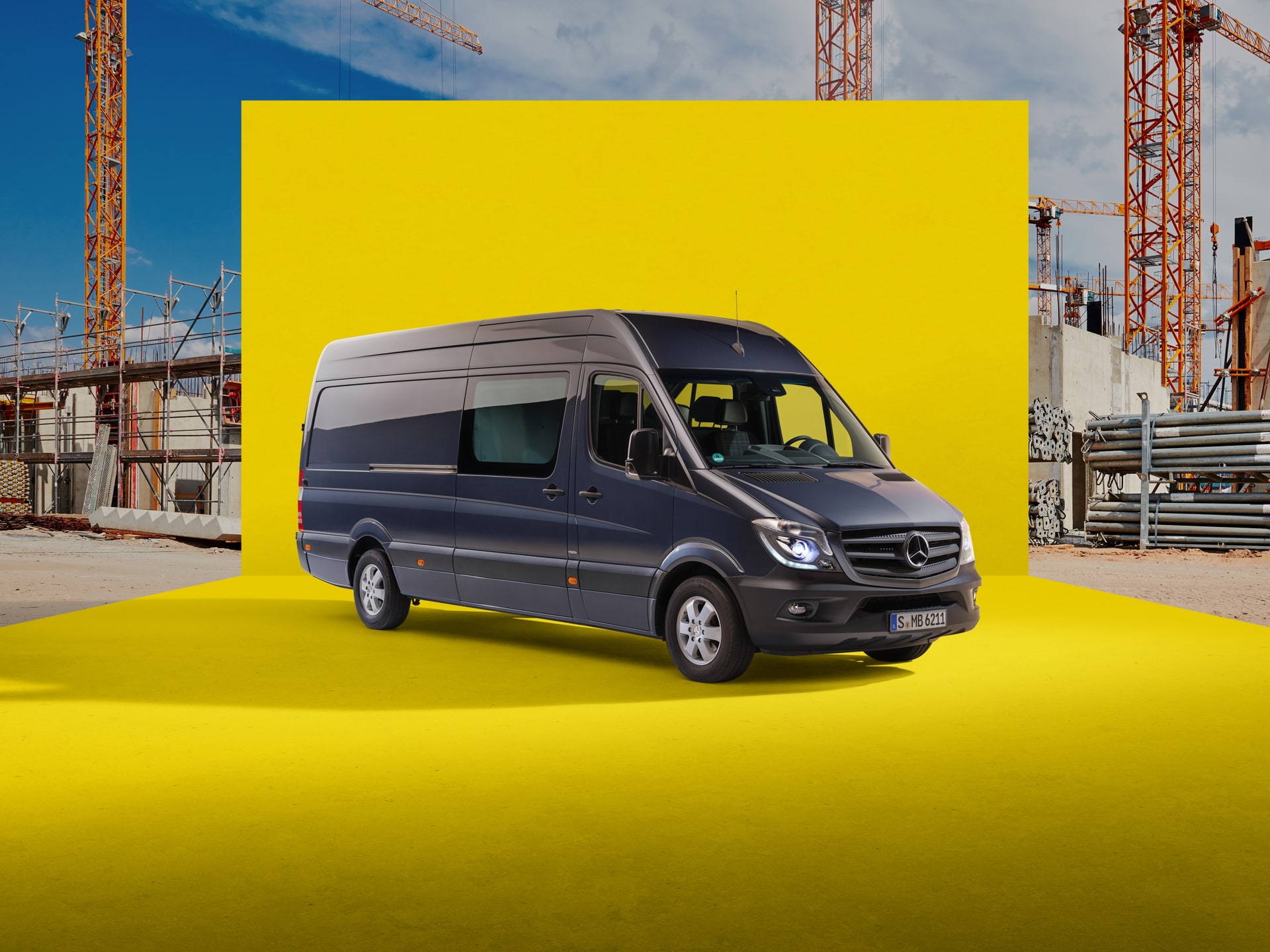
A parcel delivery fleet manager does not buy a van for the design of the dashboard. They buy cubic metres. They buy payload that doesn’t penalise the driving licence of the courier. And in 2026, with the Low Emission Zones already consolidated in Spain’s major cities, they also buy a diesel engine that still has access to interurban routes without restrictions or extra urban logistics charges. That triangle —volume, payload and regulatory access— is what defines this ranking.
What logistics companies look for in a large diesel van in 2026
The paradox is clear: while the official discourse pushes towards the electric van, the operational reality of a medium-distance transport company still favours diesel. Ranges of 600-700 km without stopping, refuelling in five minutes and a cost per kilometre that the large electric van still can’t match on long routes. For fleets chaining Madrid-Valencia-Barcelona in the same day, the calculation leaves little room for debate.
How we prepared this ranking
We have selected specific versions —not entire ranges— prioritising L4H3 or equivalent configurations, with cargo volume equal to or greater than 14 m³. The power, WLTP consumption and payload data correspond to the highest-volume diesel version available for each model in the Spanish market. Where the manufacturer does not publish a specific figure, we have preferred to omit it rather than estimate it.
Ranking 2026: the 6 large diesel vans with the greatest cargo volume
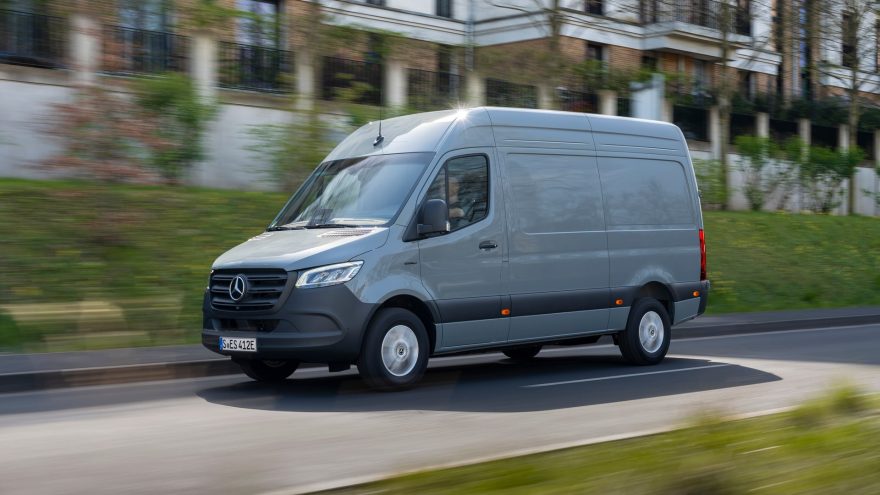
1. Mercedes-Benz Sprinter — from €45,900
The Sprinter remains the benchmark of the premium large van segment, and in its L4H3 configuration it offers one of the highest volumes on the market. It is not the cheapest on this list —far from it— but its bolted body, its soundproofing and its behaviour on motorway when fully loaded justify much of the price difference compared with Renault or Fiat.
| Model | Power (CV) | Power (kW) | Cargo volume | WLTP consumption | Label | Fuel |
|---|---|---|---|---|---|---|
| Mercedes-Benz Sprinter L4H3 | 170 CV | 125 kW | 17 m³ | 9.4 l/100 km | C | Diesel |
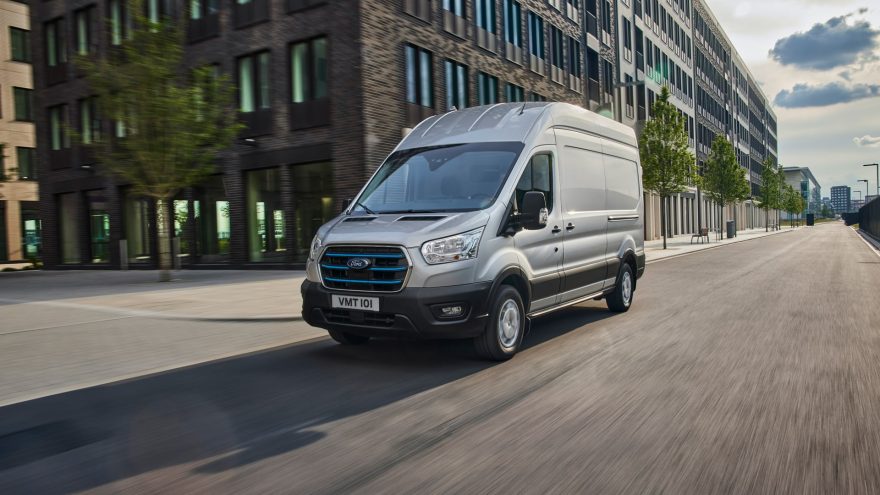
2. Ford Transit — from €42,300
The Transit has for decades been the van chosen by fleets that don’t want surprises. In its L4H3 version it sits slightly below the Sprinter in volume, but it compensates with a somewhat more restrained consumption and a network of workshops that, for a company with vehicles running twelve hours a day, weighs as much as the cargo figure itself.
| Model | Power (CV) | Power (kW) | Cargo volume | WLTP consumption | Fuel |
|---|---|---|---|---|---|
| Ford Transit L4H3 | 170 CV | 125 kW | 15.1 m³ | 9.0 l/100 km | Diesel |

3. Renault Master — from €40,100
The French Master has for years been the reference option for companies that measure the euro per cubic metre transported. In its high-volume variant it reaches 17 m³, matching the Sprinter, but at a noticeably lower entry price. The interior finish does feel more industrial, less refined than that of its German rival.
| Model | Power (CV) | Power (kW) | Cargo volume | WLTP consumption | Fuel |
|---|---|---|---|---|---|
| Renault Master L4H3 | 150 CV | 110 kW | 17 m³ | 8.8 l/100 km | Diesel |

4. Iveco Daily — from €44,500
The Daily plays in a different league when we talk about pure volume. Its long-chassis configurations allow it to exceed 19 m³ in certain bodies, something none of the others match. The nuance: its handling in the city is cruder, and it is not the van a city parcel company would choose. For long-distance routes with bulky cargo, however, it is hard to beat.
| Model | Power (CV) | Power (kW) | Cargo volume | Fuel |
|---|---|---|---|---|
| Iveco Daily high volume | 156 CV | 115 kW | 19.6 m³ | Diesel |
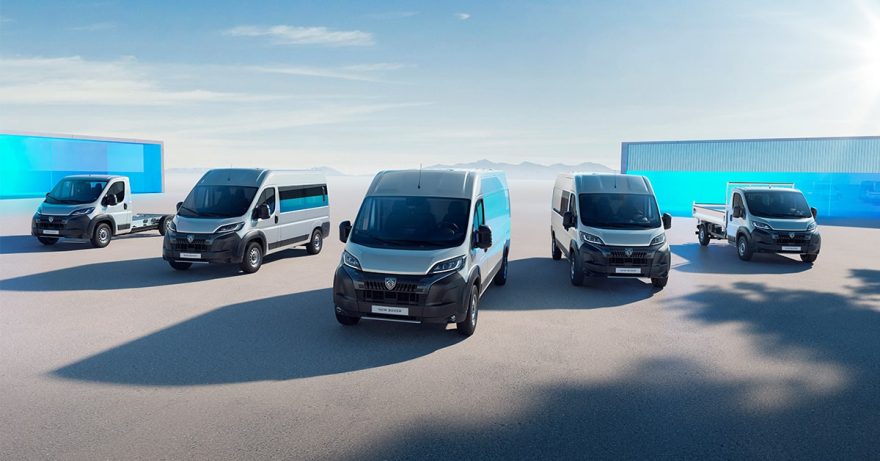
5. Peugeot Boxer — from €38,900
The Boxer shares its platform with the Fiat Ducato and the Citroën Jumper, but its commercial positioning in Spain keeps its entry price competitive against the Sprinter or the Transit. In its L4H3 version it reaches 17 m³, with a payload that makes it very attractive for last-mile distribution fleets with an intermediate stop at a regional warehouse.
| Model | Power (CV) | Power (kW) | Cargo volume | WLTP consumption | Fuel |
|---|---|---|---|---|---|
| Peugeot Boxer L4H3 | 140 CV | 103 kW | 17 m³ | 8.9 l/100 km | Diesel |

6. Fiat Ducato — from €37,800
Closing the list is the Ducato, the most affordable of the six and, for many transport SMEs, the only one that fits the budget without giving up the maximum capacity of its category. Its 17 m³ in the L4H3 configuration match the Boxer and the Sprinter at a more restrained access price, although its payload sits somewhat behind that of the French model with an identical mechanical configuration.
| Model | Power (CV) | Power (kW) | Cargo volume | Fuel |
|---|---|---|---|---|
| Fiat Ducato L4H3 | 140 CV | 103 kW | 17 m³ | Diesel |
Summary table of the ranking
| Model | Cargo volume | Power | Price from | Score |
|---|---|---|---|---|
| Iveco Daily | 19.6 m³ | 156 CV | €44,500 | 9.2 |
| Mercedes-Benz Sprinter | 17 m³ | 170 CV | €45,900 | 9.0 |
| Renault Master | 17 m³ | 150 CV | €40,100 | 8.8 |
| Peugeot Boxer | 17 m³ | 140 CV | €38,900 | 8.6 |
| Fiat Ducato | 17 m³ | 140 CV | €37,800 | 8.4 |
| Ford Transit | 15.1 m³ | 170 CV | €42,300 | 8.0 |
Diesel vs electric on long routes: why logistics has not yet switched to zero emissions
Large electric vans exist and gain ground every year in urban delivery, as we saw when analysing the electric SUVs with the best range-price balance on the Spanish market. But in a large van, with loads of up to 1,500 kg and routes of 400 km a day, real-world electric range still does not close the circle without recharging stops that no fleet manager wants to put on their route sheet.
LEZ and diesel vans: what needs to be clear
The C label still allows circulation in most Spanish Low Emission Zones, with occasional restrictions on high-pollution days. For a company with a recent diesel fleet —Euro 6e like those in this ranking— the practical impact in 2026 is limited, although it is worth checking ordinance by ordinance, because Madrid, Barcelona and Valencia do not apply exactly the same rules.
Which to choose depending on the type of operation
If the business is last-mile parcel delivery with many stops, the Boxer or the Ducato cover it amply at a lower acquisition cost. If the operation demands maximum volume per trip on long routes, the Daily has no real rival on this list. And if what is sought is proven durability over ten years of intensive use, the Sprinter still sets the standard, although you have to pay for it.
Frequently asked questions
Which is the diesel van with the greatest cargo volume available in Spain in 2026?
The Iveco Daily in its high-volume configuration, with up to 19.6 m³, leads this ranking ahead of the Mercedes-Benz Sprinter, Renault Master, Peugeot Boxer and Fiat Ducato, all tied at 17 m³ in their L4H3 versions.
Can diesel vans circulate in Low Emission Zones in 2026?
Yes, provided they have the C environmental label (Euro 6), as is the case with all the models in this ranking. Some municipal ordinances apply occasional restrictions during high-pollution episodes.
Is a diesel or electric van more cost-effective for long-distance logistics?
For routes over 300-400 km a day with heavy loads, diesel still offers a lower total operating cost due to the absence of recharging stops and faster refuelling.
Are there public subsidies to renew a diesel van fleet with more efficient models?
The state programmes in force in 2026, such as the Plan Auto+, subsidise exclusively the purchase of commercial vehicles with the CERO environmental label (electric or hydrogen), so diesel vans with a C label fall outside these direct purchase subsidies.
Technical specifications of the cars in this article
 Kia offers an electric range of 10 models, 50 versions and 400 possible combinations
 The seven finalists for the 2027 European Car of the Year (COTY) are exclusively electric
 Peugeot E-208 GTi: a battery-powered toy that revives the spirit of the 1980s sports cars
Deja un comentario