Ateca Cupra SEAT Terramar Volvo XC40 Hybrid Cars Comparisons Tests SUV
Cupra Terramar e-Hybrid vs. Volvo XC40 Recharge: two plug-in SUVs with premium character at a contained price
 Iván Navarro
24 October 2026
6 min.
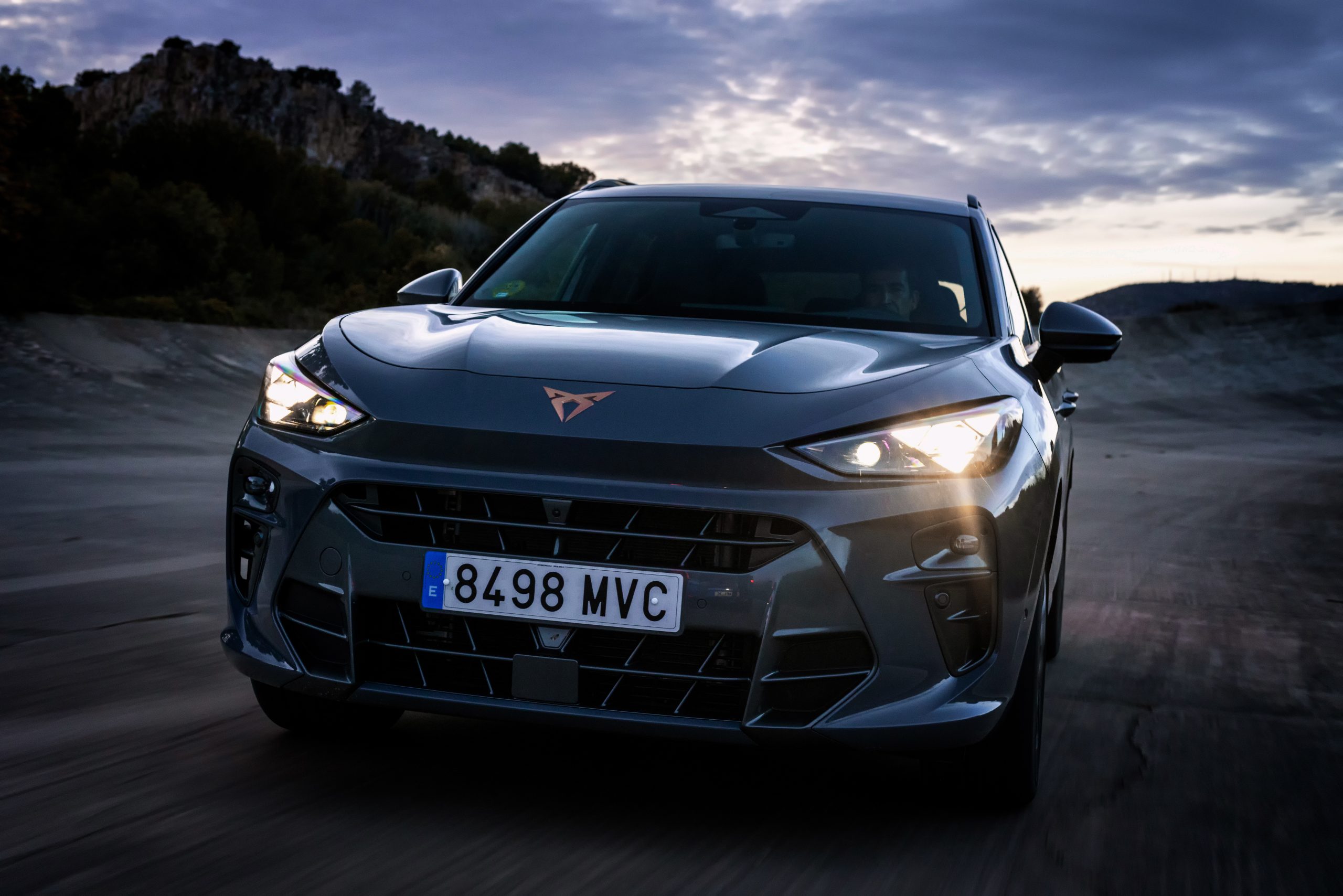
We compare the new Cupra Terramar e-Hybrid with the Volvo XC40 Recharge plug-in hybrid: two plug-in hybrid compact SUVs fighting for the same ground with opposing philosophies.
The plug-in hybrid compact SUV segment has become one of the hottest in the Spanish market. Brands with a premium aspiration but contained prices are competing for a demanding customer: someone who wants the DGT ZERO label, to run daily errands on electric power, and to have a combustion engine for long journeys without giving up a well-finished interior. In that fight, two names draw the most attention today: the newcomer Cupra Terramar e-Hybrid and the well-established Volvo XC40 Recharge plug-in hybrid. Opposing philosophies, similar goals.
Why pit the Cupra Terramar e-Hybrid against the Volvo XC40 Recharge
Both play in the league of plug-in compact SUVs with a recommended retail price below the psychological 50,000-euro threshold in their entry versions. Both promise enough electric range to forget about the petrol station for weeks if use is urban, and both offer an interior finish that looks straight at brands charging considerably more. The difference lies in the character: the Cupra presents it as a sporty SUV from the Volkswagen group on the MQB Evo platform; the Volvo, faithful to its Scandinavian DNA, prioritises comfort, safety and minimalism.
Cupra Terramar e-Hybrid from ~45,000 € (204 CV version)
The Terramar is the first compact SUV of its own for Cupra (the Ateca shared its base with SEAT) and is built at the Audi factory in Győr, which already says something about its finish level. The e-Hybrid variant combines a 1.5 TSI with an electric motor powered by a 19.7 kWh net battery, a notably high figure for the segment. This allows it to homologate around 118 km of WLTP electric range (up to 123 km in the 204 CV version), with DC fast charging of up to 50 kW — still uncommon in a PHEV.
The tuning is what one would expect from a Cupra: direct steering, firm suspension, a Cupra mode with aggressive throttle response, and a design featuring the triangular light signature and copper details that already identify the brand. Inside, enveloping seats, a 12.9-inch central screen and upholstered materials that border on premium.
| Power kW | Power CV | Top speed | Electric range | Consumption | Label | Fuel |
|---|---|---|---|---|---|---|
| 200 kW | 272 CV | ~215 km/h | ~118 km WLTP | ~0.4-1.6 L/100 km WLTP | ZERO | PHEV |
Volvo XC40 Recharge plug-in hybrid from ~46,500 €
The XC40 has for years been one of the best-selling premium compact SUVs in Europe, and the T5 Recharge plug-in version (now sold in Spain as the Recharge plug-in hybrid) is one of its most in-demand configurations. It combines a 1.5 turbo three-cylinder with an electric motor and a battery of about 10.7 kWh that delivers around 45-50 km of WLTP electric range.
The figure is modest compared with the Cupra, but the Volvo proposition goes in a different direction: outstanding ride comfort, some of the best seats in the segment, very clear ergonomics with a 9-inch vertical screen with integrated Google, and a standard safety package that remains a benchmark. It is a car for covering kilometres without fatigue, with a design that ages well and an interior where wood, recycled textile and soft-touch plastics form a serene whole.
| Power kW | Power CV | Top speed | Electric range | Consumption | Label | Fuel |
|---|---|---|---|---|---|---|
| 155 kW | 211 CV | 180 km/h (limited) | ~45-50 km WLTP | ~1.7-2.1 L/100 km WLTP | ZERO | PHEV |
Design and brand positioning
This is where customers are won or lost. The Cupra Terramar e-Hybrid is a car that draws attention: sporty intent, taut lines, large wheels and copper details. The Volvo XC40 Recharge opts for a geometric elegance that does not age, with the Thor’s Hammer headlights as its only bold signature.
Powertrain, range and charging
This is probably the chapter where the gap is widest. The Cupra battery nearly doubles that of the Volvo, and the possibility of DC fast charging changes the rules for a PHEV: we are talking about real recharges in under half an hour at a public charger. The XC40 plug-in hybrid only accepts AC charging at 3.7 kW, which forces reliance on a domestic socket.
Interior, technology and rear seats
The XC40 continues to offer very well-resolved space for its size, with a boot of about 450-460 litres in the PHEV version. The Terramar starts with a dimensional advantage (4.52 metres versus the Volvo’s 4.44) and offers around 400 litres of cargo space in the plug-in version, penalised by the battery under the floor.
Dynamic behaviour
The Cupra is clearly sportier: more direct steering, optional adaptive DCC suspension, front-wheel drive with active electronic torque distribution, and a chassis that invites you to push. The Volvo prioritises filtering out bumps, silent running and a progressive response.
Prices and a note for the reader
The prices shown are manufacturer’s recommended retail price, without taking into account current offers, dealer discounts, specific campaigns or purchase aid. The real invoice figure may fall by several thousand euros. Note: in 2026 the XC40 PHEV versions are no longer actively sold in Spain.
Summary table and rating
| Model | Power | Electric range | DC fast charging | Starting price | Sportiness | Comfort | Technology | Overall score |
|---|---|---|---|---|---|---|---|---|
| Cupra Terramar e-Hybrid | 272 CV | ~118 km | Yes (50 kW) | ~45,000 € (204 CV) / ~53,000 € (272 CV) | 9/10 | 7.5/10 | 8.5/10 | 8.5/10 |
| Volvo XC40 Recharge PHEV | 211 CV | ~45-50 km | No | ~46,500 € | 7/10 | 9/10 | 8/10 | 8/10 |
Verdict: which to buy?
If dynamic driving, real electric range and the ability to recharge quickly on the road weigh heavily in the decision, the Cupra Terramar e-Hybrid is today one of the most complete offers on the market. If what you are looking for is a quiet, safe car with a restful interior and a brand with established prestige, the Volvo XC40 Recharge remains a hard choice to argue with. Cupra attacks with a fresh product; Volvo defends with craftsmanship.
Frequently asked questions
Which has more electric range, the Cupra Terramar e-Hybrid or the Volvo XC40 Recharge?
The Cupra Terramar e-Hybrid, comfortably: it homologates around 118 km WLTP versus the approximately 45-50 km of the Volvo XC40 Recharge plug-in hybrid, thanks to a 19.7 kWh net battery versus the Swedish model’s 10.7 kWh.
Do both have the DGT ZERO label?
Yes. By exceeding 40 km of homologated electric range, both the Cupra Terramar e-Hybrid and the Volvo XC40 Recharge plug-in hybrid qualify for the ZERO emissions label, with all the associated advantages in low-emission zones and parking.
Which one can be charged faster?
The Cupra Terramar e-Hybrid is practically unique in its segment in accepting DC fast charging up to 50 kW. The Volvo XC40 Recharge only allows AC charging at 3.7 kW, so it depends on the domestic socket or a wallbox.
Which is the better buy as a first premium plug-in hybrid?
It depends on the profile. For those who prioritise electric range, sportiness and charging technology, the Cupra Terramar e-Hybrid is the more modern choice. For those seeking comfort, safety and a brand with a calm identity, the Volvo XC40 Recharge remains an established reference.
Technical specifications of the cars in this article

 Peugeot E-208 GTi: a battery-powered toy that revives the spirit of the 1980s sports cars
 New Lexus ES: luxury grows and goes electric
 First contact with the Dacia Sandero Hybrid 155: power and efficiency from €19,890
Deja un comentario