Emissions scandal rocks German car industry: tests on monkeys and humans
 Guillermo Lopez
30 January 2018
4 min.
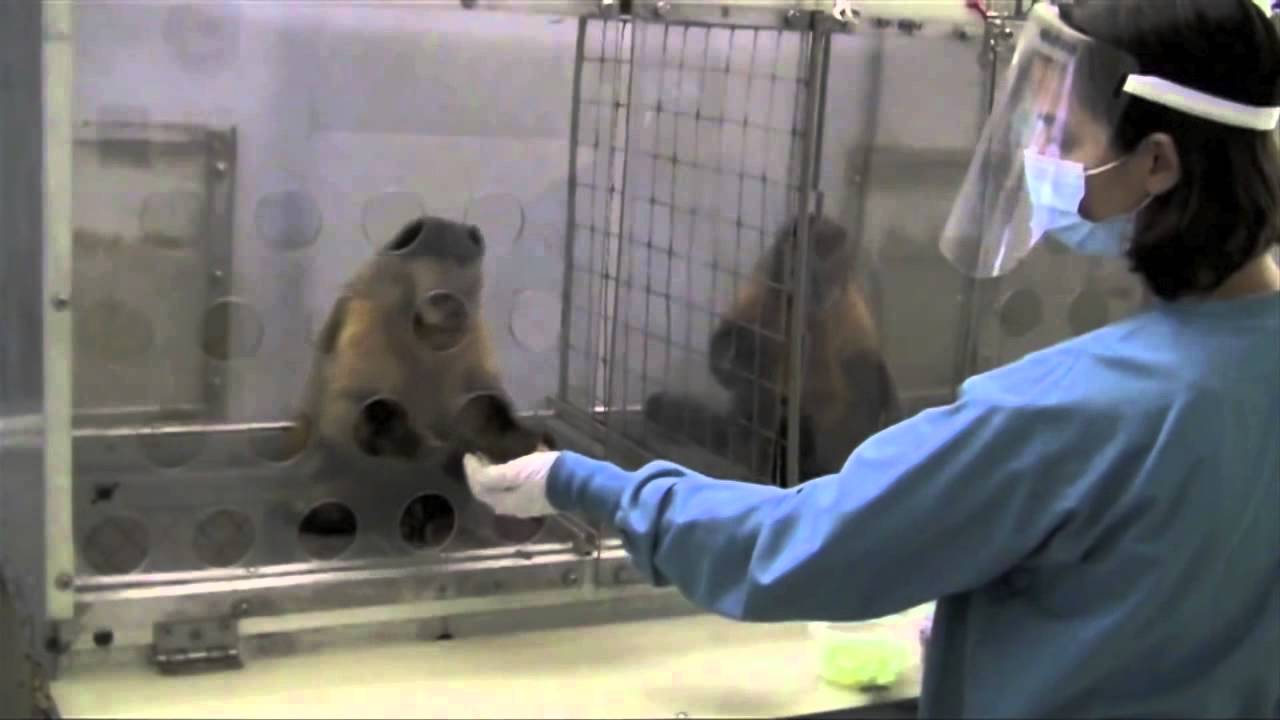
German car manufacturers could be embroiled in a new scandal after US reports accused them of funding experiments on monkeys and humans.
Germany’s leading car groups (BMW, Daimler and Volkswagen) may have funded tests and trials on monkeys and humans to show that the exhaust emissions from their engines are not harmful to health, according to reports published in various North American and European media.
The three major European groups are once again in the spotlight after it leaked that they commissioned and funded tests and experiments in which monkeys and humans were made to inhale nitrogen dioxide (NO§h11Fordh12§) in order to prove its harmlessness to health. The scandal has reached such proportions that even German Chancellor Angela Merkel and her government have described these practices as “repugnant” and are demanding explanations from the manufacturers involved.
The three major German brands, BMW, Volkswagen and Daimler, claim to have been unaware of these experiments and have launched an internal investigation. Last weekend, The New York Times published an article revealing that in 2014 a scientific testing centre financed by the three major car groups had commissioned various tests and trials on apes in the United States, in which they were exposed for hours to inhaling nitrogen dioxide to check the possible harm it could cause to their health. According to the information, the ultimate aim of the tests was to prove that diesel engine emissions were not harmful to health.
“This kind of experimentation on monkeys and even humans has no ethical justification whatsoever. The dismay and shame felt by many people is entirely understandable,” said Steffen Seibert, spokesman for the German government, condemning the trials on behalf of the Chancellor. “The car brands now have the responsibility to clarify the purpose of these tests,” Seibert added.
According to the published reports, the monkey trials came to light as part of the investigation currently under way in the US into the scandal of manipulated emissions in diesel vehicles. The three manufacturers involved have reacted quickly, claiming to be completely unaware of such practices and launching an internal investigation to clarify what happened.
However, the German newspapers Stuttgarter Zeitung and Süddeutsche Zeitung reported yesterday, Monday, that the European Association for Transport-Related Environment and Health Research (EUGT), a centre funded among others by the three car groups, had also commissioned this type of tests on 25 healthy people, who were likewise exposed to several hours of nitrogen dioxide inhalation (NO§h38Fordh39§).
Thomas Kraus, director of the University Hospital of Aachen, the centre where the tests were carried out, has denied that the tests conducted in 2013 had anything to do with diesel engines. According to Kraus, the aim of the tests was to establish the levels of C0§h45Fordh46§ to which employees are exposed in their workplaces, a study whose results were published in 2016, after approval by the university’s ethics committee.
According to The New York Times, the monkey tests were carried out at the request of the EUGT at the Lovelace Biomedical laboratory in Albuquerque (New Mexico, USA), where the animals were forced to inhale for hours the gases expelled from the exhaust pipe of a VW Beetle and, subsequently, those of a comparable model of Ford. After the experiment, the monkeys were anaesthetised and intubated to examine both their lungs and their blood.
The three major groups distance themselves from the tests
The three large German car corporations possibly involved claim to be completely unaware of the carrying out of this type of experimentation. Hans Dieter Pötsch, chairman of the Supervisory Board of Volkswagen, stated that the group’s management completely distances itself from such practices and has opened a thorough investigation to clarify what happened: “Whoever is responsible,” said Pötsch, “will obviously have to be held accountable.”
Last Sunday, the Daimler group issued a statement strongly condemning the experiment carried out by the EUGT. “We are shocked by the scale and implementation of the study and we condemn the experiments in the strongest terms,” Daimler’s statement says, explaining that the Star brand group had no influence whatsoever on the carrying out of the experiments. “We have launched a comprehensive investigation to determine how such a study could have been carried out, which completely contradicts our values and ethical principles,” the statement said.
The spokesman for the German government has demanded an explanation from the companies involved given how unjustifiable the tests are: “What car manufacturers need to do with emissions is reduce them, not try to prove they are not harmful to health.”


 The seven finalists for the 2027 European Car of the Year (COTY) are exclusively electric
 Peugeot E-208 GTi: a battery-powered toy that revives the spirit of the 1980s sports cars
 New Lexus ES: luxury grows and goes electric
Deja un comentario