Fiat Grande Panda: more details on the new city car from Fiat
 Rafa Guitart @GuitartRafa
19 July 2024
4 min.
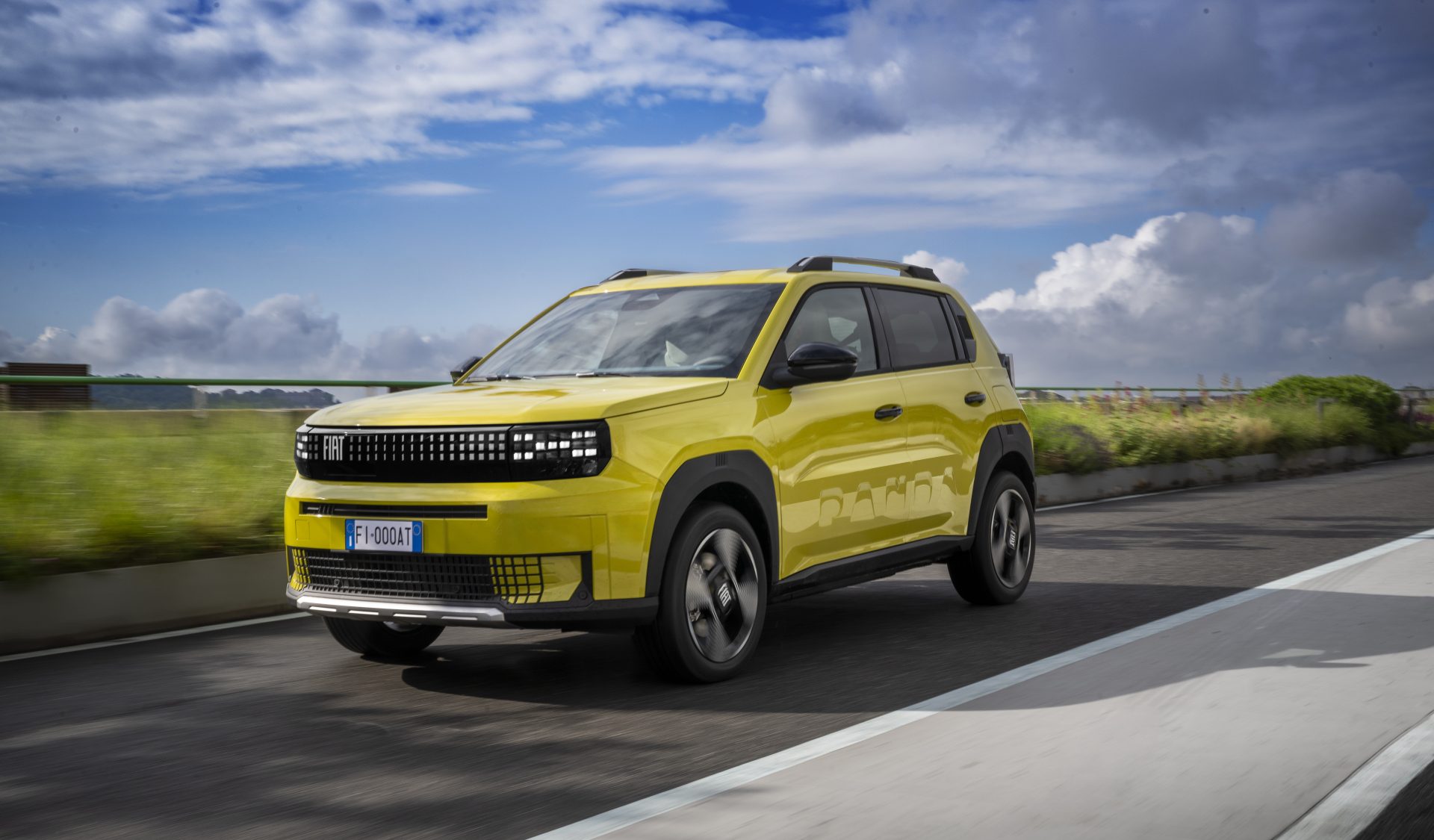
Taking advantage of the 125th anniversary of Fiat, the Italian brand has staged a major programme of celebrations in the city of Turin. Among them, it has unveiled the new model it will launch shortly, a clone of the recently presented Citroën C3.
However, the Grande Panda marks the return of FIAT to the global market, developed around 3 pillars: a distinctly Italian design, use of Stellantis’ global platform and a model of particular local relevance. Inspired by the iconic Panda of the 1980s, with which Fiat aims to democratise the car once again, an affordable, family-oriented segment B car that will start below 25,000 euros for the fully electric version.
Original design
Designed in Italy, at the FIAT Centro Stile in Turin, the Grande Panda is based on a simple idea: a multi-energy platform, a strictly Italian design and the option to choose the powertrain according to customers’ needs.
Like its predecessor, the Grande Panda offers a simple design with great personality and plenty of interior space, but now in a five-door body. With restrained exterior dimensions, 3.99 metres long, 1.76 metres wide and 1.57 metres high, it offers ample space for five passengers, includes storage compartments with a 13-litre capacity and a 361-litre boot.
The exterior, with bold lines, pays some tribute to the 1980s model, with some straight shapes, sturdy wheel arches, roof bars, silver front and rear underbody protectors, gloss black pillar finishes, privacy glass and 17-inch aerodynamic alloy wheels, depending on the trim level.
As a tribute to the classic Panda, the Grande Panda features lettering embossed on the side panel itself and is offered in seven colours: red, white, black, green, brown, blue and yellow, although the brand’s philosophy of not offering it in grey, “No Grey”, remains.
The front light clusters consist of LED pixel sets to represent daytime running lights and, behind these, are the main units, which feature an outward projection system. The rear lights are also especially eye-catching, with LED blocks embedded in a transparent methacrylate assembly that looks very original.
Clever solutions
The interior is also rather distinctive; a special tribute has been paid to the ramp of the Lingotto building, which has inspired some of the elements, such as the dashboard and the polycarbonate frame that houses the 10-inch instrument cluster and the 10.25-inch central screen, dedicated to navigation, audio and controls.
Considerable attention has been paid to optimising space: there are 13 litres of storage in the dashboard – inspired by the 1980s model – three of which are in a single lidded compartment made from sustainable materials.
The spiral charging cable stands out as one of the most innovative solutions in the model and indeed in the “electrified world”, as this ingenious solution is unprecedented among electric cars (with high-power charging), making the charging process easy, without complications or cumbersome and messy manoeuvres, since the helical cable is stowed only inside a dedicated compartment at the front. It also has a high-power charging socket (100 kW DC at the rear, which can also be used to charge with AC).
The Grande Panda is the first vehicle on the market to include an integrated charging cable, which works on AC up to 7 kW (we assume that optionally it may charge on three-phase at 11 kW, as its twin brother the C3 does). The spiral cable has a special housing under the bonnet, with a hinged cover at the front, which saves space in the boot and makes it practical for everyday use, as it is easy to handle and avoids the dirt of traditional cables. This solution is very simple: after opening the cover, you only need to pull out the cable and connect it to the charging station. Once charging is complete, it can easily be returned to its housing thanks to the spiral shape of the cable.
Two powertrains available
The Grande Panda will be available in both electric and hybrid versions with 100 CV at the end of the year. The electric version will have a 44 kWh battery and an 83 kW motor (113 CV), which will allow a range of more than 320 km on the WLTP combined cycle. It has not been confirmed whether a cheaper variant with a smaller battery will exist, like the one the Citroën C3 will offer in its entry-level version.


 Peugeot E-208 GTi: a battery-powered toy that revives the spirit of the 1980s sports cars
 New Lexus ES: luxury grows and goes electric
 First contact with the Dacia Sandero Hybrid 155: power and efficiency from €19,890
Deja un comentario