Dacia Hyundai Jogger KIA Santa Fe Sorento Family Buying Guides Minivans
How to Choose a 7-Seat Family SUV with Better Interior Design and Modularity in 2026
 Dani Montesinos
24 November 2026
6 min.
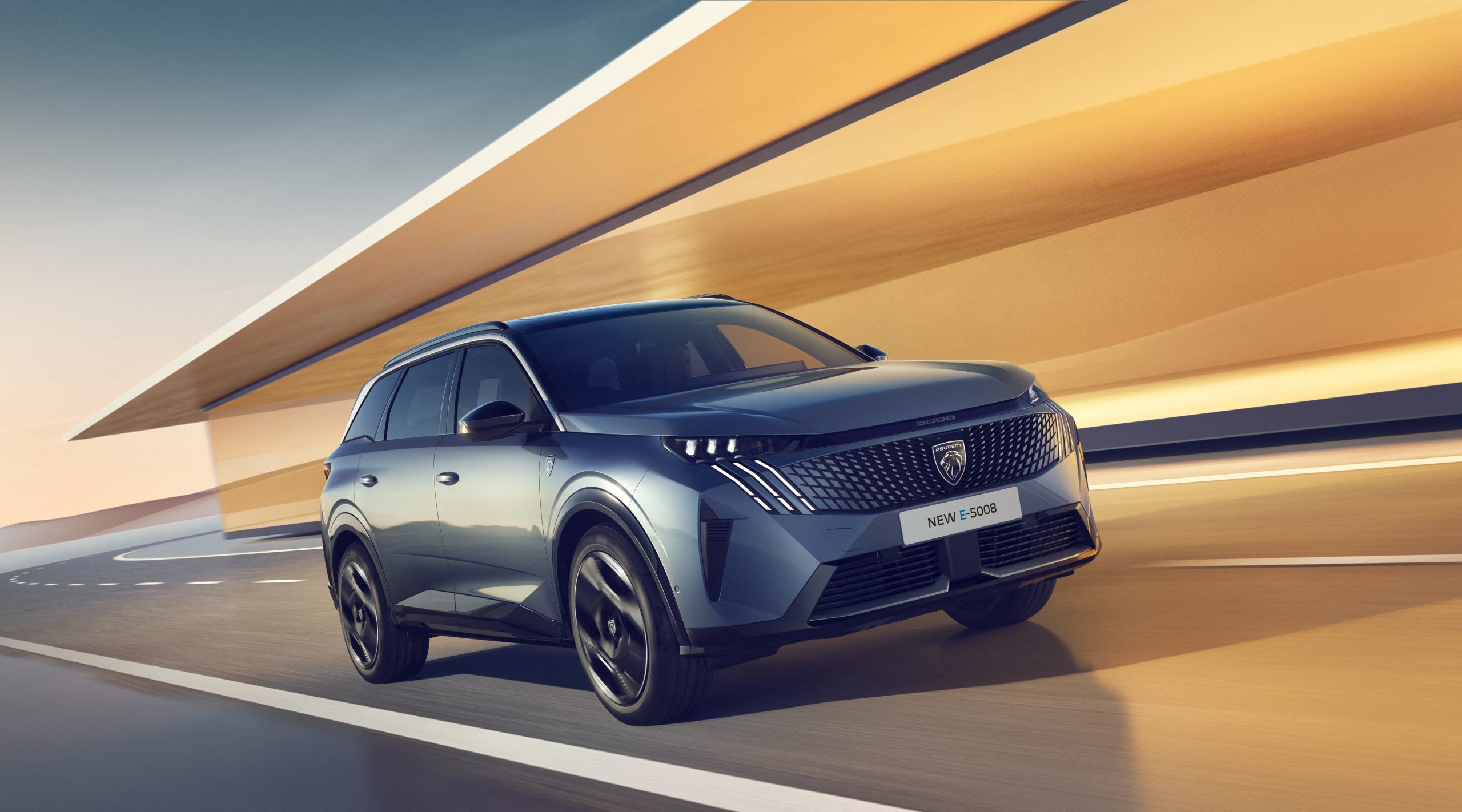
We compare 7-seat SUVs with the best interior design and modularity on the Spanish market, with data on boot space, third-row access and perceived quality
Choosing a 7-seat family SUV in 2026 is no longer just about finding room for two more child seats. It’s about understanding what happens when you pack suitcases, a dog, a pushchair and three teenagers on the same August Friday. The range on offer in Spain has become huge, and that is precisely why it’s worth looking beyond the brochure specs: what really separates a good family SUV from a mediocre one comes down to the centimetres of third-row access, the real litres of boot space depending on how you configure the seats, and whether the cabin feels premium or is just hard plastic dressed up as design.
This guide covers five models genuinely on sale in Spain, each with a different approach, so you can compare with data and not just gut feeling.
What makes a 7-seat SUV stand out in interior design and modularity in 2026
The key is no longer having seven seats on paper. It’s that those seven seats are actually useful. A large family SUV in 2026 is judged on three things: how easily you can reach the third row without contortions, how much boot space remains in each seat configuration, and what the materials feel like to the touch after two years of daily use.
Third-row access
One-motion sliding and folding systems make the difference between an SUV designed for adults and one designed only for children. “One-touch” mechanisms that release the second row without removing the child seat are now almost standard in the upper range of the segment, but not all manufacturers do it equally well.
Boot litres in each configuration
This is where spec sheets are most misleading, quoting boot capacity “to the roof” with the third row folded away. The honest approach is to look at three scenarios: with all seven seats in use, with five seats and the third row folded down, and with everything folded for a removal.
Perceived cabin quality
Screens, stitching, panel fit. An interior can have a huge screen and still feel cheap if the plastics in the lower areas sound hollow when you knock them.
Peugeot 5008 (from €34,590): the French design leap
The new-generation Peugeot 5008 changed philosophy entirely: it moved from tall MPV to pure SUV, and gained in interior presence what some will miss in pure practicality. The panoramic i-Cockpit and the quality of panel fit now rank among the best in the mainstream segment. With the third row in use the boot drops to 357 litres, a decent but not outstanding figure; with five seats it rises to 916 litres.
| Model | Power | Consumption | Label | Fuel |
|---|---|---|---|---|
| Peugeot 5008 Hybrid 145 | 145 CV (107 kW) | 5.3 l/100 km | ECO | Hybrid |
Hyundai Santa Fe (from €49,640): square styling as a selling point
The Santa Fe’s squarer body is no accident: Hyundai it has been optimised precisely to gain usable centimetres in the third row, something we already analysed in detail in our head-to-head with the Mazda CX-80. The result is 628 litres with five seats and 281 litres with all seven occupied, among the best figures in the group with seven seats in use.
| Model | Power | Consumption | Label | Fuel |
|---|---|---|---|---|
| Hyundai Santa Fe Hybrid | 239 CV (175 kW) | 6.4 l/100 km | ECO | Hybrid |
Kia Sorento (from €49,520): technology and real space without fuss
The Sorento shares much of its mechanical DNA with the Santa Fe, but its interior opts for a more restrained, almost minimalist language. With all seven seats deployed the boot is 187 litres, just enough for the weekly shop; folding the third row raises it to 608 litres, enough for any long family trip.
| Model | Power | Consumption | Label | Fuel |
|---|---|---|---|---|
| Kia Sorento Hybrid 215 | 215 CV (158 kW) | 6.4 l/100 km | ECO | Hybrid |
Mazda CX-80 (from €62,571): the Japanese premium approach
It’s the most expensive on the list, and it shows in the interior: Nappa leather, genuine wood in some versions, and a material finish that borders on the upper segment. The PHEV variant adds around 60 km of electric range, enough for most urban journeys without touching the combustion engine. With seven seats the boot offers 258 litres; with five, 687 litres.
| Model | Power | Range | Label | Fuel |
|---|---|---|---|---|
| Mazda CX-80 PHEV | 327 CV (241 kW) | ~60 km (electric) | CERO | PHEV |
Dacia Jogger (from €24,590): seven real seats at the lowest price on the market
The Jogger doesn’t compete on materials, and there’s no point pretending otherwise: the plastics are hard and the central screen impresses nobody. But it solves the essentials, space, with a candour we already covered in our full review. With seven seats fitted the boot drops to 160 litres, and with five it rises to 565 litres. For a family that prioritises budget over interior show, it still has no direct rival.
| Model | Power | Consumption | Label | Fuel |
|---|---|---|---|---|
| Dacia Jogger Hybrid 155 | 155 CV (114 kW) | 4.8 l/100 km | ECO | Hybrid |
Comparison: modularity, boot space and perceived quality
| Model | Boot with 7 seats | Boot with 5 seats | Modularity | Perceived quality | Overall score |
|---|---|---|---|---|---|
| Peugeot 5008 | 357 L | 916 L | 8/10 | 8.5/10 | 8.3/10 |
| Hyundai Santa Fe | 281 L | 628 L | 8.5/10 | 8/10 | 8.4/10 |
| Kia Sorento | 187 L | 608 L | 7.5/10 | 8/10 | 7.8/10 |
| Mazda CX-80 | 258 L | 687 L | 8/10 | 9.5/10 | 8.6/10 |
| Dacia Jogger | 160 L | 565 L | 7/10 | 5.5/10 | 7/10 |
Which SUV to choose based on your profile
For a large family that uses all seven seats every day, the Hyundai Santa Fe wins on boot space with the third row in use, the best figure in this group. If your focus is urban use with the third row as an occasional extra, the Peugeot 5008 offers the best balance between design and everyday practicality. For long journeys, the Mazda CX-80 justifies its higher price with a level of comfort and insulation that becomes noticeable after the third hour on the motorway. And if budget comes first, the Dacia Jogger remains the only genuine entry point to the seven-seat segment for under €25,000 before any possible discounts.
Anyone who wants to go further into how the third row performs with real adults on board, and not just catalogue mannequins, can read our analysis of legroom and third-row access, a criterion that changes the final assessment of each model considerably.
Purchase incentives in 2026
Several of these models, especially the hybrid and PHEV versions, may qualify for the Plan Auto+, the current framework of purchase incentives for efficient vehicles in Spain. Amounts and conditions change fairly often, so it is always most reliable to check the official plan website before concluding any purchase.
Frequently asked questions
Which 7-seat SUV has the best interior in 2026?
The Mazda CX-80 leads on perceived quality thanks to its materials and finish, although the Peugeot 5008 offers the most striking design with its panoramic i-Cockpit.
Which is the most modular family SUV?
The Hyundai Santa Fe stands out for the best balance between boot space with seven seats in use and ease of folding the third row in a single motion.
Which 7-seat SUV is the cheapest in Spain?
The Dacia Jogger, from €24,590 without incentives or discounts, is the most affordable option on the market with seven homologated seats.
Is a 7-seat PHEV SUV like the Mazda CX-80 worth it?
Yes if you make frequent urban journeys that can be covered by its roughly 60 km of electric range; on constant long trips, a conventional hybrid such as the Santa Fe or Sorento is simpler to manage.
Technical specifications of the cars in this article

 Kia offers an electric range of 10 models, 50 versions and 400 possible combinations
 The seven finalists for the 2027 European Car of the Year (COTY) are exclusively electric
 Peugeot E-208 GTi: a battery-powered toy that revives the spirit of the 1980s sports cars
Deja un comentario