Bigster C5 C5 Aircross Citroen Corolla Corolla Cross Dacia Toyota Family Buying Guides SUV
How to Choose a Family SUV for Under €38,000 in 2026: Space, Boot and Running Costs
 Dani Montesinos
12 November 2026
7 min.
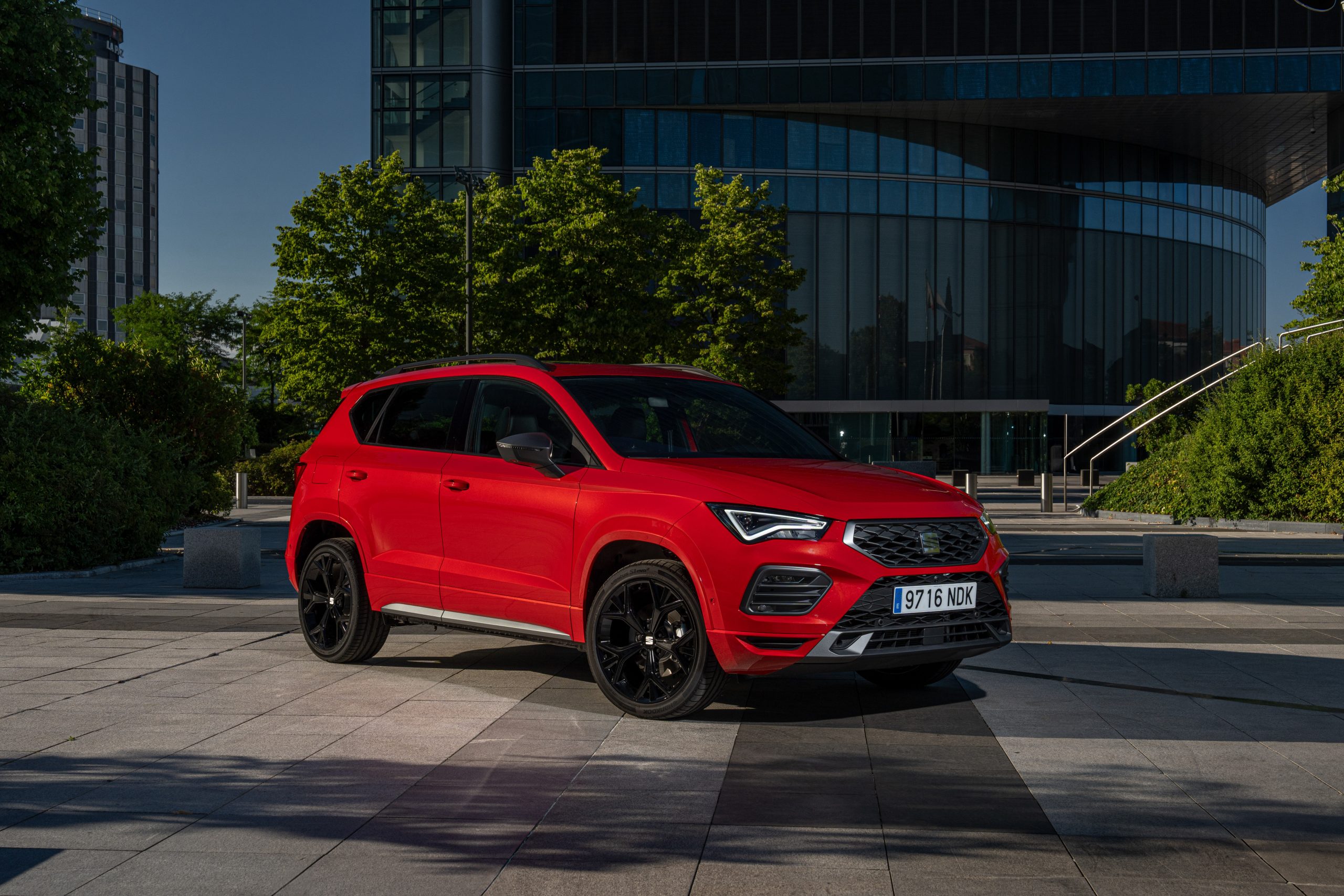
2026 comparison of the best family SUVs under €38,000 in Spain, with boot space, WLTP consumption, DGT environmental label and warranty for each model
Buying a family SUV with a fixed budget of €38,000 no longer means giving up anything essential. In 2026, the Spanish market offers options with boots of more than 500 litres, hybrids that drop below 5.5 l/100 km in real-world use, and warranties that reach seven years. The problem is not a lack of choice but an excess of it: there are too many compact SUVs and mid-size SUVs competing for the same budget, and not all of them deliver the same for the same money.
This guide is based on measurable criteria, not vague impressions: homologated boot capacity, WLTP consumption, the DGT environmental label and warranty conditions. That is enough to objectively compare seven models currently on sale in Spain.
What a family SUV under €38,000 must offer in 2026
Three things, in this order of priority: real space for four or five occupants with holiday luggage, consumption that does not inflate the monthly fuel bill, and a DGT label that guarantees unrestricted access to city centres with low-emission zones. Everything else, screens, driver assistance and trim levels, is important but secondary to these three filters.
Interior space and boot: the numbers that really matter
Below 520 litres, a family SUV starts to fall short for a family of four with large suitcases and a pushchair. Above 600 litres, the car already competes with a compact MPV in cargo capacity. That range, between 500 and 670 litres, is what truly separates the candidates on this list.
WLTP consumption and DGT label: the real running cost
This is where the annual budget is decided. A petrol family SUV rated at 6.5 l/100 km WLTP can climb to 8 l/100 km in real motorway use with air conditioning and four occupants. A well-engineered hybrid, by contrast, keeps the gap between official cycle and real-world use much more contained, especially on mixed city and country journeys. The ECO label also grants access to free regulated parking in several Spanish capitals, something that over the years weighs more than it seems when signing the contract.
Is a 7-seater SUV under €38,000 worth it?
It depends on what you need it for. If the third row will be used occasionally, with small children and short trips, models such as the Dacia Jogger (from €17,290 in its petrol LPG version, with seven seats available) more than suffice. If, on the other hand, you want a third row usable by adults on a regular basis, it is worth checking the wheelbase and access to that row carefully, something we analysed in detail in our guide to family SUVs with a third row usable by adults. Among the models in this comparison, the Citroën C5 Aircross offers an optional third row, although it is designed for occasional trips rather than daily use.
The models we recommend
Dacia Bigster, from €25,020
The quintessential low-cost family SUV, with a boot that nearly reaches 667 litres in its entry version. We already compared it with its smaller sibling in our Bigster versus Duster showdown, and the conclusion still holds: more space for practically the same money.
| Power CV | Boot | WLTP consumption | Label | Fuel |
|---|---|---|---|---|
| 140 | 667 l | 5.3 l/100 km | ECO | Petrol and LPG mild hybrid |
Hyundai Tucson, from €31,445
The most expensive on the list, but also the one that best balances technology and hybrid consumption. Its 582-litre boot falls somewhat short of the Bigster’s, though it wins on trim quality.
| Power CV | Boot | WLTP consumption | Label | Fuel |
|---|---|---|---|---|
| 239 | 582 l | 5.3 l/100 km | ECO | Hybrid |
Skoda Karoq, from €37,570
A 521-litre boot, understated in design and generous in cabin space for the rear seats. It is probably the most “sensible” choice on the list, in the best sense: it doesn’t surprise, but it doesn’t let you down.
| Power CV | Boot | WLTP consumption | Label | Fuel |
|---|---|---|---|---|
| 150 | 521 l | 6.3 l/100 km | C | Petrol |
Seat Ateca, from €30,570
It shares its platform with the Karoq, but with a slightly sportier character in the steering feel. A 510-litre boot, the tightest of the petrol models on this list.
| Power CV | Boot | WLTP consumption | Label | Fuel |
|---|---|---|---|---|
| 150 | 510 l | 6.5 l/100 km | C | Petrol |
MG HS, from €24,340
The surprise of the comparison in terms of value for money. As we already saw against the Omoda 5, the Chinese compact SUV MG offers equipment well above its starting price.
| Power CV | Boot | WLTP consumption | Label | Fuel |
|---|---|---|---|---|
| 170 | 507 l | 6.8 l/100 km | C | Petrol |
Citroën C5 Aircross, from €28,990
Ride comfort above the segment average and a 580-litre boot, with an optional third row for occasional trips.
| Power CV | Boot | WLTP consumption | Label | Fuel |
|---|---|---|---|---|
| 145 | 580 l | 5.2 l/100 km | ECO | Hybrid |
Toyota Corolla Cross, from €37,100
The most efficient in the group in real-world consumption, although with the smallest boot of the seven, 440 litres. If the priority is spending little day to day, it is hard to beat.
| Power CV | Boot | WLTP consumption | Label | Fuel |
|---|---|---|---|---|
| 140 | 440 l | 4.8 l/100 km | ECO | Hybrid |
Comparison summary table
| Model | Starting price | Boot | WLTP consumption | Label | Score |
|---|---|---|---|---|---|
| Dacia Bigster | €25,020 | 667 l | 5.3 l/100 km | ECO | 8.5/10 |
| Hyundai Tucson | €31,445 | 582 l | 5.3 l/100 km | ECO | 8/10 |
| Skoda Karoq | €37,570 | 521 l | 6.3 l/100 km | C | 7/10 |
| Seat Ateca | €30,570 | 510 l | 6.5 l/100 km | C | 6.5/10 |
| MG HS | €24,340 | 507 l | 6.8 l/100 km | C | 7.5/10 |
| Citroën C5 Aircross | €28,990 | 580 l | 5.2 l/100 km | ECO | 8/10 |
| Toyota Corolla Cross | €37,100 | 440 l | 4.8 l/100 km | ECO | 7.5/10 |
Warranty and maintenance costs: the small print
The Dacia Bigster and the MG HS come with seven-year warranties, well above the usual five offered by Skoda, Seat or Hyundai. Yet this does not always translate into lower real maintenance costs: servicing of the Chinese models can turn out more expensive if their dealer network is not as extensive as that of established European brands. It is worth requesting a five-year maintenance quote before signing, rather than focusing only on the warranty length.
Public incentives: Plan Auto+
For the hybrid and electrified versions on this list, it is advisable to check the current conditions of the Plan Auto+, the framework of public aid for vehicle purchases in Spain. Amounts and requirements change fairly often, so the most reliable approach is to consult the official website before closing the deal.
Our final recommendation
If the criteria are boot space and price, the Dacia Bigster wins clearly. If real day-to-day consumption is the priority, the Toyota Corolla Cross is hard to beat, although its boot means planning luggage more carefully. And if you are looking for balance without surprises, the Citroën C5 Aircross meets expectations on almost every front without excelling extremely in any one of them.
Frequently asked questions
What is the best family SUV under €38,000 in 2026?
There is no single winner: the Dacia Bigster leads on boot space and price, the Toyota Corolla Cross on real-world consumption, and the Hyundai Tucson on equipment and comfort within that budget.
Is it worth paying more for a hybrid family SUV than a petrol one?
Yes, if annual use exceeds 15,000 km, because the consumption difference between a hybrid (5 l/100 km) and a naturally aspirated petrol (6.5 l/100 km) offsets the difference in purchase price within two or three years.
Which 7-seater family SUV can be bought for less than €35,000?
The Dacia Bigster, from €25,020, and the Citroën C5 Aircross with its optional third row are the two most accessible alternatives within this budget on the Spanish market.
Which DGT label should you look for in a family SUV in 2026?
The ECO label, if use is mostly urban or in areas with low-emission restrictions. The C label remains valid in most Spanish cities, but with less room for the future.
Technical specifications of the cars in this article
 Kia offers an electric range of 10 models, 50 versions and 400 possible combinations
 The seven finalists for the 2027 European Car of the Year (COTY) are exclusively electric
 Peugeot E-208 GTi: a battery-powered toy that revives the spirit of the 1980s sports cars
Deja un comentario