BYD Hyundai KIA Kodiaq RAV4 SEAL Skoda Sportage Toyota Tucson Family Buying Guides Tests SUV
How to Choose a Family SUV with the Best Value for Money in 2026: Seven Keys Before Signing
 Iván Navarro
15 August 2026
8 min.
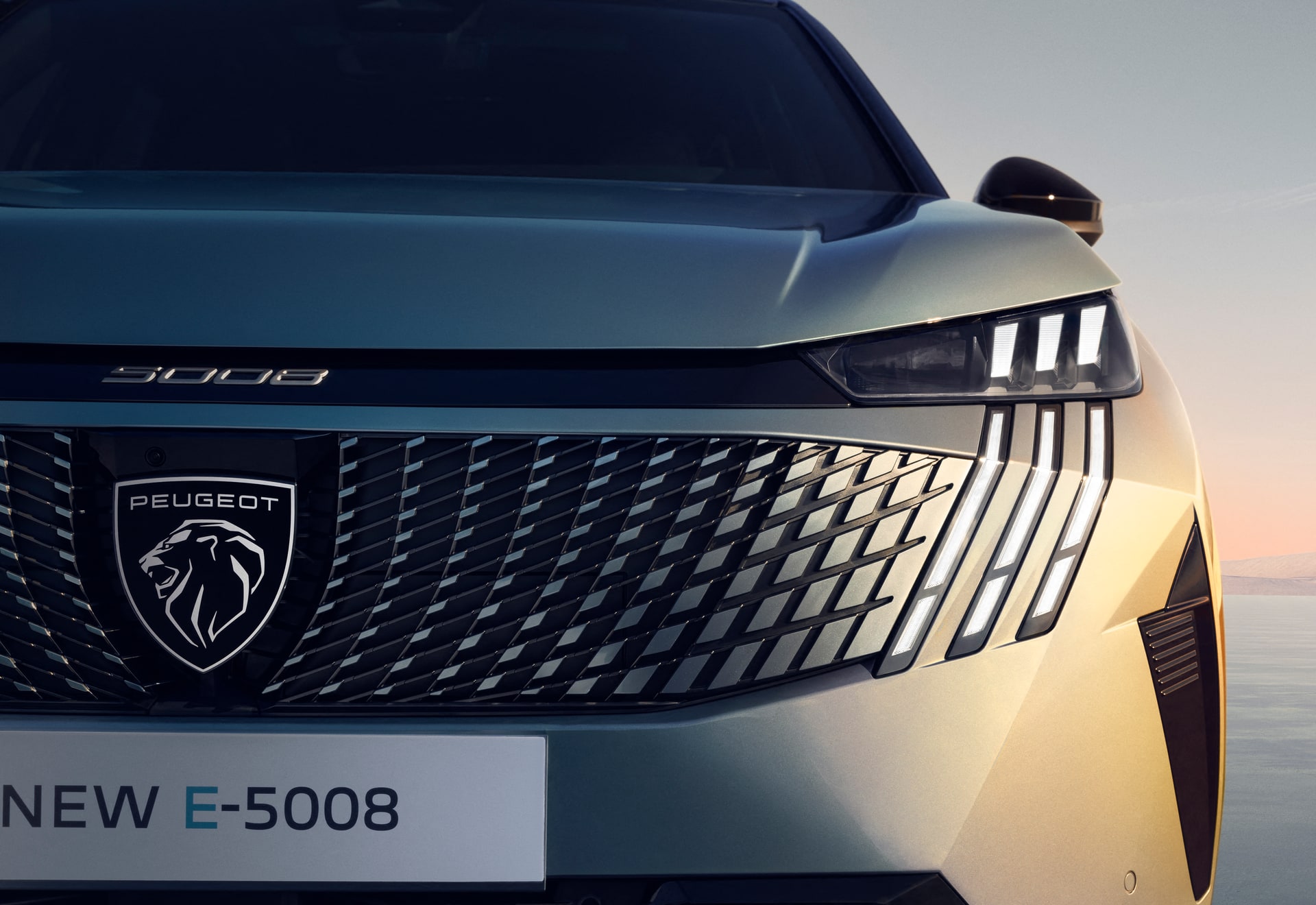
A practical guide to finding the best value-for-money family SUV in Spain in 2026: warranty, total cost of ownership, ADAS and residual value, with representative models across price ranges.
Choosing a family SUV in 2026 has become a exercise in fine engineering. The catalogue is huge, prices overlap between European, Korean and Chinese brands, and environmental labels affect daily use more than many buyers calculate before signing. The question is no longer which model has the most horsepower. It is how much it will cost you to keep it in the garage for five years, how much it will be worth when you change it, and whether its ADAS will spare you real scares or just beeps.
Below are the seven keys we believe you should have on the table before sitting down with the salesperson. With specific models, figures and a summary table so you don’t get lost.
1. Define real use, not aspirational use
The classic first mistake: buying for the ideal weekend, not the real Monday. If your routine is 40 km a day between home, school and office, with a monthly getaway, a hybrid will serve you better than a diesel. If you drive 30,000 km a year with a trailer, the equation changes completely.
Think about three variables before looking at brochures: annual kilometres, urban/motorway split, and whether you really need seven seats or only twice a year. A seven-seat family SUV with the third row permanently folded down loses 200 litres of usable boot space compared with the five-seat version. That detail matters more than the colour.
2. Environmental label and ZBE: the invisible filter
Madrid, Barcelona, Valencia, Seville, Bilbao… Low Emission Zones (ZBE) are no longer a future threat. An Eco or a Zero label completely changes your freedom of movement. A modern petrol with a C label is still valid, but its residual value at five years is more questionable.
If you live or work inside a ZBE, prioritise a plug-in hybrid or an electric car. If your city does not yet enforce it strictly, a well-engineered full hybrid may be the sweet spot.
3. Total budget, not showroom price
TCO —total cost of ownership— is the figure that separates a smart purchase from a bad one. It includes:
- Financing or opportunity cost of the cash.
- Insurance (a 200 hp plug-in hybrid SUV can cost 25-30% more to insure than its full hybrid equivalent).
- Fuel or electricity based on your real usage mix.
- Official maintenance during the warranty years.
- Estimated depreciation over 4-5 years.
A well-chosen family hybrid SUV with good value for money rarely comes in below €0.28/km real cost, all included. If it comes out lower, check your numbers. If it comes out much higher, you may be looking above your segment.
4. Warranty: the new battlefield
Here the Chinese brands have aggressively moved the line. Seven years with no mileage limit is already standard at Jaecoo, Omoda or MG. Kia remains firm with its seven years/150,000 km. Hyundai and Toyota extend the battery pack to eight years on hybrids. Peugeot and Skoda stay at the two statutory years, the most extendable paid options.
This is not a minor detail. In a plug-in hybrid SUV, the battery represents between 20 and 30% of the car’s manufacturing cost. A long warranty is hard cash.
5. ADAS: what you will really use every day
A brochure listing 25 assistants is of little use if adaptive cruise control brakes harshly or lane keeping fights the steering wheel on a national motorway. Test them. Don’t trust the PDF.
The non-negotiable basics for 2026: autonomous emergency braking with pedestrian and cyclist detection, adaptive cruise control with Stop&Go, active lane keeping, 360º camera and rear cross-traffic alert. The rest is welcome, but secondary. The Euro NCAP rankings and standard ADAS for the segment are a good preliminary filter.
6. Space and boot: measurement and feel
Official boot litres can be misleading. A Peugeot 5008 declares more volume than a Kodiaq, but the Czech’s squarer shape carries luggage better. Measure your pram, your child seat, your golf bag. Climb in the back with the front seats in your usual position and check your knees.
In seven-seaters, the key nuance is whether the third row is for emergencies (children up to 1.45 m) or genuinely usable by an adult for more than half an hour.
7. Residual value: the number nobody shows you
At five years, a Toyota RAV4 hybrid typically retains 55-60% of its RRP. A Chinese SUV without a market track record may fall to 40-45%. That is not a deal-breaker —there are many reasons to buy it anyway— but you should know it beforehand.
Representative models by price range
Jaecoo 7 — from €24,900
The Jaecoo 7 has reset the value-for-money bar of the compact family segment. Interior finishes above its price point, a 14.8″ central screen and seven years of warranty. The SHS plug-in hybrid version is around €35,000.
| Power kW | Power hp | Top speed | Range | Consumption | Label | Fuel |
|---|---|---|---|---|---|---|
| 108 | 147 | 180 km/h | 600 km | 7.0 l/100 | C | Petrol |
Hyundai Tucson — from €29,500
Full hybrid reference with a finely balanced combination of comfort, real consumption and equipment. Eight-year battery warranty and a wide after-sales network. Its interior with a curved dual screen remains one of the most accomplished in the segment.
| Power kW | Power hp | Top speed | Range | Consumption | Label | Fuel |
|---|---|---|---|---|---|---|
| 158 | 215 | 193 km/h | 900 km | 5.7 l/100 | ECO | Hybrid |
Kia Sportage — from €30,200
Same group, different approach. The Sportage opts for a more disruptive design and slightly firmer steering. Seven years/150,000 km warranty and a PHEV version with 70 km of certified electric range that suits commuting well.
| Power kW | Power hp | Top speed | Range | Consumption | Label | Fuel |
|---|---|---|---|---|---|---|
| 195 | 265 | 191 km/h | 950 km | 1.1 l/100 | ZERO | PHEV |
Toyota RAV4 — from €38,500
The benchmark for reliability and residual value. Nothing flashy, everything works. The hybrid version is the pillar of the range; the PHEV, with over 300 hp, goes beyond the value-for-money script but delivers.
| Power kW | Power hp | Top speed | Range | Consumption | Label | Fuel |
|---|---|---|---|---|---|---|
| 147 | 200 | 180 km/h | 1,000 km | 5.8 l/100 | ECO | Hybrid |
Skoda Kodiaq — from €40,900
When the keyword is “well-used space”. Genuine seven seats, squared boot, sober perceived quality. Mild-hybrid and PHEV engines. It is not the cheapest, but probably the most functional in the VW Group.
| Power kW | Power hp | Top speed | Range | Consumption | Label | Fuel |
|---|---|---|---|---|---|---|
| 110 | 150 | 207 km/h | 850 km | 6.3 l/100 | ECO | Mild Hybrid |
Peugeot 5008 — from €42,300
Seven seats with a more elegant design language than average. The plug-in hybrid version offers a declared electric range over 80 km. The i-Cockpit still divides opinion: try it before you buy.
| Power kW | Power hp | Top speed | Range | Consumption | Label | Fuel |
|---|---|---|---|---|---|---|
| 143 | 195 | 220 km/h | 900 km | 1.3 l/100 | ZERO | PHEV |
BYD Seal U DM-i — from €35,990
The most aggressive Chinese player in the family PHEV segment. Declared electric range above 80 km, and a combined range close to 1,000 real km. Generous interior, although the software still needs polishing.
| Power kW | Power hp | Top speed | Range | Consumption | Label | Fuel |
|---|---|---|---|---|---|---|
| 160 | 218 | 170 km/h | 1,080 km | 1.1 l/100 | ZERO | PHEV |
Summary table and scoring
Scores from 1 to 10 weighting warranty, equipment, real consumption, residual value and perceived quality.
| Model | Price from | Fuel | Warranty | Residual value | Score |
|---|---|---|---|---|---|
| §8Omodah406§ | €24,900 | Petrol/PHEV | 7 years | Average | 8.4 |
| Hyundai Tucson | €29,500 | Hybrid | 5 years | High | 8.7 |
| Kia Sportage | €30,200 | PHEV | 7 years | High | 8.6 |
| BYD Seal U DM-i | €35,990 | PHEV | 6 years | Average | 8.1 |
| Toyota RAV4 | €38,500 | Hybrid | Up to 10 years* | Very high | 9.0 |
| Skoda Kodiaq | €40,900 | Hybrid | 2+3 years | High | 8.3 |
| Peugeot 5008 | €42,300 | PHEV | 2+3 years | Average-High | 8.0 |
*Toyota Relax: up to 10 years if maintained at an official dealer network.
Actionable checklist before signing
- Calculate your real 4-year TCO, not the list price.
- Check the environmental label against your city’s ZBE.
- Test the ADAS on real roads, not in the dealership’s roundabout.
- Check whether the model is eligible under the current Plan Auto+ and consult the updated amount on the official website.
- Ask for a buyback or guaranteed residual value simulation at 4 years.
- Climb into the third row if you need seven seats, with the front seat in your position.
- Read the small print of the warranty: mileage, exclusions, mandatory maintenance.
Frequently asked questions
Which family SUV offers the best value for money in Spain in 2026?
It depends on use, but the Hyundai Tucson hybrid and the Jaecoo 7 dominate the equipment/price ratio in the entry range, while the Toyota RAV4 wins on medium-term residual value. For genuine seven seats, the Skoda Kodiaq sets the functional standard.
Is it worth buying a plug-in hybrid SUV if I can’t charge at home?
No. A PHEV without regular access to a plug consumes more than a conventional HEV on motorways and loses its tax advantage of use. If you can’t charge at least three or four times a week, a hybrid performs better.
Does a Chinese SUV make sense compared with a European or Korean one in 2026?
In equipment and warranty, yes. In residual value, not entirely yet: historical data is short and the used market still penalises them. For long-term use (7-10 years) the equation balances out; for 3-4 year renewals, a Korean model usually proves more profitable.
What public incentives are available for buying a family SUV in 2026?
The current framework is Plan Auto+, which replaces previous schemes. It mainly applies to electrified vehicles with a CERO label and, in some versions, ECO. Check up-to-date amounts, deadlines and requirements on the programme’s official website before signing the order.
Technical specifications of the cars in this article


 Peugeot E-208 GTi: a battery-powered toy that revives the spirit of the 1980s sports cars
 New Lexus ES: luxury grows and goes electric
 First contact with the Dacia Sandero Hybrid 155: power and efficiency from €19,890
Deja un comentario