MG ZS Electric Cars Hybrid Cars Comparisons SUV
Omoda 5 vs. MG ZS: which Chinese compact SUV offers more equipment for less than €25,000?
 Iván Navarro
15 August 2026
5 min.
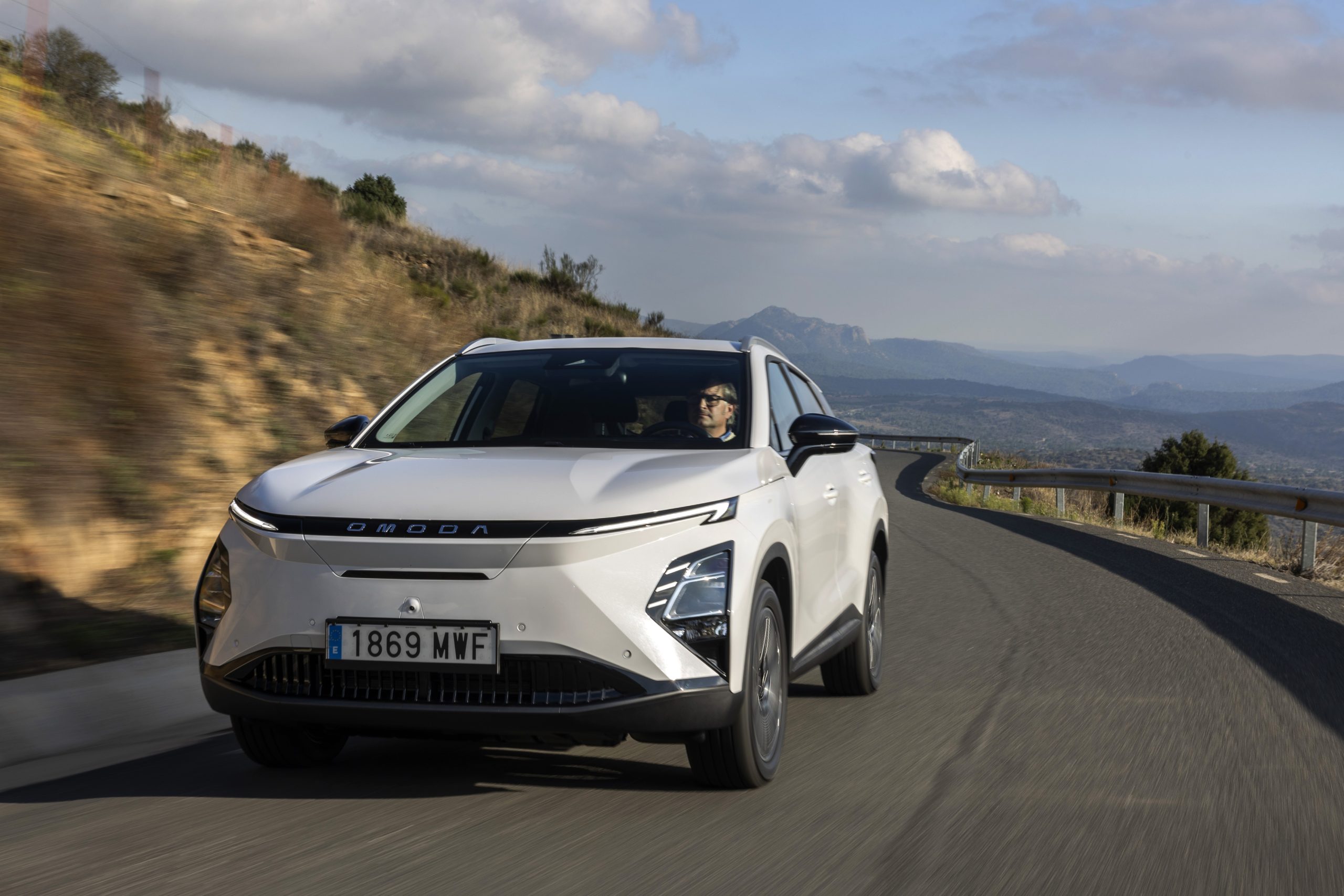
We compare the electric Omoda 5 and the MG ZS Hybrid+ to find out which one truly delivers on the promise of an affordable Chinese SUV under €25,000 in Spain.
Chinese brands’ arrival in Spain is no longer a promise: it is a fact already reflected in the registration figures. Two names keep coming up in any dealership conversation when the budget is tight and the car sought is a compact SUV. The Omoda 5 and the MG ZS. On paper, both target the same customer. In practice, they play very different games.
Let’s get to the point, with one nuance worth clarifying from the start: only one of the two actually falls below €25,000 at its recommended retail price. The other does not. And that difference shapes the entire comparison.
The context: two Chinese SUVs, two philosophies
The Omoda 5 currently sold in Spain in its 100% electric version belongs to Chery, a giant that has decided to attack Europe with a more aggressively designed sub-brand. The MG ZS, meanwhile, comes from SAIC and has been on the Spanish market for years, with a commercial track record the Omoda does not yet have. One bets on pure electric; the other on a hybrid with an ECO label.
They are not direct rivals in propulsion, but they are in target market: the buyer who wants a compact Chinese SUV without breaking the bank. And that is where the comparison becomes interesting — and somewhat tricky, if you don’t read the price tags closely.
Omoda 5 electric — from ≈€37,900
Let’s start with the one that breaks the premise of the headline. The Omoda 5 in its 204 61 kWh Comfort version starts at around €37,900 in recommended retail price. Far from the €25,000 barrier. Not even with the Plan Auto+ applied — when applicable and according to the amount in force on the official website — does it come close to the MG ZS in starting price.
What does it offer in return? A compact electric SUV with an urban and suburban focus, a 61 kWh battery, a homologated range close to 430 km, and a design that, in our view, is among the most accomplished in the Chinese segment. Interior with a panoramic dual screen, imitation leather upholstery, and a standard equipment level that a European equivalent would require moving up two trim levels to match.
That said, the real cost of use only pays off if you have charging at home or at work. Without your own plug, the equation gets more complicated.
| Power kW | Power CV | Top speed | Range | Consumption | Label | Fuel |
|---|---|---|---|---|---|---|
| ≈150 kW | ≈200 CV | ≈170 km/h | ≈430 km | ≈15.5 kWh/100 | ZERO | Electric |
MG ZS Hybrid+ — from ≈€23,300
Here, yes. The MG ZS Hybrid+ 1.5 194 CV starts at approximately €23,300 in recommended retail price, and it is the only one of the two that literally meets the headline’s premise. A compact hybrid SUV, ECO label, automatic transmission, and a combined 194 CV powertrain that on paper promises driving enjoyment — though in practice you need to manage dynamic expectations carefully.
What’s interesting about the ZS Hybrid+ is not what it does, but what it offers for the money. Central screen, 360º camera on mid-level trims, MG Pilot driver-assistance package, climate control… all of that comes at a price that would have been unthinkable a few years ago for an SUV with an ECO label. Homologated consumption around 5 l/100 km, which in real mixed use translates, according to our experience with the powertrain, into somewhat higher figures — a realistic 5.8–6.2 if you rely heavily on motorways.
| Power kW | Power CV | Top speed | Range | Consumption | Label | Fuel |
|---|---|---|---|---|---|---|
| ≈140 kW | ≈190 CV | ≈170 km/h | Data not available | ≈5 l/100 km | ECO | Hybrid |
Equipment: who gives more for less
The MG ZS Hybrid+ plays on its home turf. At its starting price, the standard equipment level is hard to match in Europe: few rivals cost what it costs and come with a full ADAS suite. An analysis very similar to the one we made with the Jaecoo 7, where the Chinese brand dominates on value for money.
The Omoda 5, although more expensive, comes standard with a dual screen, a panoramic roof on many trims, and a perceived quality one step above. It doesn’t compete on price; it competes on its electric value proposition.
Real cost of use: the factor that changes everything
Here there is no theory, only invoices. A user driving 15,000 km a year who charges the Omoda 5 at home on off-peak tariff might pay around €400–500 a year in “fuel”. The MG ZS Hybrid+ with a real consumption of 6 l/100 km will cost around €1,400 in petrol at peak prices.
But — and this but matters — the Omoda 5’s initial premium over the ZS Hybrid+ is roughly €14,600. You would need more than ten years of driving to recoup it through fuel savings alone. The math doesn’t work for everyone.
Summary table and score
| Model | Price from | Propulsion | Power | Range / Consumption | Label | Score /10 |
|---|---|---|---|---|---|---|
| Omoda 5 204 61 kWh | ≈€37,900 | Electric | ≈200 CV | ≈430 km | ZERO | 7.8 |
| MG ZS Hybrid+ 1.5 194 | ≈€23,300 | Hybrid | ≈194 CV | ≈5 l/100 km | ECO | 8.4 |
The prices listed are the manufacturer’s recommended retail prices, without dealer discounts, one-off campaigns, or purchase incentives in force (such as Plan Auto+, where applicable). Check current conditions before signing.
Verdict
If the headline is “compact Chinese SUV for less than €25,000”, the short answer is MG ZS Hybrid+. Full stop. There is no debate about RRP. It is the only one that meets the premise.
If the headline were “best Chinese SUV for decarbonising your garage with your own charger and a flexible budget”, the Omoda 5 would have a lot to say. At its price, and against European rivals, it remains a solid proposition — though closer to €38,000 than to €25,000.
Frequently asked questions
Is the Omoda 5 sold in a hybrid version in Spain?
The current commercial offer of the Omoda 5 in Spain focuses on the electric variant. For conventional hybrids, the Chery/Omoda brand itself directs buyers toward other models in its range.
Does the MG ZS Hybrid+ need a plug?
No. It is a hybrid: the battery is recharged by the petrol engine and by energy recovered during braking. It does not require home charging infrastructure.
Which Chinese SUV makes more sense if I do a lot of motorway driving?
The MG ZS Hybrid+ is more practical for high mileage on motorways without access to charging. The electric Omoda 5 only pays off for that use if you have planned fast-charging access and a home charger.
Do the prices include Plan Auto+ incentives?
No. The RRPs shown are without incentives or discounts. To find out the amount in force for each model — especially for the electric Omoda 5 — check the plan’s official website before finalising the purchase.
Technical specifications of this car
 Peugeot E-208 GTi: a battery-powered toy that revives the spirit of the 1980s sports cars
 New Lexus ES: luxury grows and goes electric
 First contact with the Dacia Sandero Hybrid 155: power and efficiency from €19,890
Deja un comentario