Hyundai KIA Renault Toyota Hybrid Cars Buying Guides SUV
How to Choose a Hybrid Compact SUV with the Latest Technology in 2026: Connectivity, ADAS and OTA Updates
 Carlos Romero
14 July 2026
6 min.
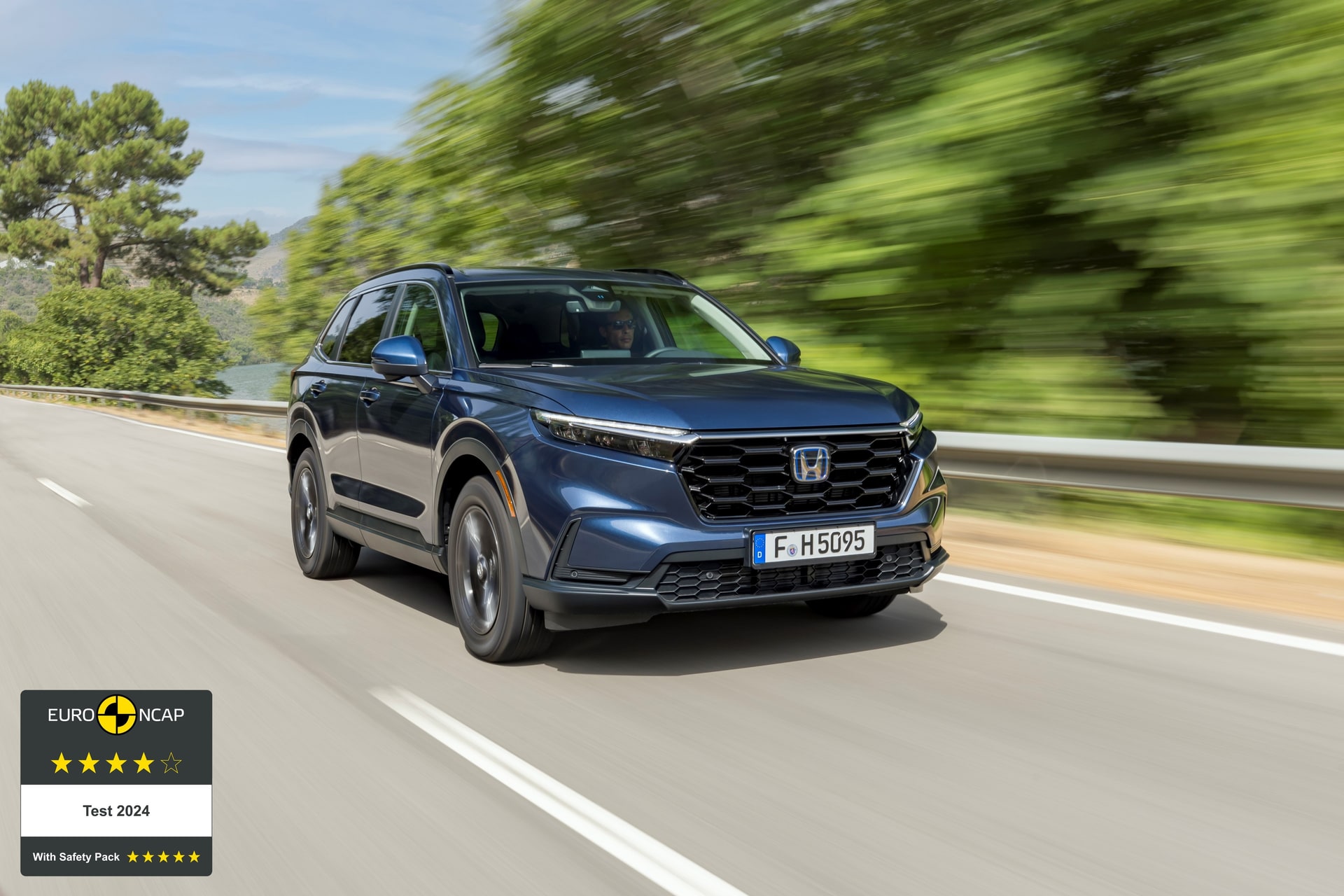
Premium guide to choosing the best hybrid compact SUV in 2026 in Spain: connectivity, ADAS systems under GSR2 and real over-the-air (OTA) update capability.
In 2026 the hybrid compact SUV is reaching its peak of technological maturity. A low consumption figure and an ECO label are no longer enough: the discerning buyer looks for an electronic architecture capable of evolving with the car, frictionless connectivity and an ADAS package that complies—without fuss—with the European GSR2 regulation. This guide sets out the objective criteria for choosing well, ranks the three axes that make the difference and matches them to real models available on the Spanish market.
Why 2026 is the year of the technology-driven hybrid compact SUV
The convergence of three forces—mandatory electrification, European regulation on active safety and the arrival of software-defined vehicle architectures—has pushed the hybrid C-segment into a qualitative leap. The 2026 hybrid compact SUV is today the most balanced car a Spanish family can buy: ECO label, total range of more than 900 km, and electronic platforms designed to receive improvements throughout their service life.
The three axes for deciding: connectivity, ADAS and OTA
Reducing the decision to “power and consumption” is a costly mistake. The real differentiator is measured in:
- Connectivity: smartphone integration, brand app, cloud services and the quality of the infotainment system.
- ADAS under GSR2: since July 2024 the regulation requires advanced assistance systems, but calibration varies greatly between manufacturers.
- OTA updates: real capability to update functions, maps and modules without visiting a workshop.
Connectivity: from wireless CarPlay to the cloud ecosystem
The minimum acceptable standard in 2026 is wireless Android Auto and Apple CarPlay, inductive charging of at least 15 W, and a brand app with route planning, remote climate control and geolocation. Brands such as Hyundai, Kia and Renault lead with their Bluelink, Kia Connect and MyRenault ecosystems, while Toyota has finally closed the gap with its new generation of multimedia infotainment.
ADAS and GSR2: what to demand beyond the legal minimum
GSR2 requires drowsiness alert, lane keeping, autonomous emergency braking with pedestrian and cyclist detection, sign recognition and an event data recorder. What matters is the quality of integration: a good ADAS does not annoy, it anticipates, and allows quick deactivation through physical shortcuts. Here SUVs with a stereo front camera and a well-calibrated mid-range radar stand out.
OTA: the criterion that separates a modern car from an obsolete one
A hybrid SUV without OTA ages badly. There are three levels:
- Map and infotainment OTA: basic, present in almost all of them.
- OTA for secondary modules (ADAS, climate control, telematics).
- OTA for powertrain and critical control units: still reserved for manufacturers with a zonal architecture.
Toyota RAV4 — from €42,500
The historic benchmark of the self-charging hybrid, with the fifth generation of the Hybrid Synergy Drive and notable improvements in infotainment after its latest update.
| Power kW | Power CV | Top speed | Range | Consumption | Label | Fuel |
|---|---|---|---|---|---|---|
| 160 | 218 | 180 km/h | 1,000 km | 5.8 l/100 km | ECO | Hybrid |
Honda CR-V e:HEV — from €44,900
The e:HEV system of Honda works like an extended electric car at urban speeds and delivers a mechanical refinement that is hard to match.
| Power kW | Power CV | Top speed | Range | Consumption | Label | Fuel |
|---|---|---|---|---|---|---|
| 135 | 184 | 187 km/h | 950 km | 6.4 l/100 km | ECO | Hybrid |
Kia Sportage HEV — from €33,900
It combines bold design, a curved panoramic display and a Kia Connect ecosystem with map and infotainment OTA.
| Power kW | Power CV | Top speed | Range | Consumption | Label | Fuel |
|---|---|---|---|---|---|---|
| 169 | 230 | 193 km/h | 900 km | 5.9 l/100 km | ECO | Hybrid |
Hyundai Tucson HEV — from €34,500
Technical sibling of the Sportage, with angular styling and a particularly well-executed Bluelink in the mobile app.
| Power kW | Power CV | Top speed | Range | Consumption | Label | Fuel |
|---|---|---|---|---|---|---|
| 160 | 215 | 193 km/h | 900 km | 6.0 l/100 km | ECO | Hybrid |
Nissan Qashqai e-Power — from €37,200
The e-Power always drives the wheels with the electric motor, which makes it one of the most enjoyable hybrids to drive in the city.
| Power kW | Power CV | Top speed | Range | Consumption | Label | Fuel |
|---|---|---|---|---|---|---|
| 140 | 190 | 170 km/h | 950 km | 5.3 l/100 km | ECO | Hybrid |
Renault Austral E-Tech — from €36,800
The Austral uses the E-Tech full hybrid system with a Multi-Mode gearbox and an OpenR Link based on Android Automotive with native Google integration.
| Power kW | Power CV | Top speed | Range | Consumption | Label | Fuel |
|---|---|---|---|---|---|---|
| 147 | 200 | 175 km/h | 1,100 km | 4.7 l/100 km | ECO | Hybrid |
Cupra Formentor e-Hybrid — from €41,500
Although it is a PHEV, its performance approach and the electronics of the VW Group make it a premium alternative for those seeking performance and MIB4 connectivity.
| Power kW | Power CV | Top speed | Range | Consumption | Label | Fuel |
|---|---|---|---|---|---|---|
| 200 | 272 | 230 km/h | 900 km | 1.3 l/100 km | PHEV |
Hybrid compact SUV comparison: summary table and scoring
| Model | Price from | CV | Consumption | Connectivity | ADAS | OTA | Overall score /10 |
|---|---|---|---|---|---|---|---|
| Toyota RAV4 | €42,500 | 218 | 5.8 | 8 | 9 | 7 | 8.3 |
| Honda CR-V e:HEV | €44,900 | 184 | 6.4 | 7 | 9 | 7.8 | |
| Kia Sportage HEV | €33,900 | 230 | 5.9 | 9 | 9 | 8 | 8.7 |
| Hyundai Tucson HEV | €34,500 | 215 | 6.0 | 9 | 9 | 8 | 8.6 |
| Nissan Qashqai e-Power | €37,200 | 190 | 5.3 | 7 | 8 | 7.6 | |
| Renault Austral E-Tech | €36,800 | 200 | 4.7 | 9 | 9 | 9 | 9.0 |
| Cupra Formentor e-Hybrid | €41,500 | 272 | 1.3 | 9 | 8 | 8 | 8.5 |
Quick guide by usage profile
- Pure urban: Nissan Qashqai e-Power for its electric feel.
- Mixed family use: Renault Austral E-Tech for consumption and OTA.
- Long distances: Toyota RAV4 for reliability.
- Tech lovers and design: Kia Sportage or Hyundai Tucson.
- Performance: Cupra Formentor e-Hybrid.
Editor’s verdict
If we had to sign a single recommendation within the best hybrid SUV 2026, the Renault Austral E-Tech tops the ranking for its combination of efficiency, native Android Automotive and serious OTA policies. The Kia Sportage and the Hyundai Tucson follow closely with a technology-to-price ratio that is hard to beat.
Frequently asked questions
Which hybrid compact SUV has the best connectivity in 2026?
The Renault Austral E-Tech, thanks to its OpenR Link system based on Android Automotive with Google services integrated as standard, leads the connectivity category, followed by the Kia Sportage and the Hyundai Tucson.
Is it mandatory for a new SUV to comply with GSR2?
Yes. Since July 2024, all new vehicles registered in the EU must include the full GSR2 assistance package, including autonomous braking, lane keeping and an event data recorder.
Which hybrid SUVs receive powertrain OTA updates?
Currently, in the compact segment, the brands with the most advanced architecture for deep OTA are Renault and the Hyundai-Kia Group. Toyota and Honda limit OTA to infotainment and mapping.
Is a self-charging hybrid (HEV) or a plug-in (PHEV) better?
It depends on use. If you drive less than 50 km a day and can charge at home, the PHEV (like the Cupra Formentor) offers a ZERO label and minimal consumption. For mixed use without a plug, the HEV remains the most rational option.


 Peugeot E-208 GTi: a battery-powered toy that revives the spirit of the 1980s sports cars
 New Lexus ES: luxury grows and goes electric
 First contact with the Dacia Sandero Hybrid 155: power and efficiency from €19,890
Deja un comentario