Honda Hyundai KIA Renault Toyota Hybrid Cars Buying Guides SUV
How to Choose a Hybrid Compact SUV Without Exceeding €32,000 in 2026: Key Criteria for Making the Right Decision
 Dani Montesinos
24 July 2026
6 min.
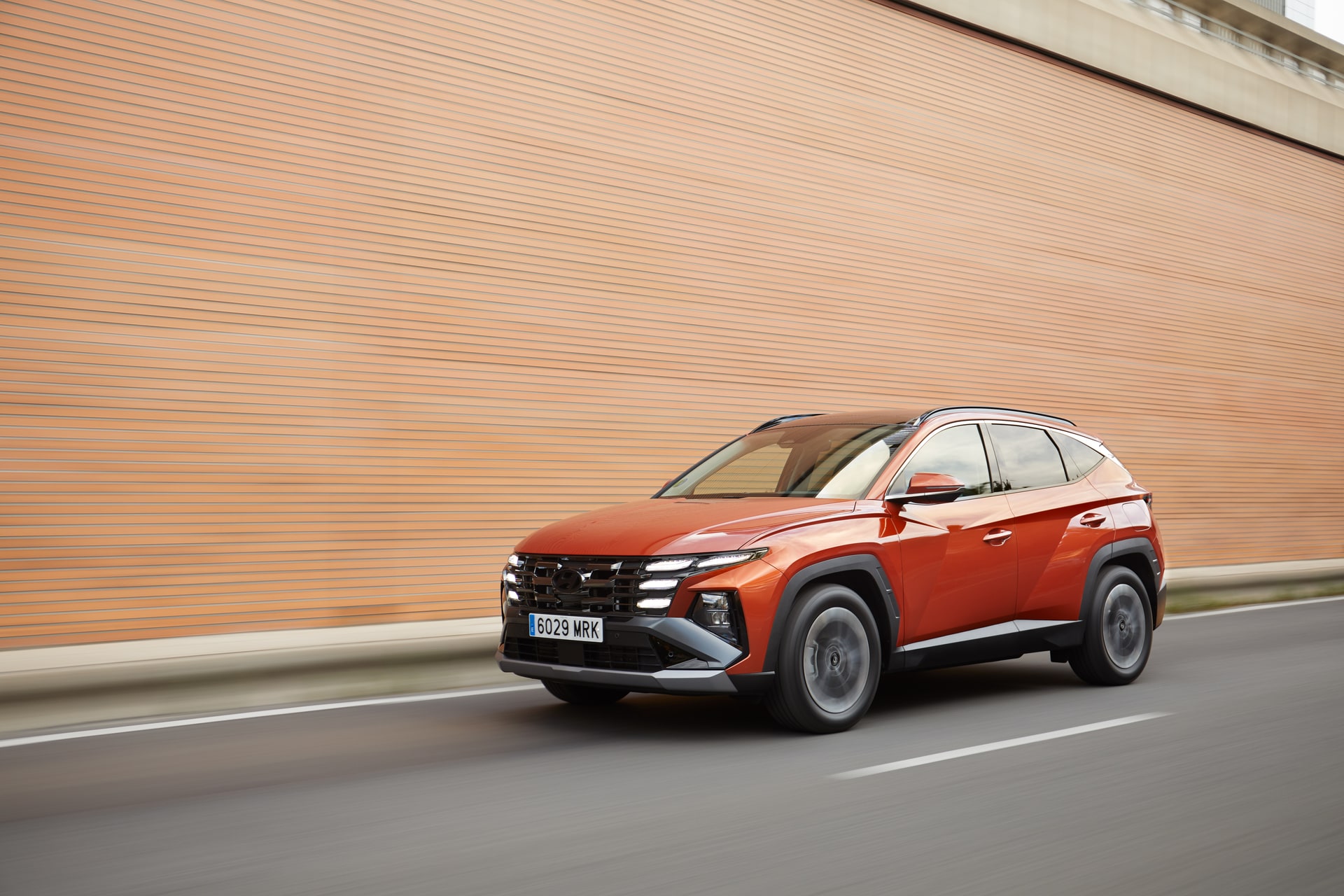
A practical guide to buying a hybrid compact SUV for around €35,000 in Spain in 2026, with technical criteria, available models and an objective comparison.
The hybrid compact SUV segment has become the true battleground of the Spanish market. With the ECO label as an urban passport, consumption below 5.5 l/100 km and an offer that in 2026 approaches thirty references, the question is no longer whether a hybrid compact SUV is the logical choice for a average family, but which one to buy without crossing the psychological — and fiscal — barrier of €32,000. This guide answers exactly that question with verifiable criteria and models genuinely available at Spanish dealerships.
Why the hybrid compact SUV is the most competitive segment of 2026
No other segment concentrates so much engineering per euro. The hybrid compact SUV combines the format preferred by the Spanish buyer (between 4.35 and 4.55 metres), the efficiency of electrified powertrains and prices that, thanks to Asian competition and the commercial campaigns of mainstream brands, remain contained despite raw material inflation.
What we mean by “hybrid compact SUV for less than €32,000”
We are talking about vehicles between 4.3 and 4.6 metres long, front-wheel drive, with a self-charging hybrid system (HEV) or an advanced light hybrid (evolved 48V MHEV), and a final list price — with brand discounts and associated financing — below €32,000 for a well-equipped mid-range trim, not the bare entry-level version.
Types of hybridisation: HEV, MHEV and why the difference matters
The self-charging HEV (Toyota, Honda, Renault E-Tech) allows pure electric driving at low speed, with real savings of 25-35% compared with an equivalent petrol car. The 48V MHEV (Hyundai, Kia, MG) assists the combustion engine but does not propel the car on its own; its saving is around 10-15%. For intensive urban use, the HEV is superior; for predominantly motorway driving, the difference narrows.
WLTP consumption: the figure that separates the good from the excellent
The segment benchmark in 2026 is 4.7-5.3 l/100 km WLTP combined for HEV, and 5.8-6.4 l/100 km for MHEV. Anything above 6.5 l/100 km in a compact SUV labelled as hybrid should set off alarm bells.
ADAS and safety: what to demand without exception in 2026
With the GSR2 regulation fully applied, any new compact SUV includes autonomous emergency braking, active lane keeping, traffic sign recognition and driver fatigue detection. What makes the difference: 360° camera, adaptive cruise control with Stop&Go, semi-autonomous lane change and head-up display. Requiring at least the first two below €32,000 is reasonable.
Warranty and after-sales: where the Asian brands win
Toyota offers up to 15 years or 250,000 km of warranty on the hybrid battery when official servicing is carried out. Hyundai and Kia maintain their 5 and 7 years respectively. MG adds 7 years. Honda covers 5 years. This factor weighs heavily on resale value at 4-5 years.
The models you can actually buy in Spain at around €35,000
Toyota C-HR 1.8 Hybrid — from €30,750
The segment benchmark for real-world efficiency. Its fourth-generation hybrid system drinks less than 5 l/100 km in mixed use effortlessly, the ECO label is guaranteed and the design remains the most daring in the segment. Weak point: tight boot (388 litres) and somewhat dark rear seats.
| Power kW | Power CV | Top speed | Range | Consumption | Label | Fuel |
|---|---|---|---|---|---|---|
| 103 kW | 140 CV | 175 km/h | ~1,100 km | 4.7 l/100 km | ECO | Hybrid |
Hyundai Tucson 1.6 T-GDI HEV — from €30,325
Spain’s best-selling compact SUV plays the card of size (4.50 m), a 620-litre boot and a curved dual-screen interface as standard from the mid-level trim. Its HEV system delivers 215 CV combined, the most powerful on the list.
| Power kW | Power CV | Top speed | Range | Consumption | Label | Fuel |
|---|---|---|---|---|---|---|
| 175 kW | 239 CV | 193 km/h | ~820 km | 5.7 l/100 km | ECO | Hybrid |
Kia Sportage 1.6 T-GDI HEV — from €27,460
Technical sibling of the Tucson but with firmer suspension tuning and seven years of warranty. More angular design and slightly superior perceived finishes on the centre console.
| Power kW | Power CV | Top speed | Range | Consumption | Label | Fuel |
|---|---|---|---|---|---|---|
| 175 kW | 239 CV | 190 km/h | ~900 km | 5.5 l/100 km | ECO | Hybrid |
Renault Symbioz E-Tech 145 — from €30,385
The surprise of the comparison. The E-Tech 145 system with dog-clutch gearbox allows up to 80% of urban time in electric mode. Very competitive entry price and a techno trim with notable equipment.
| Power kW | Power CV | Top speed | Range | Consumption | Label | Fuel |
|---|---|---|---|---|---|---|
| 103 kW | 140 CV | 170 km/h | ~1,100 km | 5.9 l/100 km | ECO | Hybrid |
Nissan Qashqai e-Power — from €32,400
A unique concept: the combustion engine only generates electricity, the wheels are always driven by an electric motor. Driving feel very close to a pure EV without needing a plug.
| Power kW | Power CV | Top speed | Range | Consumption | Label | Fuel |
|---|---|---|---|---|---|---|
| 140 kW | 190 CV | 170 km/h | ~830 km | 4.4 l/100 km | ECO | Hybrid |
Honda ZR-V e:HEV — from €38,750
Honda’s i-MMD system is probably the most refined in the segment in its transitions between modes. Interior quality above average, although the boot (380 litres) falls behind its rivals.
| Power kW | Power CV | Top speed | Range | Consumption | Label | Fuel |
|---|---|---|---|---|---|---|
| 135 kW | 184 CV | 173 km/h | ~870 km | 5.4 l/100 km | ECO | Hybrid |
MG HS Hybrid+ — from €22,340
The most aggressive price-equipment option. For less than €28,000 it offers a 4.66 m compact SUV with a 220 CV hybrid system, a 12.3″ screen, full ADAS and seven years of warranty.
| Power kW | Power CV | Top speed | Range | Consumption | Label | Fuel |
|---|---|---|---|---|---|---|
| 145 kW | 197 CV | 168 km/h | ~950 km | 5.0 l/100 km | ECO | Hybrid |
Summary table and weighted ranking
| Model | Price from | CV | WLTP consumption | Warranty | Score /10 |
|---|---|---|---|---|---|
| Toyota C-HR Hybrid | €30,750 | 140 | 4.7 l | 10-15 years battery | 9.0 |
| Renault Symbioz E-Tech | €30,385 | 140 | 5.9 l | 3 years | 8.7 |
| Honda ZR-V e:HEV | €38,750 | 184 | 5.4 l | 5 years | 8.5 |
| Hyundai Tucson HEV | €30,325 | 239 | 5.7 l | 5 years | 8.4 |
| Kia Sportage HEV | €27,460 | 239 | 5.5 l | 7 years | 8.4 |
| Nissan Qashqai e-Power | €32,400 | 190 | 4.4 l | 3 years | 8.2 |
| MG HS Hybrid+ | €22,340 | 197 | 5.0 l | 7 years | 8.1 |
Frequently asked questions
Which hybrid compact SUV consumes the least in 2026 for less than €32,000?
The Renault Symbioz E-Tech 145 with 4.6 l/100 km WLTP, closely followed by the Toyota C-HR Hybrid with 4.9 l/100 km. Both clearly outperform the segment’s MHEVs in urban use.
Is a self-charging HEV or an MHEV better for the city?
A self-charging HEV, without question. It can run in pure electric mode up to 40-50 km/h without burning petrol, whereas the MHEV always depends on the combustion engine. In traffic jams the consumption difference can exceed 30%.
What warranty covers the hybrid battery on these models?
Toyota leads with up to 10-15 years (under its Relax programme) when official servicing is carried out. Kia offers 7 years, Hyundai and Honda 5 years, MG 7 years, and Renault and Nissan 3 years on the complete vehicle with specific conditions for the battery.
Can I enter Madrid Central or Barcelona’s ZBE with these hybrid compact SUVs?
Yes. All the models mentioned carry the DGT ECO label, which allows access to Low Emission Zones in all Spanish cities without significant restrictions until at least 2030.


 Peugeot E-208 GTi: a battery-powered toy that revives the spirit of the 1980s sports cars
 New Lexus ES: luxury grows and goes electric
 First contact with the Dacia Sandero Hybrid 155: power and efficiency from €19,890
Deja un comentario