Electric Cars Hybrid Cars Buying Guides SUV
How to Choose an Urban SUV-B in 2026: Equipment, Consumption and Real Price versus List Price
 Dani Montesinos
28 July 2026
5 min.
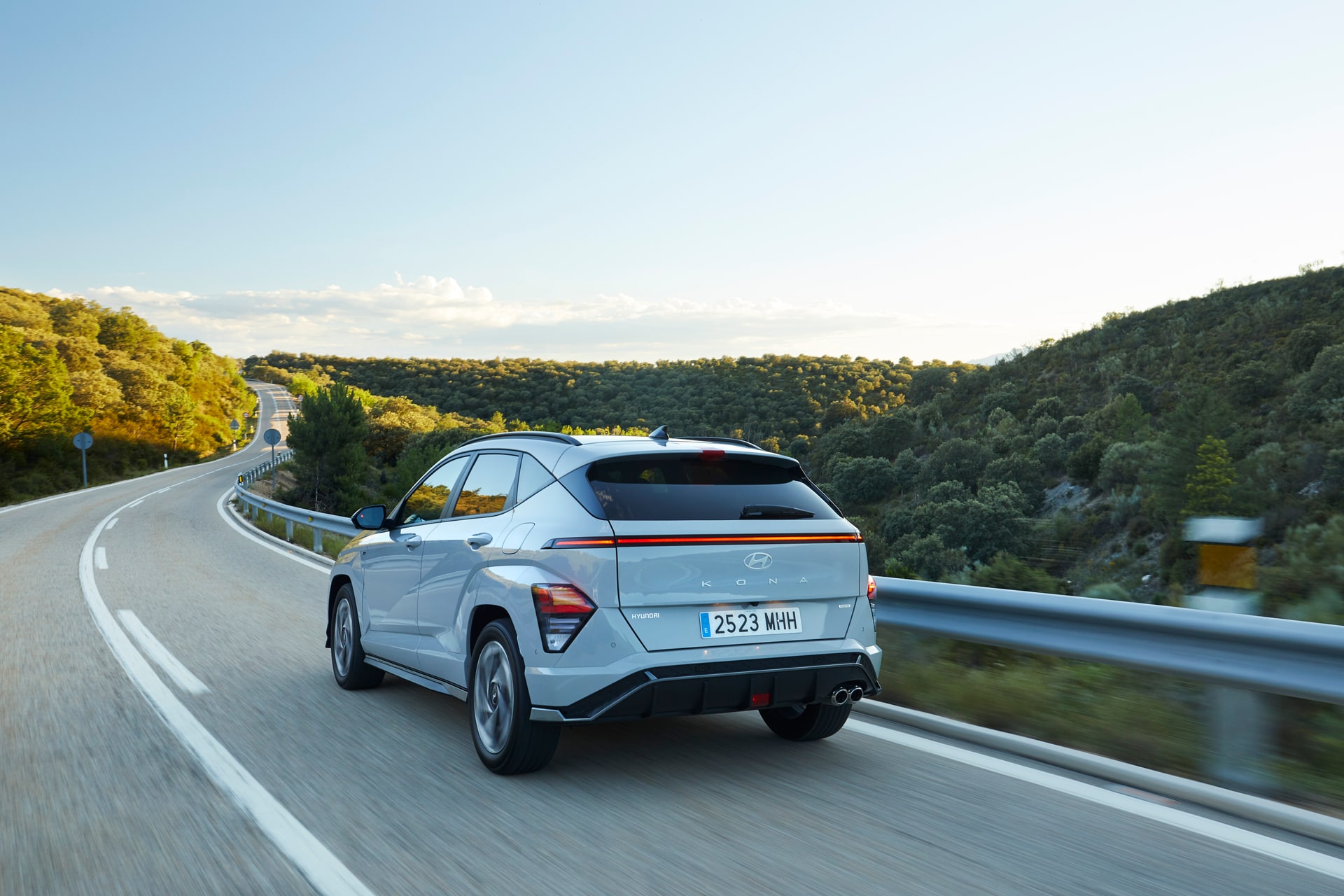
The definitive guide to choosing the best urban SUV-B 2026 in Spain: GSR2 equipment, real WLTP consumption and transaction price versus list price.
The urban SUV-B segment is at its most mature. In 2026, choosing a small SUV in Spain is no longer a matter of choosing between petrol or diesel, but of making sense of an ecosystem where 48 V mild hybrids, full hybrids, compact PHEVs and battery electric vehicles coexist. On top of that comes the GSR2 regulatory requirement, which has raised standard equipment, and a growing gap between the list price and the real transaction price. This guide sets out the criteria that make the difference and compares the models with the greatest weight in the Spanish market.
What defines an urban SUV-B today
We are talking about vehicles between 4.10 and 4.40 metres long, with a raised ride height, platforms shared with B-segment city cars and a clear purpose: mixed urban and interurban use, with a boot of 400-475 litres and engines of 100 to 160 CV in the most in-demand versions.
The impact of GSR2 on equipment
Since July 2024, the GSR2 regulation requires fitting as standard systems such as drowsiness warning, ISA (intelligent speed assistance), EDR black box, enhanced autonomous emergency braking and active lane keeping. In practice, this has levelled up the safety equipment of even the most basic segment B SUV equipment, but it has also raised the entry price by between 400 and 900 euros depending on the manufacturer.
Real WLTP consumption: the small print
real urban SUV consumption rarely matches the homologated figure. In full hybrids the deviation is small (between 0.3 and 0.8 l/100 km); in pure petrol it rises to 1-1.5 l/100 km, and in PHEVs it depends critically on how the plug is used.
Peugeot 2008 (from 21,630 €)
A bold design, i-Cockpit 3D and a range that includes the new generation of Turbo 100 engines with 48 V mild hybridisation, or the 110 CV and 145 CV hybrids, plus the e-2008 electric with 156 CV and 406 km WLTP. Good insulation and a premium feel inside.
| Power kW | Power CV | Top speed | Range | Consumption | Label | Fuel |
|---|---|---|---|---|---|---|
| 73 | 100 | 200 km/h | 950 km | 5.7 l/100 km | ECO | 48V hybrid |
Renault Captur (from 29,826 €)
The French best-seller shines with its E-Tech Full Hybrid 160, one of the most efficient hybrids in the segment thanks to its clutchless multimode gearbox. Modular interior with sliding rear bench.
| Power kW | Power CV | Top speed | Range | Consumption | Label | Fuel |
|---|---|---|---|---|---|---|
| 116 | 160 | 180 km/h | 900 km | 4.4 l/100 km | ECO | Hybrid |
Hyundai Kona (from 22,390 €)
The second generation has grown to 4.35 m and offers the 1.0 TGDI petrol, 1.6 TGDI, 1.6 GDI hybrid and the Kona Electric with 49 kWh or 65.4 kWh and up to 510 km WLTP. 5-year warranty with no mileage limit.
| Power kW | Power CV | Top speed | Range | Consumption | Label | Fuel |
|---|---|---|---|---|---|---|
| 150 | 204 | 172 km/h | 510 km | 14.7 kWh/100 km | ZERO | Electric |
Toyota Yaris Cross (from 27,500 €)
A benchmark for reliability and consumption. The urban hybrid SUV-B par excellence: 116 or 130 CV with the most refined hybrid powertrain in the segment, an AWD-i option and real-world consumption close to 5 l/100 km.
| Power kW | Power CV | Top speed | Range | Consumption | Label | Fuel |
|---|---|---|---|---|---|---|
| 96 | 130 | 170 km/h | 950 km | 4.5 l/100 km | ECO | Hybrid |
Nissan Juke (from 27,850 €)
Extreme personality and a 145 CV Hybrid version developed with Renault. Good chassis and colour customisation options.
| Power kW | Power CV | Top speed | Range | Consumption | Label | Fuel |
|---|---|---|---|---|---|---|
| 106 | 145 | 166 km/h | 850 km | 4.8 l/100 km | ECO | Hybrid |
Ford Puma (from 23,805 €)
Outstanding driving dynamics and a 125/155 CV 1.0 EcoBoost mHEV. Its 80-litre MegaBox under the boot floor is exclusive.
| Power kW | Power CV | Top speed | Range | Consumption | Label | Fuel |
|---|---|---|---|---|---|---|
| 114 | 155 | 200 km/h | 900 km | 5.4 l/100 km | ECO | 48V hybrid |
Seat Arona (from 19,510 €)
The most competitive entry price among established European brands. 1.0 TSI of 95 and 115 CV, with CNG options under the ECO label.
| Power kW | Power CV | Top speed | Range | Consumption | Label | Fuel |
|---|---|---|---|---|---|---|
| 85 | 115 | 196 km/h | 850 km | 5.3 l/100 km | C | Petrol |
Volkswagen T-Cross (from 22,605 €)
2024 facelift with a renewed interior. 1.0 TSI engines of 95 and 115 CV, and a 1.5 TSI of 150 CV with ACT.
| Power kW | Power CV | Top speed | Range | Consumption | Label | Fuel |
|---|---|---|---|---|---|---|
| 110 | 150 | 200 km/h | 820 km | 5.9 l/100 km | C | Petrol |
Kia Stonic (from 19,090 €)
Adjusted price and a 7-year warranty. 1.0 T-GDI mHEV engine of 100 and 115 CV.
| Power kW | Power CV | Top speed | Range | Consumption | Label | Fuel |
|---|---|---|---|---|---|---|
| 84 | 115 | 185 km/h | 900 km | 5.5 l/100 km | ECO | 48V hybrid |
Dacia Duster (from 20,020 €)
Although it borders on the C segment, the third generation keeps B-segment prices. Hybrid 140, TCe 130 mHEV and ECO-G 100 bi-fuel.
| Power kW | Power CV | Top speed | Range | Consumption | Label | Fuel |
|---|---|---|---|---|---|---|
| 103 | 140 | 180 km/h | 900 km | 5.4 l/100 km | ECO | Hybrid |
List price versus real price
The urban SUV-B real price can differ by between 8% and 18% from the recommended retail price. The most common levers are manufacturer financing (2,500-3,500 € discount, conditional), private scrappage schemes, end-of-quarter offers and stock clearance. Example: a Peugeot 2008 Hybrid 136 with a list price of 28,900 € can close at 24,100-24,800 € when financed. The most aggressive SUV-B discounts 2026 are usually the Captur, 2008, Juke and Arona.
Comparison summary table
| Model | From (€) | Real consumption | Label | Score /10 |
|---|---|---|---|---|
| Toyota Yaris Cross | 27,500 | 4.5 l | ECO | 9.0 |
| Renault Captur | 29,826 | 4.4 l | ECO | 8.7 |
| Peugeot 2008 | 21,630 | 5.7 l | ECO | 8.4 |
| Hyundai Kona | 22,390 | 14.7 kWh | ECO/ZERO | 8.6 |
| Ford Puma | 23,805 | 5.4 l | ECO | 8.3 |
| Nissan Juke | 27,850 | 4.8 l | ECO | 8.1 |
| Seat Arona | 19,510 | 5.3 l | C | 7.8 |
| Volkswagen T-Cross | 22,605 | 5.9 l | C | 7.9 |
| Kia Stonic | 19,090 | 5.5 l | ECO | 8.0 |
| Dacia Duster | 20,020 | 5.4 l | ECO | 8.2 |
Recommendations by profile
- Pure urban use: Yaris Cross or Captur E-Tech.
- Mixed with frequent motorway driving: Puma mHEV or T-Cross 1.5 TSI.
- Limited budget: Duster, Stonic or Arona.
- Step up to electric: Kona Electric or e-2008.
Frequently asked questions
Which is the best urban SUV-B 2026 for value for money?
The Toyota Yaris Cross Hybrid leads on reliability, real consumption and residual value, followed by the Renault Captur E-Tech.
Is it worth buying a small SUV 2026 with an ECO label rather than a C one?
Yes, especially if you drive in Madrid, Barcelona or any ZBE, where the ECO label guarantees unrestricted access in the medium term.
What real discount can I negotiate?
Between 8% and 18% off the RRP, almost always conditional on financing at least 8,000-10,000 € with the brand over 36-48 months.
Does an urban SUV-B hybrid pay off compared with a petrol one?
It pays off from 12,000-15,000 km a year with predominantly urban use; below that, a 48 V mHEV offers better cost-benefit.


 Kia offers an electric range of 10 models, 50 versions and 400 possible combinations
 The seven finalists for the 2027 European Car of the Year (COTY) are exclusively electric
 Peugeot E-208 GTi: a battery-powered toy that revives the spirit of the 1980s sports cars
Deja un comentario