Hyundai RAV4 Toyota Tucson Hybrid Cars Comparisons Buying Guides Tests SUV
How to Choose the Best-Value Hybrid SUV in 2026: Fuel Consumption, Warranty and Maintenance Costs
 Iván Navarro
20 August 2026
6 min.
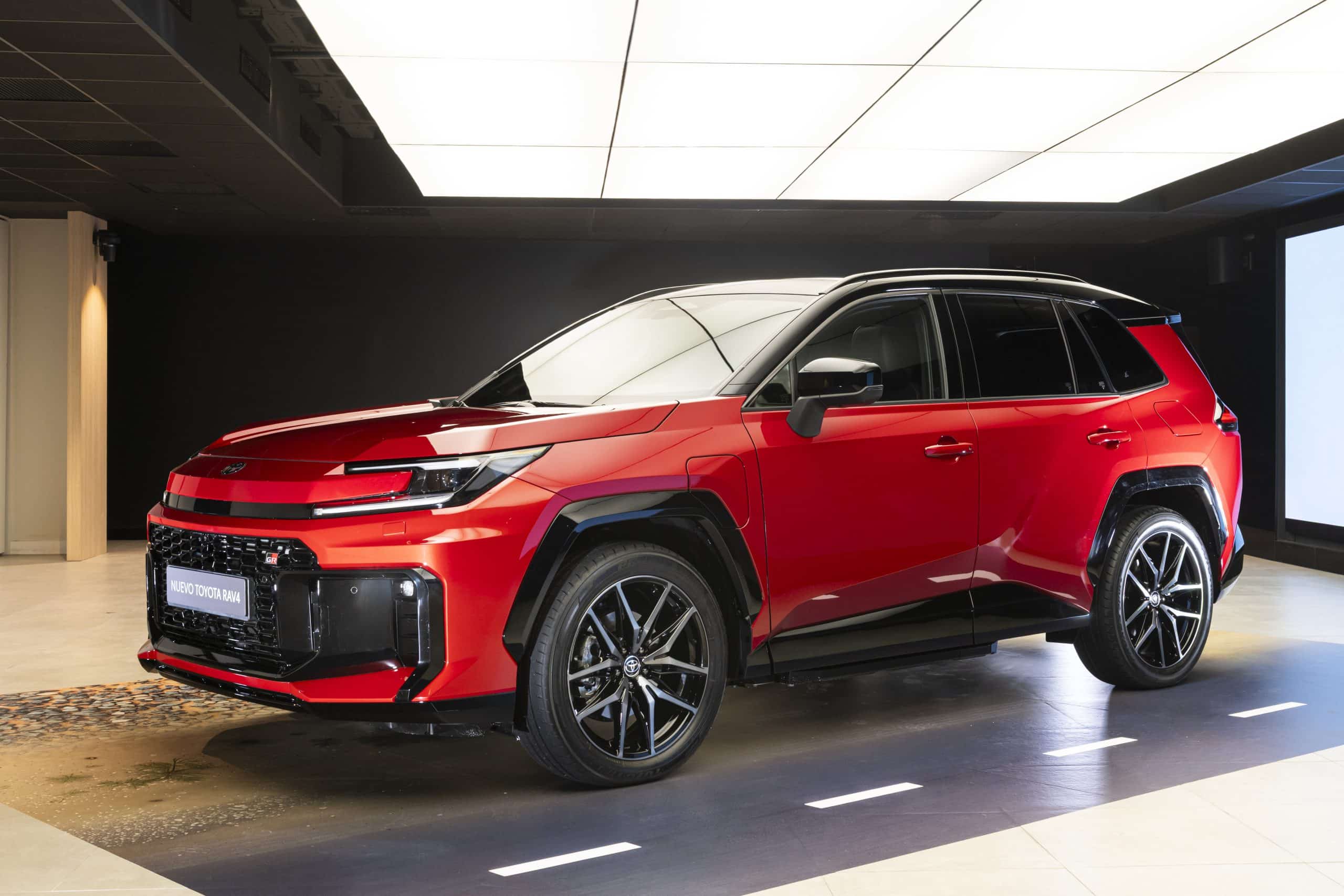
A practical guide to choosing the best-value hybrid SUV for 2026, comparing WLTP fuel consumption, real-world warranty and five-year maintenance costs. Toyota RAV4 Hybrid versus Hyundai Tucson HEV: which one makes more sense and why.
Choosing a hybrid SUV in 2026 is no longer about deciding whether to electrify. That battle has been won. The question now is more uncomfortable: between two cars that on paper consume similar amounts and cost the same, which one really works out cheaper over five years? This is where the dealer’s headline stops mattering and the small figures take over — those in the service book, in the warranty policy, on the petrol station receipt.
Let’s put on the table the four criteria that, in our view, decide the purchase of a compact hybrid SUV this year: real consumption, warranty (with the battery included, not just the car itself), service intervals and cumulative maintenance cost. And we apply them to two references in this segment in Spain: Toyota RAV4 Hybrid and Hyundai Tucson HEV.
What defines the best-value hybrid SUV of 2026?
A hybrid SUV pays off when the price premium over an equivalent petrol model is recovered in less than four years. No more, no less. Getting there requires three things: a WLTP consumption below 6 l/100 km on the combined cycle, a warranty covering the traction battery for at least eight years, and an after-sales network with labour rates kept under control.
That trio is what separates hybrids that age well from those that turn into a headache by their fourth winter.
WLTP consumption: the fine print that really matters
The WLTP homologation figure is useful but misleading if it is not put in context. A well-engineered compact hybrid SUV typically sits around 5.0–5.8 l/100 km combined. In the city, with dense traffic, that figure can drop below 4.5 l/100 km because the system recovers energy on every brake application. On the motorway, however, the advantage fades: above 120 km/h the combustion engine takes over and the hybrid ends up consuming about the same as a well-tuned petrol model.
For mixed urban use of 15,000 km a year, the difference compared with a pure petrol car can be around €400–500 a year in fuel. Not bad, but not the miracle solution either if the car spends most of its time on motorways.
Hybrid SUV warranty: where the catch is
This is where brochures get creative. The vehicle warranty and the traction battery warranty are two different things, and they do not always match. In 2026, the minimum acceptable standard is 5 years or 100,000 km for the car, and 8 years or 160,000 km for the hybrid battery. Anything less is a bad deal.
Two schemes stand out in the Spanish market: the Toyota Relax programme, which extends coverage up to 10 years or 185,000 km provided maintenance is carried out at an official network, and the Hyundai 5-year warranty with no mileage limit, which is more generous for those who drive a lot each year.
Hybrid SUV maintenance: intervals and five-year cost
Conventional hybrids have a structural advantage: less wear on the brakes (regeneration does part of the work) and less demand on the combustion engine, which cold-starts less often. This translates into services every 15,000 km or 12 months, with labour rates of around €250–400 per service at official dealerships.
Over five years, a well-maintained compact hybrid SUV serviced at an official network comes to between €1,400 and €1,800 in cumulative cost. With premium brands or exclusive networks, add another 20–30%.
Toyota RAV4 Hybrid from €43,500
The RAV4 remains the obvious reference in the segment for one simple reason: it has spent more than two decades refining the same hybrid system, and it shows. WLTP consumption of 5.7 l/100 km in the 4×2 version, an e-CVT architecture that in the city makes you forget it is a hybrid, and the umbrella of Toyota Relax coverage up to 10 years if you service it at an official workshop. The interior is not an aesthetic festival, and that has to be said, but it is put together like a Swiss watch.
| Power kW | Power CV | Top speed | Range | Consumption | Label | Fuel |
|---|---|---|---|---|---|---|
| 136 kW | 183 CV | 180 km/h | ~950 km | 4.9 l/100 km | ECO | Hybrid |
Hyundai Tucson HEV from €40,100
The Tucson HEV enters the debate from another angle: an entry price clearly below the RAV4, one of the boldest exterior designs in the segment, and a 5-year warranty with no mileage limit which, for a sales rep or a driver covering 30,000 km a year, is pure gold. The hybrid system of Hyundai lacks the finesse of the Toyota at low speeds — the switch between modes is felt a little more — but it performs well and its consumption is reasonable. Rear-seat space is remarkable.
| Power kW | Power CV | Top speed | Range | Consumption | Label | Fuel |
|---|---|---|---|---|---|---|
| 176 kW | 239 CV | 196 km/h | ~900 km | 5.9 l/100 km | ECO | Hybrid |
Toyota RAV4 vs Hyundai Tucson: which makes more sense
The RAV4 wins on proven reliability and the peace of mind of Relax coverage up to 15 years — if you keep a car for a decade, there is no debate. The Tucson wins on entry price (around €4,600 less), on design and on warranty flexibility for high-mileage drivers. We develop a finer analysis of this duel in our comparison between the Hyundai Tucson and Toyota RAV4 hybrids, where we go into detail on interior space and equipment.
| Model | Price from | WLTP consumption | Car warranty | Battery warranty | 5-year maintenance | Score |
|---|---|---|---|---|---|---|
| Toyota RAV4 Hybrid | €43,500 | 5.7 l/100 km | Up to 15 years (Relax) | 15 years / 250,000 km | ~€1,500 | 9.1/10 |
| Hyundai Tucson HEV | €34,900 | 5.9 l/100 km | 5 years no km limit | 8 years / 160,000 km | ~€1,650 | 8.6/10 |
FAQ
Which hybrid SUV consumes least in 2026 according to WLTP?
In the compact SUV segment, the Toyota RAV4 Hybrid 4×2 is homologated at 4.9 l/100 km, slightly below the Hyundai Tucson HEV (5.9 l/100 km). In real urban use both can drop below 5 l/100 km.
How many years does a hybrid battery warranty cover?
The market standard is 8 years or 160,000 km. Toyota extends that coverage up to 10 years or 185,000 km through the Relax programme, provided servicing is carried out at an official network.
How much does it cost to maintain a hybrid SUV over 5 years?
Between €1,400 and €1,800 at an official network for a conventional compact hybrid SUV, with services every 15,000 km or 12 months. Brake wear is lower thanks to regeneration.
Is a cheaper hybrid SUV worth it compared with a benchmark model?
It depends on annual mileage. Below 15,000 km a year the purchase price weighs more and the cheaper option makes sense. Above that, proven reliability and extended warranty cover offset the higher initial price.
Technical specifications of the cars in this article


 Kia offers an electric range of 10 models, 50 versions and 400 possible combinations
 The seven finalists for the 2027 European Car of the Year (COTY) are exclusively electric
 Peugeot E-208 GTi: a battery-powered toy that revives the spirit of the 1980s sports cars
Deja un comentario