e-3008 Enyaq EV6 EV9 Hyundai IONIQ Ioniq 5 KIA Model Y Peugeot Renault Santa Fe Scénic Skoda Sorento Tesla Electric Cars Comparisons Family Rankings SUV
Ranking 2026: the 6 family electric SUVs with the best range-to-price ratio under €55,000
 Iván Navarro
20 August 2026
7 min.
We analyse the six most competitive family electric SUVs on the Spanish market under €55,000, combining WLTP range, price with the Plan Auto+ and usable space. 2026 editorial ranking with technical scoring.
The family electric SUV under €55,000 has stopped being a compromise. Two years ago, anyone looking for real-world range and space for five passengers with luggage had to dig deep into their pockets, up to €60,000. Today the equation changes: six verified models on sale in Spain offer more than 500 km WLTP and premium-car equipment for less than that figure, and with the Plan Auto+ applied the real starting price drops even further.
The list that follows is not a catalogue snapshot. It is an editorial ranking that weighs three variables: homologated range, final price after aid and usable space. No filler with models that are not available at Spanish dealerships. Everything listed can be bought today.
What we ask of a family electric SUV under €55,000 in 2026
A serious family electric at this price point must meet three requirements. A minimum WLTP range of 450 km — below that, it is not worth the jump from a plug-in hybrid. Real fast-charging from 150 kW so that a Madrid–Valencia stop takes under 25 minutes. And a boot of around 500 litres, because family use demands room for a pram, car seats and luggage without debate.
The reference price is the recommended RRP for the mid-level trim, before dealer commercial discounts. The Plan Auto+ is mentioned as a framework of aid: the exact amount should be checked on the official website, as the figures are updated.
How we built the ranking: WLTP range, price and usable space
The final score combines four weights: range (35%), adjusted price (30%), space and habitability (20%) and on-the-road charging experience (15%). We do not go into aesthetic tastes or acceleration figures, which in this segment are almost incidental. A father of a family who drives 18,000 km a year wants to arrive, charge quickly and fit the pram without folding it down.
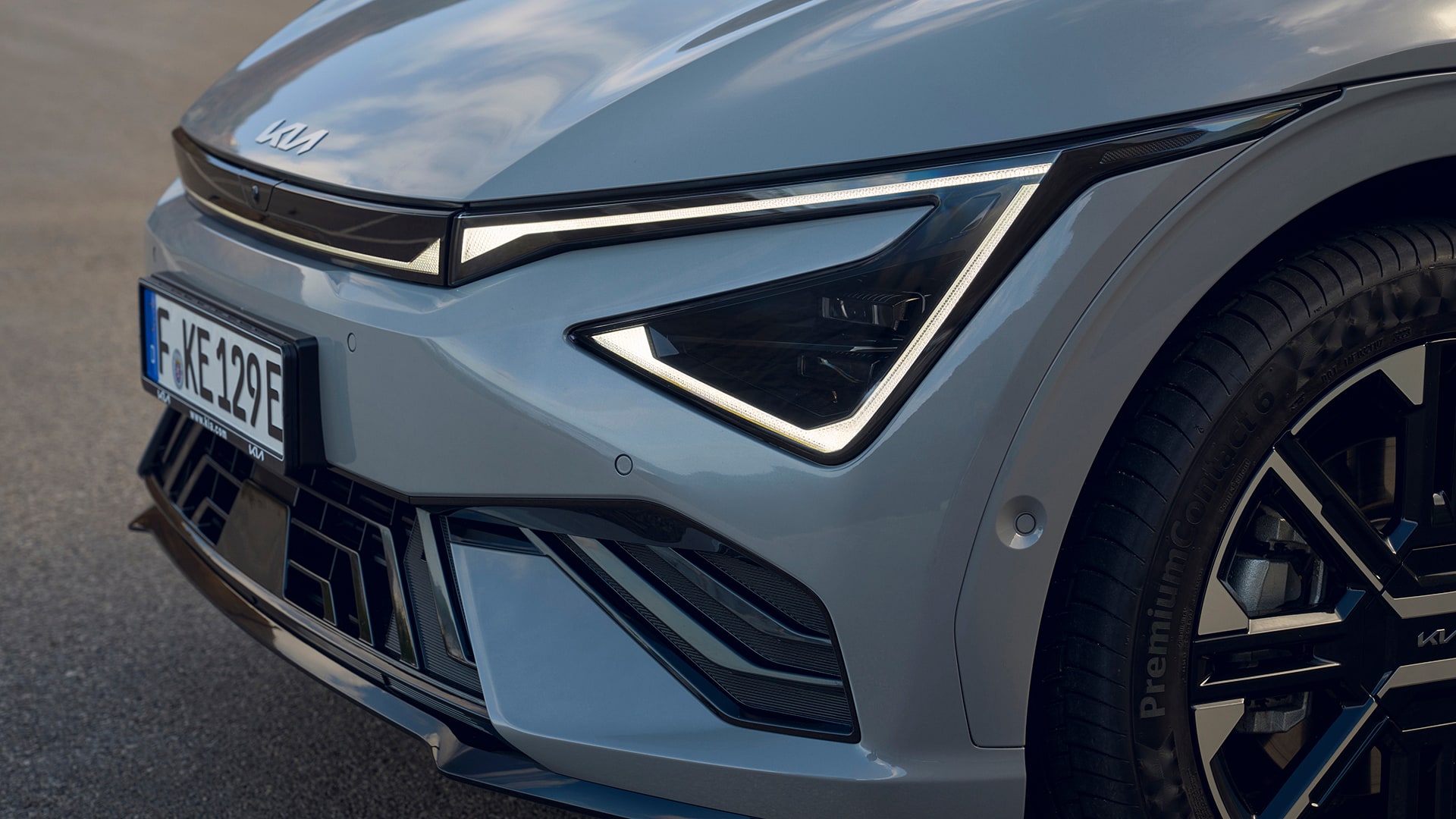
1. Kia EV6 — from €51,900
In our view, the EV6 remains the benchmark to beat. Its 800 V architecture allows charging from 10 to 80% in about 18 minutes with a 350 kW charger, something rivals at a similar price take almost twice as long to achieve. The 84 kWh battery version is homologated at 582 km WLTP and arrives at the dealership with equipment that borders on excessive: double curved screen, standard heat pump and V2L to power a camping fridge.
That said, rear seat space is not its strongest point. The sloping roofline penalises it. An occupant of 1.90 m will travel comfortably, but with knees closer to the front seat than the exterior dimensions would suggest.
| Power kW | Power CV | Top speed | WLTP range | Consumption | Emissions label | |
|---|---|---|---|---|---|---|
| 168 kW | 229 CV | 185 km/h | 582 km | 16.5 kWh/100 km | Zero | Electric |
2. Hyundai Ioniq 5 — from €46,500
The EV6’s close relative shares the E-GMP platform and all its charging virtues, but interprets the segment differently. Squarer, roomier, with a second row that is genuinely enjoyable. The 570 km WLTP of the 84 kWh version is within reach if the driver doesn’t obsess over the right foot. Its interior, with that sliding centre console, feels a step above what the price asks.
We have already compared it with its most obvious rival in a head-to-head between the Ioniq 5 and the Model Y: the conclusion is not unanimous, it depends on how the user drives the car.
| Power kW | Power CV | Top speed | WLTP range | Consumption | Emissions label | |
|---|---|---|---|---|---|---|
| 168 kW | 229 CV | 185 km/h | 570 km | 16.7 kWh/100 km | Zero | Electric |
3. Skoda Enyaq — from €44,800
The Enyaq plays a different game. Less flashy, more pragmatic, but with the largest boot in the group: 585 litres, which is welcome when it’s time to get out the child seat, the pushchair and the weekend bag in one go. The 85 version delivers 570 km WLTP and its road behaviour is among the most balanced in the segment, with steering that requires slightly less effort than the EV6’s but reads with precision.
It does not shine at fast charging — 175 kW peak — but in practice 10–80% is completed in about 28 minutes, a respectable figure. It is the rational candidate if the German chassis matters more than the badge.
| Power kW | Power CV | Top speed | WLTP range | Consumption | Emissions label | |
|---|---|---|---|---|---|---|
| 210 kW | 286 CV | 180 km/h | 570 km | 15.8 kWh/100 km | Zero | Electric |
4. Renault Scenic E-Tech — from €41,500
The return of the Scenic as an electric car has been, in my opinion, one of the French brand’s successes of the last decade. The 625 km WLTP homologated on the Long Range version is the leading figure in this ranking. And the entry price, with Auto+ applied, is the most contained of the group.
Its weak point is fast charging: 150 kW peak and a curve that drops early. For those who travel a lot on motorways it will not be the first choice. For urban and family use with an occasional monthly getaway, it is almost unbeatable.
| Power kW | Power CV | Top speed | WLTP range | Consumption | Emissions label | |
|---|---|---|---|---|---|---|
| 160 kW | 218 CV | 170 km/h | 625 km | 16.3 kWh/100 km | Zero | Electric |
5. Peugeot e-3008 — from €44,990
The e-3008 bets on design and interior. Its curved panoramic i-Cockpit is one of the most sophisticated cabins in the segment, well above what is usually seen for less than €55,000. WLTP range of 525 km on the Long Range version and a dynamic poise that surprises for such a tall car.
Its flaw is a tiny steering wheel that still doesn’t convince everyone. And fast charging, once again, falls behind the Koreans: 160 kW peak, honest but not leading.
| Power kW | Power CV | Top speed | WLTP range | Consumption | Emissions label | |
|---|---|---|---|---|---|---|
| 170 kW | 231 CV | 170 km/h | 525 km | 17.1 kWh/100 km | Zero | Electric |
6. Tesla Model Y — from €39,990
The Model Y stays in the ranking for one simple reason: the Supercharger network. None of the rivals above offers the same peace of mind on long journeys. The long-range RWD version is homologated at 657 km WLTP, and the updated interior of the 2025 refresh addresses much of the historical criticism (insulation, plastic quality, suspension).
It is not perfect. The absence of physical controls remains a talking point, and the minimalist approach doesn’t suit everyone. But as a travel tool, it still leads the pack.
| Power kW | Power CV | Top speed | WLTP range | Consumption | Emissions label | Fuel |
|---|---|---|---|---|---|---|
| 220 kW | 299 CV | 201 km/h | 600 km | 15.0 kWh/100 km | Zero | Electric |
Summary table: editorial score for the 2026 ranking
| Position | Model | WLTP range | Price from | Fast charging | Boot | Score /10 |
|---|---|---|---|---|---|---|
| Kia EV6 | 582 km | €51,900 | 350 kW | 490 L | 9.1 | |
| Hyundai Ioniq 5 | 527 km | €46,500 | 350 kW | 527 L | 9.0 | |
| Skoda Enyaq | 570 km | €44,800 | 175 kW | 585 L | 8.7 | |
| Renault Scenic E-Tech | 625 km | €41,500 | 150 kW | 545 L | 8.6 | |
| Peugeot e-3008 | 525 km | €44,990 | 160 kW | 520 L | 8.3 | |
| 6 | Tesla Model Y | 657 km | €39,990 | 250 kW | 854 L | 8.9 |
Frequently asked questions
Which family electric SUV under €55,000 has the most range in 2026?
The Tesla Model Y RWD with 657 km homologated WLTP leads this ranking for pure range. It is followed by the Renault Scenic E-Tech Long Range with 625 km, and the Skoda Enyaq 85 (570 km).
Is there a 7-seat electric SUV under €55,000 in Spain?
In practice, no. Verified 7-seat electric SUVs on the Spanish market (such as the Kia EV9) clearly exceed that threshold. Anyone who needs a third row on a tight budget currently finds more choice in the hybrid segment — something we explore in the Santa Fe vs Sorento comparison.
How much can you really save with the Plan Auto+?
It depends on the current bracket and on whether the buyer scraps an old vehicle. The aid works as a discount after purchase and is cumulative with the dealer’s commercial discount. It is advisable to check the official website for the updated amount before signing a contract.
Does an electric SUV make sense today compared with a hybrid in this segment?
It does if the user drives more than 15,000 km a year and has access to charging at home or at work. Without a private charging point, the operating saving diminishes. For mixed use with many long motorway trips and no private infrastructure, a plug-in hybrid remains the more rational choice.
Technical specifications of the cars in this article

 Kia offers an electric range of 10 models, 50 versions and 400 possible combinations
 The seven finalists for the 2027 European Car of the Year (COTY) are exclusively electric
 Peugeot E-208 GTi: a battery-powered toy that revives the spirit of the 1980s sports cars
Deja un comentario