Hydrogen combustion engines: will they become a real alternative?
 Mónica Redondo @MonicaRedondoD
5 July 2021
2 min.
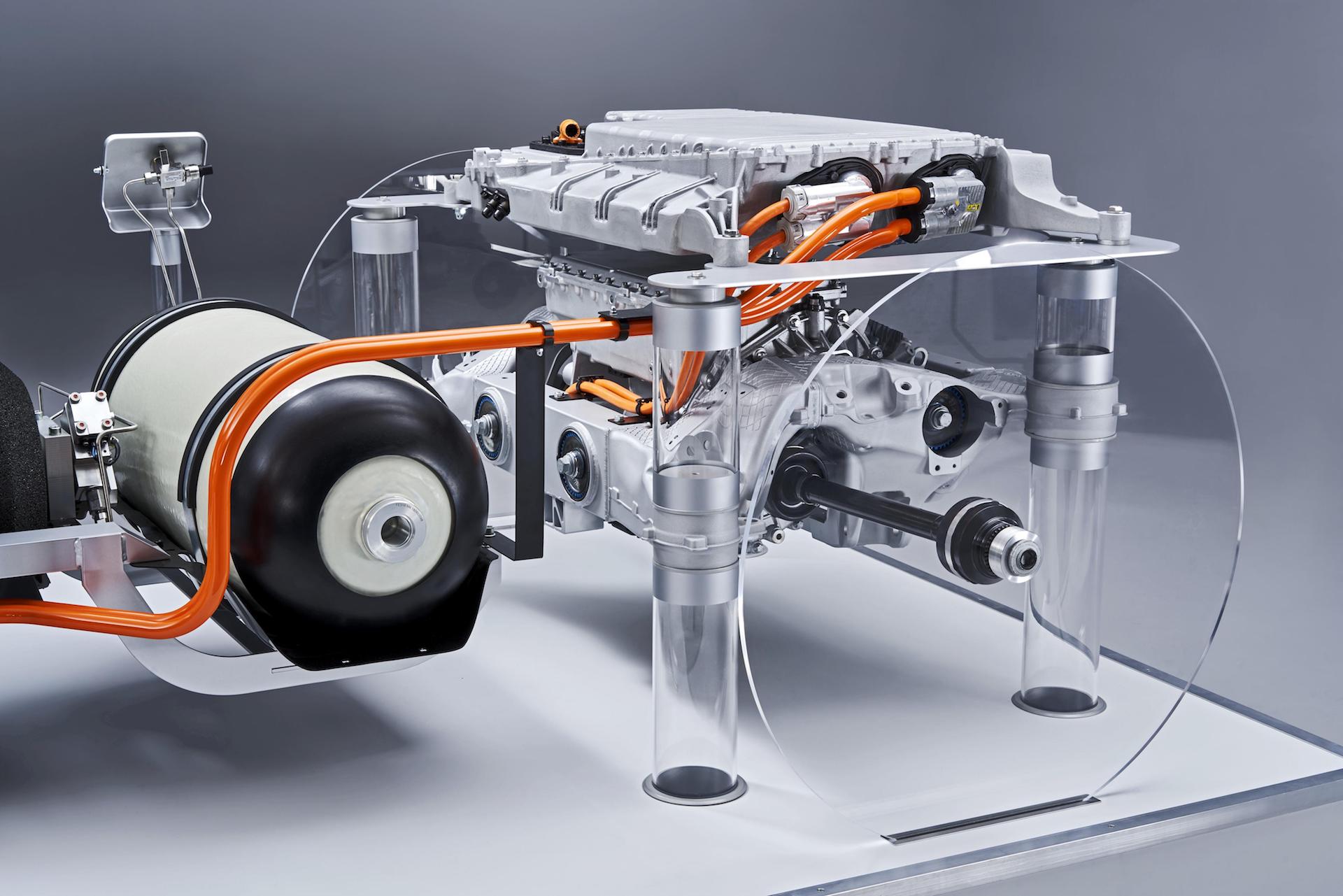
Would it be feasible to develop hydrogen internal combustion engines?
Could hydrogen combustion engines become a real alternative to petrol or diesel engines? It is important to point out that hydrogen burns much faster than petrol, which can make engine response much better and even quicker. Nevertheless, hydrogen is not giving up its fight and aims to become a strong contender for road transport.
The use of hydrogen in fuel cells to generate emission-free electricity has great potential, but many manufacturers are no longer committed to developing internal combustion engines, although they have not disappeared altogether, as Toyota has developed a three-cylinder engine powered by hydrogen that will be used in the Toyota Corolla Sport taking part in the 24 Hours of Fuji.
Hydrogen, the future of combustion engines?
Although hydrogen is a clean fuel compared with petrol or diesel, it is only completely free of emissions when it is used in a fuel cell system to generate electricity. When burned in a combustion engine, it is not completely emission-free. Although no unburnt hydrocarbons, carbon monoxide or CO2 are produced, nitrogen oxides are.
Hydrogen is much less demanding than petrol or diesel and burns completely and efficiently across a much wider range of air-fuel ratios. As a result, a hydrogen engine can run very lean (more air, less fuel) and still produce much lower NOx levels than petrol or diesel.
Hydrogen carries a large amount of energy by weight but is much less dense than liquid fuels, so port-injection engines, in which the fuel is injected into the intake manifold and mixed with air outside the cylinders, produce significantly less power than petrol. Direct injection improves matters and, combined with variable-geometry turbocharging, makes hydrogen-fuelled combustion engines more viable.
New direct-injection turbocharged hydrogen engines can produce more power than an equivalent petrol engine by increasing the proportion of hydrogen in the fuel-air mixture, but NOx levels rise. Otherwise, hydrogen engines are essentially modified petrol engines that, in production form, would have some stronger components and direct hydrogen injection systems.


 Peugeot E-208 GTi: a battery-powered toy that revives the spirit of the 1980s sports cars
 New Lexus ES: luxury grows and goes electric
 First contact with the Dacia Sandero Hybrid 155: power and efficiency from €19,890
Deja un comentario