BYD Hyundai Ioniq 5 Seal U Comparisons
Hyundai Ioniq 5 vs BYD Seal U
 Iván Navarro
27 March 2026
8 min.
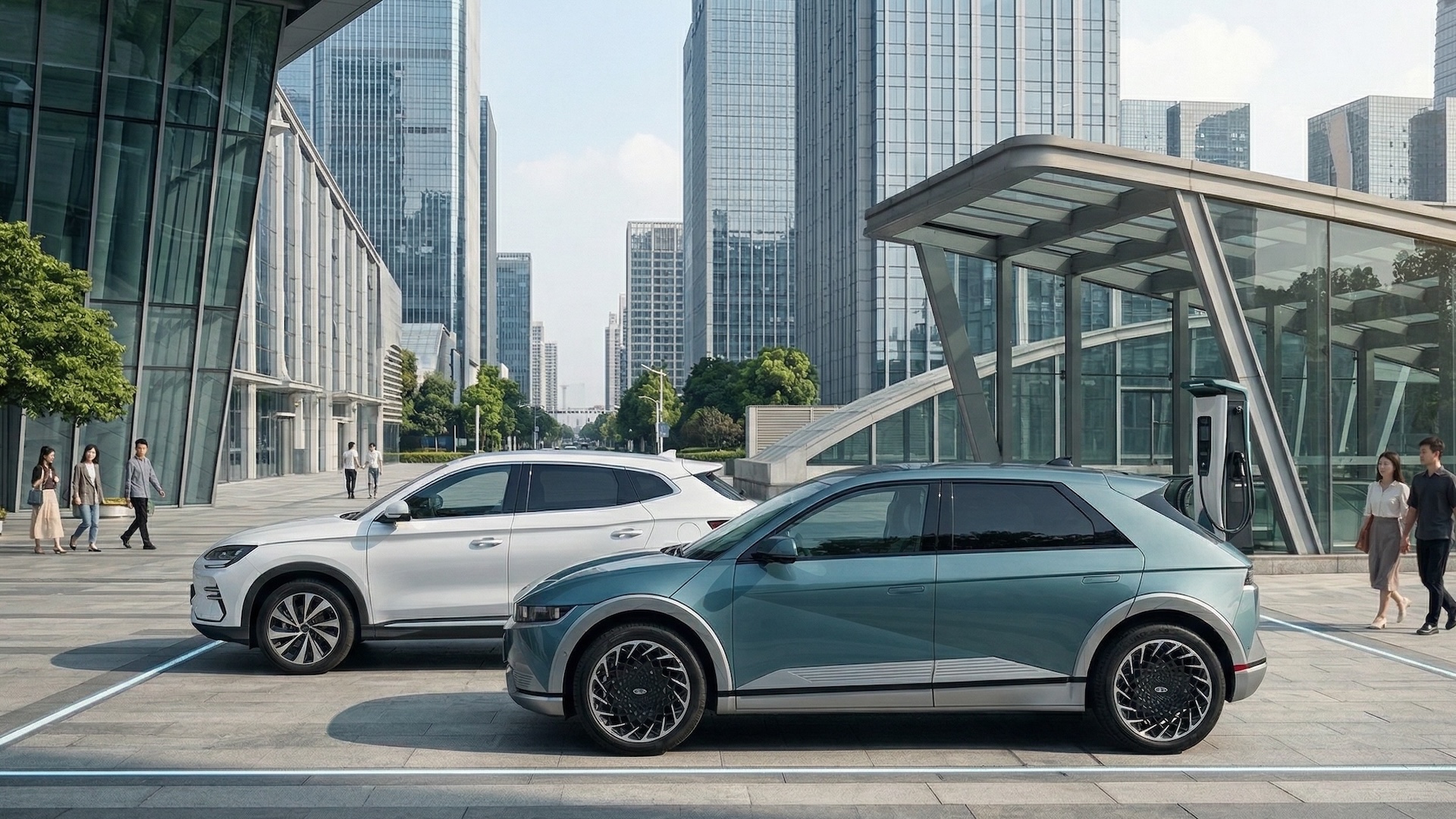
In today’s electric vehicle market, more and more options are available every day, and the SUV segment is one of the most competitive. In this article we compare head to head two genuinely interesting models that stand out from the rest.
The clash between two modern electric proposals raises clear questions: which one has the most real-world range, which car is more comfortable for everyday use, and which offers the best value for money? In this comparative analysis we review key aspects of the Hyundai Ioniq 5 and the BYD Seal U, with special attention to efficiency, on-board technology and practical space.
The comparison focuses on equivalent versions in terms of range and power, based on official homologation figures and manufacturer specifications. Today’s typical buyer looks for a balance between WLTP range, comfort and a reasonable starting price; that is why we also compare real-world consumption sensitivity and the cost of entry.
The analysis covers safety, perceived quality, driver assistance and the experience of use in the city and on long trips. Models such as the Hyundai Kona or the Kia Niro also belong to this competitive environment, but here we focus on two alternatives that represent different approaches: one with an interior design geared toward comfort and modularity; the other toward a proposal focused on efficiency and value for money in terms of equipment.
The most balanced models in the segment in 2026
To choose the vehicles in this comparison we have prioritised the balance between efficiency, performance, interior space and cost. The mix of real-world range, material quality and driving experience makes the difference: a good balance means moderate consumption on the road, sufficient dynamism and an interior that handles everyday use without giving up assistance systems and connectivity.
Hyundai Ioniq 5
The Hyundai Ioniq 5 stands out for a dedicated electric platform that gives it a very well-balanced technical package: generous interior space thanks to its long wheelbase, competitive fast charging and comfortable driving. We recommend its larger-battery version for long journeys, which offers better thermal management and a homologated range that is competitive in its class. In real use the Ioniq 5 proves efficient on motorway consumption and especially comfortable in the city thanks to the smooth power delivery and the layout of the driving position.
In terms of equipment, its multimedia system is complete and the perceived quality improves on previous generations. Compared with rivals such as the Tesla Model Y, the Ioniq 5 opts for a more conventional presentation but with good finishes. Interior modularity and the boot are points in its favour for families looking for a practical car.
In short: a very well-rounded proposal if you prioritise interior space and comfort without giving up a competitive WLTP range.
The best
• Interior space and sense of roominess.
• Fast charging and efficient thermal management.
• Balance between performance and comfort.
The areas for improvement
• Price of the best-equipped versions.
• Some alternatives offer greater dynamism.
Which electric car offers the best balance between space and practicality?
The Hyundai Ioniq 5 stands out for its interior space and versatility, which makes it an ideal option for families who need room without giving up efficiency.
| Feature | Data | Score |
|---|---|---|
| Power | 217 CV | 9.0 |
| Range | 481 km (WLTP) | 9.2 |
| Top speed | 185 km/h | 8.0 |
| Boot | 531 litres | 9.1 |
| Starting price | 44,000 € | 8.6 |
score out of 10 based on the criteria analysed in this article
BYD Seal U
The BYD Seal U offers a different interpretation: a focus on efficiency and a very aggressive value-for-money equipment proposal. BYD brings to its line-up high-density battery systems and carefully managed thermal control; on the road this translates into competitive range figures and good acceleration response. Its interior design prioritises functionality and software integration, with a large central screen and increasingly complete driver assistance.
In day-to-day use the Seal U proves very economical in consumption and punchy in acceleration, but its interior space and boot are somewhat more compact than the Ioniq 5, which may penalise users who travel frequently and need space. Compared with rivals such as the Kia EV6 or the Hyundai Ioniq 5, BYD offers a proposal with a better accessories-to-price ratio and a very attractive homologated range.
The best
• Value for money in terms of equipment and price.
• Efficiency and homologated range figures.
• Integrated technology offering.
The areas for improvement
• Boot space compared with larger crossovers.
• Service and after-sales network still being consolidated in some markets.
Which electric car offers the best value for money?
The BYD Seal U positions itself as one of the alternatives with the best value for money thanks to its equipment and range figures relative to its cost.
| Feature | Data | Score |
|---|---|---|
| Power | 272 CV | 9.1 |
| Range | 560 km (WLTP) | 9.4 |
| Top speed | 200 km/h | 8.4 |
| Boot | 440 litres | 8.0 |
| Starting price | 39,500 € | 9.2 |
score out of 10 based on the criteria analysed in this article
Quick technical comparison of the Top 5
In a head-to-head clash, both models stand out for different virtues: the Ioniq 5 for its space and crossover-type body proportions, and the BYD Seal U for its range figures and an aggressive value-for-money equipment proposal. The clearest differences lie in practical use: whoever prioritises boot and roominess will value the Ioniq 5; whoever seeks range and cost per kilometre, the Seal U. In terms of fast charging, both offer competitive solutions, although real-world experience depends on the infrastructure available.
| Model | Power | Range | Price | Score |
|---|---|---|---|---|
| Hyundai Ioniq 5 | 217 CV | 481 km (WLTP) | 44,000 € | 9.2 |
| BYD Seal U | 272 CV | 560 km (WLTP) | 39,500 € | 9.0 |
score out of 10 based on the criteria analysed in this article
Which car to buy according to your profile
If you do mostly city driving
If your use is mainly urban, prioritise smooth operation and external size: the Hyundai Ioniq 5 offers a comfortable driving position and good manoeuvrability for its size; its efficiency on urban cycles is remarkable.
If you travel frequently
For long journeys, the WLTP range and fast-charging capability are crucial: the BYD Seal U delivers attractive figures and a competitive cost per kilometre, which makes it an interesting alternative for those who cover many kilometres.
If you are looking for the best price
If budget is the priority, the Seal U usually offers more equipment per euro invested; its commercial proposal and positioning tactics make it more attractive from the initial purchase.
If you prioritise technology
Both integrate advanced systems, but the BYD focuses on a very complete software experience and a dominant central screen; for tech-savvy users it may prove more satisfying.
FAQ – Frequently asked questions
Which of the two has the better real-world range?
In WLTP the BYD Seal U shows higher figures in the variant compared, which suggests better reach in mixed conditions, although real-world range will depend on the weather and the way the car is used.
Which one consumes less on the motorway?
On the motorway both are efficient, but the Ioniq 5, thanks to its aerodynamics and thermal management in longer-range versions, tends to keep consumption contained over sustained journeys.
Which is more practical for a family?
The Ioniq 5 offers greater interior space and boot capacity, making it the most practical option for families who need room and interior modularity.
Which car has the better value for money?
The BYD Seal U stands out for a very competitive value-for-money ratio, delivering a lot of equipment for a lower entry cost in comparable versions.
Are these options reliable in the long term?
Both brands have improved their reliability; Hyundai has a consolidated service network in Spain, while BYD is expanding its after-sales coverage. Final reliability will depend on maintenance and mileage.
Expert opinion
Beyond the official figures, the choice between the Hyundai Ioniq 5 and the BYD Seal U comes down to very specific priorities. If you need a spacious car with a good boot and a more traditional sense of quality, the Ioniq 5 is hard to beat: its dedicated electric chassis and tuning offer a comfortable and reliable everyday experience. If your main goal is to maximise range and get the best equipment package at the lowest possible price, the Seal U is a very strong alternative.
For mixed use with frequent trips, the real battery capacity and the efficiency of fast charging should weigh more than boot centimetres; in this scenario, the BYD can pull ahead thanks to its energy efficiency. For someone seeking the lowest cost per kilometre who values a technological presentation and abundant equipment, the Seal U is the logical choice. For families who prioritise space, ergonomics and a consolidated service network, the choice leans towards the Ioniq 5. In any case, it is advisable to test both units in real driving conditions and review financing and maintenance offers, because the final decision will depend as much on the intended use as on the balance between upfront cost and running cost.
Technical specifications of the cars in this article


 Peugeot E-208 GTi: a battery-powered toy that revives the spirit of the 1980s sports cars
 New Lexus ES: luxury grows and goes electric
 First contact with the Dacia Sandero Hybrid 155: power and efficiency from €19,890
Deja un comentario