Hyundai Ioniq 5 Electric Cars Comparisons SUV
Hyundai IONIQ 5 vs Tesla Model Y: I drive the most complete electric SUV of 2026
 Iván Navarro
4 July 2026
5 min.
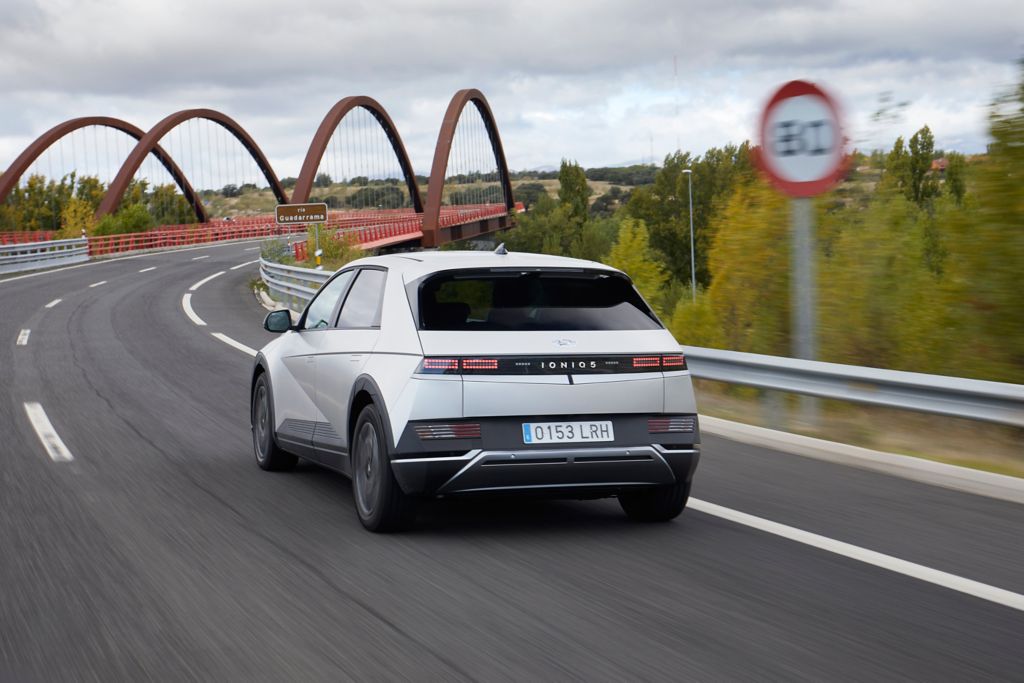
Editorial comparison between the Hyundai IONIQ 5 and the Tesla Model Y RWD to decide which is the best electric SUV of 2026 in Spain in terms of range, charging, technology and price.
The family electric SUV segment has matured into the true battlefield of electric cars in Spain. In 2026, two names sum up much of that conversation: the Hyundai IONIQ 5 and the Tesla Model Y. One bets on disruptive design, an 800-volt architecture and a European take on the electric SUV; the other on radical efficiency, software and its own charging network, which continues to set the pace. In this comparison we put them face to face with editorial judgement and official spec-sheet data.
Hyundai IONIQ 5 vs Tesla Model Y: the duel that defines the segment
The comparison between the Hyundai IONIQ 5 vs Tesla Model Y is no ordinary matchup. They are two opposing philosophies within the SUV segment in 2026: the Korean, with a retro-futuristic aesthetic and a grand-tourer electric approach; the American, with a global crossover silhouette and an almost obsessive focus on energy efficiency.
Hyundai IONIQ 5 (from ≈€44,700): the electric SUV with the soul of a concept
Three years after its launch, the IONIQ 5 remains one of the most recognisable electric cars on the market. Its boxy, straight-lined body, its light pixels and that open cabin — with a sliding centre console and recycled materials — keep it in a class of its own within the segment. The entry version features a 170 hp rear-mounted motor powered by a 63 kWh battery, with a homologated range of around 440 kilometres.
Its great technical strength remains the 800 V architecture, which allows fast-charging times hard to match in its price range. In practical terms, the IONIQ 5 recovers hundreds of kilometres in stops of under twenty minutes if it finds a suitable ultra-fast charger.
| Power kW | Power CV | Top speed | Range | Consumption | Label | Fuel |
|---|---|---|---|---|---|---|
| ≈130 kW | ≈170 CV | ≈190 km/h | ≈440 km | ≈16.8 kWh/100 km | Zero | Electric |
Tesla Model Y (from ≈€40,000): efficiency, software and charging network
The Model Y RWD arrives in 2026 refreshed in its details but true to its DNA. The entry version combines a 299 CV rear-mounted motor with a battery of roughly 84 kWh and a homologated range close to 534 kilometres, figures that place it ahead of the IONIQ 5 in pure efficiency. The Tesla Model Y’s range remains one of its most cited strengths, and its integration with the Supercharger network continues to make the difference on long journeys.
Its minimalist interior, dominated by the central screen, will please some more than others — in our view the approach is coherent though less warm than the rival’s — but the software-hardware combination remains a benchmark that is hard to dispute.
| Power kW | Power CV | Top speed | Range | Consumption | Label | Fuel |
|---|---|---|---|---|---|---|
| ≈220 kW | ≈299 CV | ≈200 km/h | ≈534 km | ≈15.0 kWh/100 km | Zero | Electric |
Range and charging: two paths to the same goal
In real-world range, the Model Y has the edge: roughly 90 more homologated kilometres with a practically equivalent battery. The reason is its aerodynamic efficiency and a very refined thermal management system. The IONIQ 5 responds with 800 V charging, which in practice offsets part of that gap when the journey includes a strategic stop.
Technology, interior and dynamics
The Korean offers a brighter cabin, better perceived materials and a classic ergonomic layout, with physical controls where they matter. The Tesla, by contrast, opts for total screen integration and a software ecosystem that is constantly updated over the air. On the road, the Model Y feels more agile and direct; the IONIQ 5, more composed and comfortable on open highways.
Price and value equation
The Hyundai IONIQ 5 starts at approximately €44,700, while the Model Y RWD starts around €40,000. As always, these are manufacturer’s recommended retail prices, without dealer discounts, campaigns or purchase incentives.
Summary table and editorial score
| Model | Range | Power | Price from | Fast charging | Technology | Score |
|---|---|---|---|---|---|---|
| Hyundai IONIQ 5 | ≈440 km | 170 CV | ≈€44,700 | 9/10 | 8/10 | 8.5/10 |
| Tesla Model Y | ≈534 km | 299 CV | ≈€40,000 | 9/10 | 9/10 | 9/10 |
Verdict: which is the best family electric SUV?
If the criteria are range, efficiency and its own charging network, the Model Y remains the objective benchmark. If you are looking for distinctive design, perceived quality and a warmer cabin experience, the IONIQ 5 is an equally solid choice. Both are, today, the reference in the electric SUV segment in Spain.
Frequently asked questions
Which electric SUV has more range, the IONIQ 5 or the Model Y?
The Tesla Model Y RWD homologates around 534 km compared with the 440 km of the entry-level Hyundai IONIQ 5, thanks to superior aerodynamic efficiency.
Which charges faster at an ultra-fast charging point?
The IONIQ 5 takes advantage of its 800 V architecture for very short charging cycles; the Model Y compensates with the Supercharger network, optimised for the car itself.
Which is more recommendable for everyday family use?
Both offer plenty of space for five occupants. The IONIQ 5 stands out in comfort and materials; the Model Y, in consumption and running cost.
Do the prices include incentives or discounts?
No. The figures are manufacturer’s recommended retail prices, without dealer discounts, occasional campaigns or purchase incentives.
Technical specifications of this car
 Peugeot E-208 GTi: a battery-powered toy that revives the spirit of the 1980s sports cars
 New Lexus ES: luxury grows and goes electric
 First contact with the Dacia Sandero Hybrid 155: power and efficiency from €19,890
Deja un comentario