Avenger Hyundai Jeep Juke KIA Kona Nissan Stonic Hybrid Cars Comparisons SUV
Hyundai Kona vs Nissan Juke Hybrid: Which Urban SUV-B Offers the Best Overall Value in 2026?
 Iván Navarro
19 November 2026
6 min.
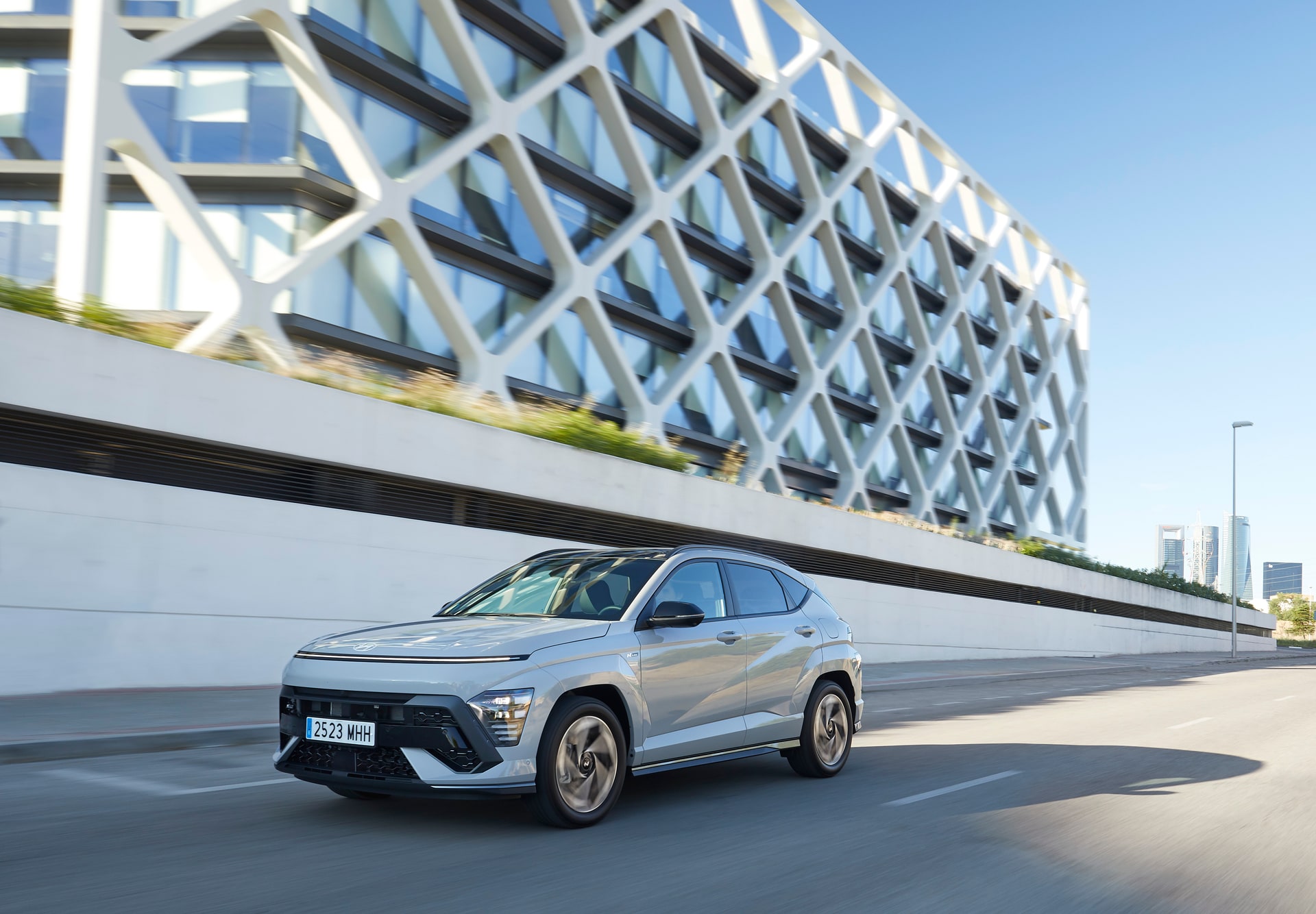
We compare the Hyundai Kona Electric and the Nissan Juke petrol head to head on range, consumption, price and daily use to answer which urban SUV-B makes more sense in 2026.
That two SUV-Bs of the same size take such different approaches says a lot about where the urban segment stands in Spain. On one hand, the Hyundai Kona in its electric version, betting everything on the technical specs of the near future. On the other, the Nissan Juke, true to an efficient petrol approach that still appeals to anyone who doesn’t want to depend on a charger. Before getting into the figures, one necessary clarification: although the market often talks about the Juke in “hybrid” terms, the reference unit sold in Spain is the turbocharged 1.0 DIG-T petrol, with no plug and no electric range of its own.
Hyundai Kona Electric from €37,950: the flagship of the Kona in its zero-emission version
The Hyundai Kona has been the flagship of the Korean SUV-B for several generations, and its EV 135 49kWh Black Line version best sums up where the brand is heading. We are talking about a car designed to get around the city silently and without emissions, with a homologated range of about 377 km which, in real urban use, tends to fall somewhat short but remains sufficient for most daily journeys. The Black Line trim adds a touch of aesthetic personality that is not merely cosmetic: it also incorporates equipment details that make a difference compared with entry-level versions.
| Version | Fuel | Power | Top speed | Range | Battery | Price from |
|---|---|---|---|---|---|---|
| Hyundai Kona EV 135 49kWh Black Line | Electric | 99 kW / 135 CV | 155 km/h | 377 km | 48.4 kWh | €37,950 |
Nissan Juke from €25,775: the combustion alternative that doesn’t need a plug
The Nissan Juke 1.0 DIG-T 114 Acenta plays a different game. Its three-cylinder engine and 114 CV aren’t aimed at impressing on paper; they aim to keep the owner from thinking about the car beyond filling the tank. And it achieves this: with a homologated consumption of 5.8 l/100 km and emissions of 133 g/km of CO₂, it stays within reasonable parameters for a petrol car of this size, without the range anxiety that still haunts part of the electric public.
| Version | Fuel | Power | Top speed | Consumption | CO₂ emissions | Price from |
|---|---|---|---|---|---|---|
| Nissan Juke 1.0 DIG-T 114 Acenta | Petrol | 84 kW / 114 CV | 180 km/h | 5.8 l/100 km | 133 g/km | €25,775 |
Real range: 377 electric km versus a petrol tank
Here lies the core of the decision. The Kona promises 377 km of homologated range, a figure that in urban journeys with favourable weather comes fairly close to reality, but which can drop noticeably in winter or on sustained motorway driving. The Juke, on the other hand, doesn’t have that debate: refuelling takes five minutes and your room for manoeuvre depends only on how many petrol stations you find, which in Spain are still far more numerous than reliable fast-charging points.
Consumption and cost per kilometre in day-to-day use
For those who make short trips and charge at home or at work, the cost per kilometre of the Kona Electric can be noticeably lower than that of the Juke. But that advantage comes with fine print: it depends on the electricity tariff you have and on whether you have access to overnight slow charging. Without that infrastructure, charging on fast DC can push the equation up to almost matching petrol. The Juke, with its homologated 5.8 l/100 km, offers a more predictable cost, with no surprises depending on the electricity tariff of the moment.
Price from: what it costs to enter each technology
The RRP gap is significant: the Hyundai Kona EV starts at around €37,950, while the entry-level Nissan Juke is around €25,775. These are indicative prices, manufacturer’s recommended retail prices without dealer discounts or one-off campaigns, so it is always worth checking them against up-to-date data. That gap of more than €12,000 is not minor and shapes a large part of the decision, especially if the buyer cannot charge at home.
Public aid and the Plan Auto+: how they change the equation
This is where the Plan Auto+ comes into play, the framework of aid in force in Spain for buying low-emission vehicles. It can noticeably reduce the upfront outlay for the Hyundai Kona Electric, although the amounts and deadlines should always be checked on the official website before closing any purchase, as they vary and no specific figure should be taken for granted.
Urban use: manoeuvrability, parking and charging
In the city, both move with ease thanks to their SUV-B dimensions, but their character differs. The Kona runs in absolute silence at low speeds, something appreciated in traffic jams and parking manoeuvres. The Juke, with its sportier character and slightly firmer suspension, conveys more involvement at the wheel, although that comes at the expense of comfort over cobblestones. If the priority is arriving relaxed after a long day, the Kona has the edge; if you want a bit of fun when driving, the Juke won’t disappoint.
Technology, space and maintenance
Both SUVs offer digital screens, driver-assistance systems and connectivity as standard on their mid-range trims, with no dramatic differences in that area. Where they do differ is in maintenance: an electric car like the Kona has fewer moving parts subject to wear, which over five years can translate into fewer workshop visits, something we already analysed when comparing the Hyundai Kona Electric with the Jeep Avenger Electric. The Juke, with a conventional combustion powertrain, involves more frequent servicing, although the cost per intervention is usually lower and the workshop network is practically universal.
Comparison table: Hyundai Kona vs Nissan Juke
| Model | Fuel | Power | Key figure | Price from | Highmotor score |
|---|---|---|---|---|---|
| Hyundai Kona EV Black Line | Electric | 135 CV | 377 km range | €37,950 | 8.3/10 |
| Nissan Juke 1.0 DIG-T Acenta | Petrol | 114 CV | 5.8 l/100 km | €25,775 | 7.6/10 |
Highmotor verdict: which urban SUV-B makes more sense in 2026?
There is no single answer, but there is a clear criterion. If use is predominantly urban, regular charging is possible and the budget allows the initial jump, the Hyundai Kona Electric offers the best balance in the medium term: lower cost per kilometre, less maintenance and access to Plan Auto+ aid that narrows the entry gap. If use is more varied, includes frequent long journeys or there is simply nowhere to plug in, the Nissan Juke remains an efficient combustion alternative, with an entry price that makes it more accessible from day one, something we already pointed out when comparing the Nissan Juke with the KIA Stonic. The Kona wins on future outlook; the Juke wins on immediate simplicity.
Frequently asked questions
What real range does the Hyundai Kona Electric offer?
It is homologated at around 377 km, although in urban use with favourable weather it tends to come close to that figure, and in adverse conditions it can drop noticeably.
How much does the Nissan Juke consume in day-to-day use?
Around 5.8 l/100 km on the homologated cycle, with emissions close to 133 g/km of CO₂, figures consistent for a turbocharged petrol SUV-B.
What is the indicative price of each model?
The Hyundai Kona Electric starts at about €37,950 and the petrol Nissan Juke is around €25,775, both as recommended retail prices without offers or dealer discounts.
Does the Kona Electric or the petrol Juke make more sense in 2026?
It depends on use: the Kona makes sense if charging is available and urban journeys predominate, while the Juke is more practical for those who need total flexibility without depending on charging infrastructure.
Technical specifications of the cars in this article
 Kia offers an electric range of 10 models, 50 versions and 400 possible combinations
 The seven finalists for the 2027 European Car of the Year (COTY) are exclusively electric
 Peugeot E-208 GTi: a battery-powered toy that revives the spirit of the 1980s sports cars
Deja un comentario