Born Cupra E-308 ID.3 Megane Peugeot Renault Volkswagen Electric Cars Compact Buying Guides Safety
How to choose an electric compact car in 2026 with a focus on active safety: ADAS level 2, autonomous emergency braking and key assistants
 Dani Montesinos
19 November 2026
8 min.
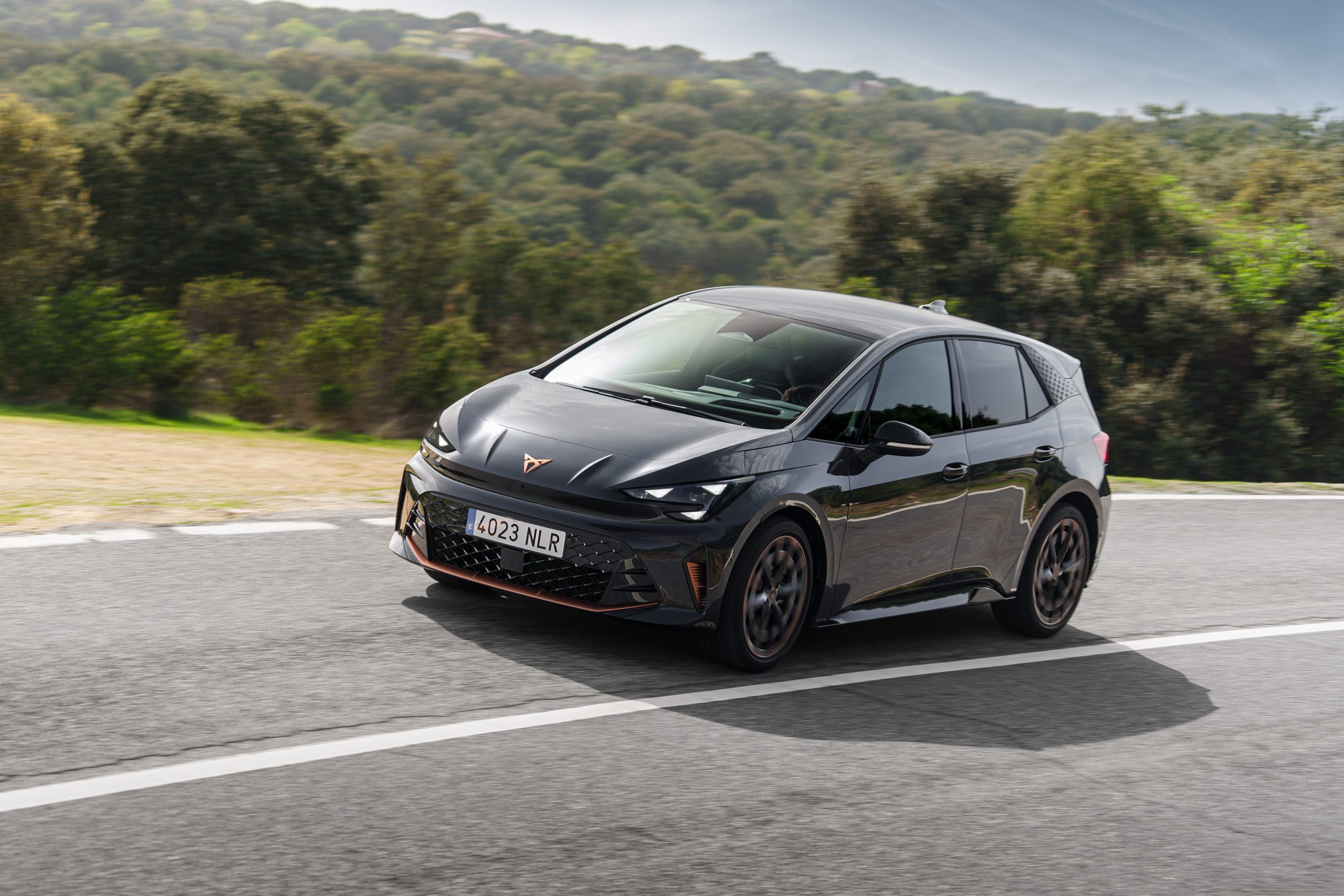
Buying guide for choosing an electric compact car in 2026 under the active safety criterion, with the ADAS level 2 checklist required by Euro NCAP
Buying an electric compact car in 2026 is no longer just about range or price per kWh. Active safety has become the criterion that separates a well-engineered car from one that merely ticks the boxes. And this isn’t a casual opinion: European regulation has made it a factory requirement, although the level of sophistication of each system still depends greatly on the brand, and sometimes even on the specific version you sign for at the dealership.
At Highmotor we have spent months analysing technical sheets and configurators for the electric compact cars that are actually on sale in Spain right now. The conclusion is clear: there is fine print, and it is worth reading before you sign.
Why active safety drives the purchase of an electric compact car in 2026
An electric compact car spends a lot of its time in town, at junctions, roundabouts and shared cycle lanes. That is where ADAS level 2 matters more than the homologated range, which, let’s be honest, rarely matches the real one. Autonomous emergency braking (AEB) prevents or mitigates a good share of urban collisions at low speed, and that weighs more in everyday use than seventy extra kilometres of battery you will almost never need.
The regulatory framework that changes the rules: GSR2 and Euro NCAP 2026
The European General Safety Regulation, known as GSR2, has for some time required every new homologated car to include as standard a minimum package of assistants: AEB, lane departure warning, drowsiness alert and intelligent speed limiter. What has changed in 2026 is the Euro NCAP benchmark, which has tightened its assessment protocols, demanding reliable detection of pedestrians at night, cyclists at junctions and turning scenarios with crossing traffic. A car can meet the legal minimum and still fall short of the new criteria of the independent body, which in practice is what sets the real reference for the buyer.
Technical checklist: what to demand in ADAS level 2 before signing
Before you look at the upholstery colour, it is worth going through this.
AEB with detection of pedestrians, cyclists and crossings
Not all AEB systems are the same. Ask specifically whether the system detects pedestrians at night and cyclists at intersections, not just vehicles ahead. That is the difference between a 2019 system with a new coat of paint and one designed for the current protocol.
Predictive adaptive cruise control
An ACC that uses navigation data and speed limits to anticipate bends or roundabouts smooths driving on conventional roads, where electric compact cars spend much of their working life, outside the motorway.
Lane keeping and centring
Some systems only warn with a vibration, while others actively correct the trajectory. Real lane centring, not a simple departure warning, is what makes the difference on long journeys.
Blind spot detection and safe exit warning
In town, the warning when opening a door towards a cyclist approaching from behind is no longer a luxury extra: on several models it is standard, and it should be on all of them.
Standard or optional pack: the fine print that decides the purchase
Here is the trick that is least often mentioned: many brands advertise “ADAS level 2” on the general spec sheet, but active lane centring or blind spot warning with corrective braking come in a pack costing between 1,000 and 2,000 euros that does not always stand out in the configurator. It is worth asking in writing what the entry version includes and what the assistance pack requires. If you plan to apply for the Plan Auto+ for the purchase, check the conditions in force on the official website, because they change fairly often and nothing should be taken for granted.
Volkswagen ID.3 Neo — from 28,260 €
The ID.3 comes as standard with Front Assist, including pedestrian and cyclist detection, and reserves Travel Assist (active lane centring with navigation-based speed management) for the upper trims. It is one of the best-resolved electric compacts in urban scenarios, although the full driver assistance pack is not included in the cheapest version.
| Power (kW) | Power (CV) | Range | Consumption | Label | Fuel |
|---|---|---|---|---|---|
| 140 kW | 190 CV | 494 km | 13.9 kWh/100 km | 0 emissions | Electric |
Cupra Born — from 38,720 €
It shares its technical base with the ID.3, but Cupra comes as standard with emergency braking with crossing recognition from the entry trim, something other models in the group reserve for more expensive versions. Predictive ACC arrives in the Travel pack, just as in its German cousin.
| Power (kW) | Power (CV) | Range | Consumption | Label | Fuel |
|---|---|---|---|---|---|
| 140 kW | 190 CV | 483 km | 14.3 kWh/100 km | 0 emissions | Electric |
Peugeot e-308 — from 37,440 €
Peugeot includes as standard active braking with pedestrian detection and blind spot warning across the whole range, which is welcome. What falls short is lane centring: it works more as an occasional corrector than as a continuous active assistant, and it shows on the motorway on long trips.
| Power (kW) | Power (CV) | Range | Consumption | Label | Fuel |
|---|---|---|---|---|---|
| 115 kW | 156 CV | 450 km | 14.9 kWh/100 km | 0 emissions | Electric |
Renault Megane E-Tech — from 37,955 €
Of the five, the Megane E-Tech is the one that best integrates predictive ACC with navigation as standard from a mid-range trim, without needing to go up to the top of the range. Blind spot detection with corrective braking (not just a warning) remains optional, which costs it points against its otherwise good overall performance.
| Power (kW) | Power (CV) | Range | Consumption | Label | Fuel |
|---|---|---|---|---|---|
| 160 kW | 220 CV | 501 km | 15.7 kWh/100 km | 0 emissions | Electric |
MG4 — from 31,190 €
The MG4 surprises by bringing almost the entire ADAS package as standard even in the entry version, which makes it the most aggressive option on active safety price-equipment. That said, its lane centring calibration is more abrupt than that of its European rivals, and in real tests it takes some getting used to before you fully trust it.
| Power (kW) | Power (CV) | Range | Consumption | Label | Fuel |
|---|---|---|---|---|---|
| 170 kW | 231 CV | 618 km | 17.6 kWh/100 km | 0 emissions | Electric |
Summary table: active safety and compared technical specifications
| Model | Price from | Range | AEB pedestrians/cyclists | Standard active lane centring | Active safety score (1-10) |
|---|---|---|---|---|---|
| Volkswagen ID.3 | 28,260 € | 494 km | Yes | No (optional pack) | 7.5 |
| Cupra Born | 38,720 € | 483 km | Yes | No (optional pack) | 7.8 |
| Peugeot e-308 | 37,440 € | 450 km | Yes | No (occasional corrector) | 7.0 |
| Renault Megane E-Tech | 37,955 € | 501 km | Yes | Partial from mid-range | 8.0 |
| MG4 | 31,190 € | 618 km | Yes | Yes, standard | 7.3 |
The Megane E-Tech takes the top score for balance between what it includes as standard and what it costs to activate everything. The MG4 wins on raw price-equipment, although its calibration costs it some marks.
How to apply this checklist to your real use
If your day-to-day is town and short trips, prioritise AEB with crossing detection and blind spot warning above any other assistant: that is where the real risk lies. If you drive on country roads often, predictive ACC and active lane centring matter more than any homologated range figure. And if your budget is tight, always ask which specific version includes each assistant as standard, because the model’s general spec sheet rarely tells the whole story. It is an approach similar to the one we already apply when discussing how to choose a city car in 2026, where the size of the car also determines which assistants make real sense.
Frequently asked questions
What minimum ADAS level 2 should I demand in an electric compact car in 2026?
At a minimum, AEB with pedestrian and cyclist detection, blind spot warning and adaptive cruise control. Active lane centring is desirable, but in several models it remains optional.
What is the difference between urban and interurban autonomous emergency braking?
Urban braking acts at low speeds and prioritises pedestrians and cyclists; interurban braking works at higher speeds and mainly detects vehicles and obstacles on the road. A good electric compact should incorporate both as standard.
Is ADAS level 2 mandatory on new cars sold in Spain?
The GSR2 regulation requires a minimum package of assistants on every car homologated in the European Union, but the level of sophistication above that minimum depends on each manufacturer and version.
Is it worth paying for the driver assistance pack on an electric compact car?
In most cases yes, especially if the car will also be used on country roads or motorways. The cost usually runs between 1,000 and 2,000 euros, a reasonable figure given what it adds in real safety and driving comfort.
Technical specifications of the cars in this article
 Kia offers an electric range of 10 models, 50 versions and 400 possible combinations
 The seven finalists for the 2027 European Car of the Year (COTY) are exclusively electric
 Peugeot E-208 GTi: a battery-powered toy that revives the spirit of the 1980s sports cars
Deja un comentario