Ë-Berlingo Berlingo Caddy Citroen Combo Ford Opel Partner Peugeot Proace City Toyota Transit Volkswagen Comerciales Compact Comparisons Furgonetas
Toyota Proace City vs. Peugeot Partner: comparison of small diesel vans for home delivery services
 Iván Navarro
19 November 2026
6 min.
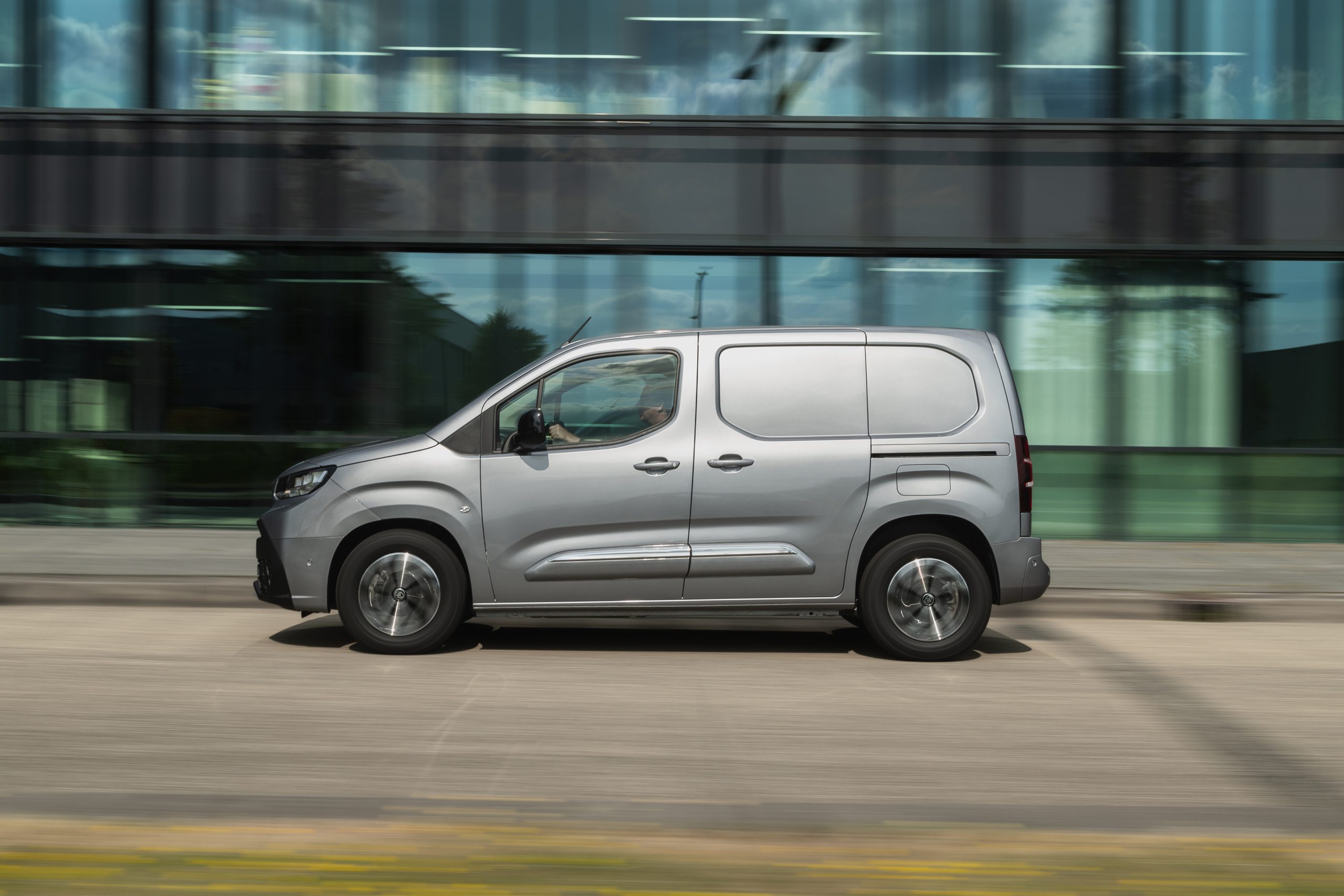
A self-employed courier who delivers six days a week does not buy a van on a whim. They choose it based on what it costs to fill the tank, whether they can enter the city centre without paying a fine, and how long it takes to recover the investment. That not-so-romantic calculation brings together two different philosophies within the same small van segment: the traditional diesel and the electric van that promises long-term savings. Toyota and Peugeot represent that contrast almost perfectly.
Toyota Proace City 1.5D 100 CV: the sensible diesel van from 29,000 €
The Toyota Proace City in its Van L1 1.5D 100 GX version sticks with what is familiar. It has a 1.5-litre diesel engine, 80 kW (100 CV) and a homologated consumption of 5.5 l/100 km, which in real urban delivery tends to be somewhat higher if the van is always loaded. Nothing that will surprise anyone who has spent years with a diesel of this size. Its appeal lies in the upfront outlay: it starts at around 29,000 € RRP, without counting dealer discounts or one-off campaigns, which places it as the most affordable entry option of the two protagonists of this showdown.
| Model | Power (kW) | Power (CV) | Consumption | Fuel |
|---|---|---|---|---|
| Toyota Proace City 1.5D 100 GX | 80 kW | 100 CV | ≈5.5 l/100 km | Diesel |
Peugeot Partner electric 136: the ZBE bet from 38,000 €
The Peugeot Partner Furgón M Carga Incrementada 136 50kWh changes the approach completely. It has a 100 kW (136 CV) electric motor, a 50 kWh battery and a homologated range of 340 km, with a top speed limited to 140 km/h, which is enough for any urban or peri-urban delivery. The starting price rises to an indicative 38,000 €, about 9,000 € more than the diesel Proace City, a difference that is not minor for a self-employed worker financing their work tool. That figure, however, does not include the Plan Auto+ or the aid that some autonomous communities add to the purchase of zero-emission vehicles: it is worth checking the official plan’s website before ruling the option out on price.
| Model | Power (kW) | Power (CV) | Top speed | Range | Battery | Fuel |
|---|---|---|---|---|---|---|
| Peugeot Partner 136 50kWh | 100 kW | 136 CV | 140 km/h | ≈340 km | 50 kWh | Electric |
Direct comparison: consumption, range and cost per kilometre
Here is the crux of the matter. The Proace City runs on diesel, a fuel whose price no longer has the advantage it had a decade ago over domestic electricity or charging at work points. The electric Partner, on the other hand, depends on where and when you charge: at home overnight it is cheap, at a motorway fast charger it stops being so attractive. For delivery routes of less than 150 km a day within the city, the Partner’s 340 km of range is more than enough. For mixed routes that combine distant industrial estates with deliveries across several municipalities, range starts to weigh on the driver’s mind, although in reality few home couriers exceed that figure in a working day.
Low-emission zones: who enters without restrictions?
The Partner, with a CERO label, enters any Spanish ZBE without any limitation, present or future. The diesel Proace City, even as a recent model with a C label, may be affected during high-pollution episodes or in progressive restrictions that several capital cities have already announced for the coming years. If the business operates mainly in central Madrid, Barcelona or any other city with an established ZBE, that nuance weighs more than the initial 9,000 € difference.
Segment rivals: Citroën Berlingo Van, Opel Combo Cargo, Renault Kangoo Furgón, Ford Transit Connect and Volkswagen Caddy Cargo
The Toyota vs. Peugeot duel does not exhaust the segment, far from it. The Citroën Berlingo Van shares its platform with the Partner and offers diesel and electric variants with a very similar approach to payload. The Opel Combo Cargo plays in the same Stellantis league, with a slightly more fleet-oriented approach. The Renault Kangoo Furgón remains a benchmark for its cargo space and its reputation for everyday robustness. The Ford Transit Connect keeps a loyal following among those who prioritise the feel of driving on the road. And the Volkswagen Caddy Cargo completes the group with an interior finish that sits a step above the rest, although that is also reflected in the final price. For anyone who has already looked at electric alternatives in the segment, our comparison between the Peugeot e-Partner and the Citroën ë-Berlingo explores that other front in more depth.
Summary table and score
| Model | Engine | Price from (indicative RRP) | Urban delivery score | ZBE score |
|---|---|---|---|---|
| Toyota Proace City 1.5D 100 CV | Diesel | ≈29,000 € | 8/10 | 5/10 |
| Peugeot Partner 136 50kWh | Electric | ≈38,000 € | 9/10 | 10/10 |
| Citroën Berlingo Van | Diesel / Electric | check with dealer | 7/10 | 7/10 |
| Opel Combo Cargo | Diesel / Electric | check with dealer | 7/10 | 7/10 |
| Renault Kangoo Furgón | Diesel | check with dealer | 8/10 | 5/10 |
| Ford Transit Connect | Diesel | check with dealer | 7/10 | 5/10 |
| Volkswagen Caddy Cargo | Diesel | check with dealer | 8/10 | 5/10 |
Which one to choose according to your daily route?
If daily mileage is around 80-100 km, all in an urban setting, and deliveries are concentrated in a few neighbourhoods, the electric Peugeot Partner pays back its price premium over time and also safeguards the business against any future ZBE. If, on the other hand, the route is mixed, with stretches of road at higher speeds and the need to refuel at any petrol station without worrying about charging points, the Toyota Proace City diesel remains the most practical option and, above all, the one that requires the least initial capital. There is no single answer: there is a customer profile for each.
Frequently asked questions
How much does the Toyota Proace City 1.5D 100 CV cost in Spain?
Its starting price is around 29,000 € RRP, excluding dealer discounts and one-off offers, according to the manufacturer’s official specifications.
What real range does the electric Peugeot Partner have?
The 136 CV version with a 50 kWh battery is homologated at around 340 km of range, a figure that in urban parcel delivery with frequent charging tends to come fairly close to reality.
Can the diesel Toyota Proace City enter a Low-Emission Zone?
It depends on the environmental label and the local regulations in force in each city; it is best to check before operating in urban centres with active restrictions.
Is it worth paying more for an electric van as a self-employed worker?
If the daily route is urban and access to ZBE is relevant, it usually is worth it in the medium term; if the use is mixed with few kilometres in the city, diesel is still cheaper to buy and to maintain.
Technical specifications of the cars in this article

 Kia offers an electric range of 10 models, 50 versions and 400 possible combinations
 The seven finalists for the 2027 European Car of the Year (COTY) are exclusively electric
 Peugeot E-208 GTi: a battery-powered toy that revives the spirit of the 1980s sports cars
Deja un comentario