Hyundai Tucson Hybrid Cars Comparisons Safety SUV
Hyundai Tucson Hybrid vs. Kia Sportage Hybrid: the Korean hybrid SUV with the best safety and connectivity
 Iván Navarro
8 June 2026
4 min.
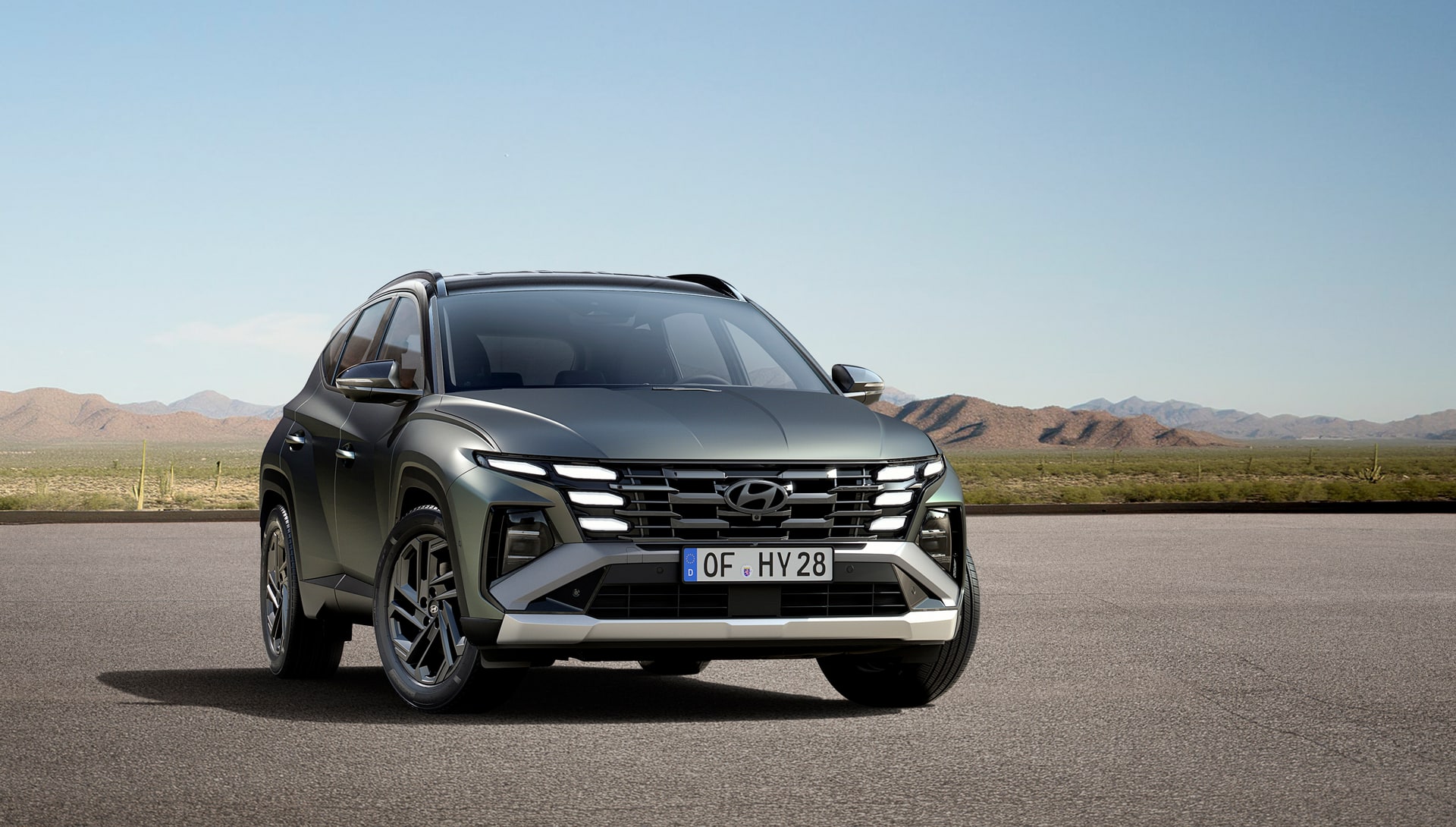
Technical comparison between the Hyundai Tucson Hybrid HEV and the Kia Sportage Hybrid PHEV: ADAS safety, connectivity and indicative price in the Spanish market.
The most intense duel in the C-SUV segment in Spain is not fought between German or Japanese brands: it is fought within the Hyundai Motor Group. The clash between the Hyundai Tucson Hybrid and the Kia Sportage Hybrid is, today, the most relevant one for anyone looking for a rational, safe and fully connected Korean hybrid SUV. They share the N3 platform and a basic powertrain, yet they have taken surprisingly different paths to win over Spanish customers.
Two siblings with their own personality
The Tucson opts for a conventional hybrid (HEV) with an ECO label, affordable and efficient without the need to plug in. The Sportage, in the version we analyse here, takes a step up with PHEV technology, a ZERO emissions label and all-wheel drive. Same DNA, two philosophies: pragmatism versus electrified ambition.
Hyundai Tucson Hybrid (HEV, 220 CV, ECO label) — from approximately €37,000
The Tucson Hybrid combines the 1.6 T-GDi with an electric motor powered by a small 1.5 kWh battery. The result: 220 CV of combined power, an ECO label from the DGT and a homologated consumption of around 6 l/100 km with no need to look for a plug. Its Parametric Dynamics design, with light units integrated into the grille, remains one of the most striking in the segment.
On the safety front, it fits the almost complete Hyundai SmartSense suite as standard on mid-range trims: autonomous emergency braking with pedestrian and cyclist detection, lane keeping assist with active centring, adaptive cruise control with Stop&Go function, rear cross-traffic alert with braking and Blind-Spot View Monitor with a camera in the instrument cluster when the indicator is activated.
| Power kW | Power CV | Top speed | Electric range | Consumption | Label | Fuel |
|---|---|---|---|---|---|---|
| 160 kW | 220 CV | ≈190 km/h | Not applicable (HEV) | ≈6 l/100 km | ECO | Hybrid |
Kia Sportage Hybrid PHEV (252 CV, ZERO label) — from approximately €47,500
The Sportage Hybrid in its 1.6 T-GDi 252 Drive 4×4 ISG Aut PHEV variant plays in a different energy league. Its 14 kWh battery allows around 70 km of homologated 100% electric range, enough for daily urban use without burning a drop of petrol, with a ZERO label and free access to low-emission zones (ZBE). The all-wheel drive HTRAC and 252 combined CV give it superior dynamic poise over its sibling.
The more angular styling, with the boomerang light signature, targets buyers who walk into the dealership looking for visual excitement. The interior is that of a Sportage: a dual 12.3-inch curved screen, a reconfigurable dual touch panel for climate/multimedia and Kia Connect connectivity with remote services, OTA updates and wireless charging.
| Power kW | Power CV | Top speed | Electric range | Consumption | Label | Fuel |
|---|---|---|---|---|---|---|
| 190 kW | 252 CV | ≈190 km/h | ≈70 km | ≈1 l/100 km | ZERO | PHEV |
ADAS safety: technical tie, equipment nuances
Both share the same electronic architecture and catalogue of driver assistance systems. The difference lies in how they are distributed across trim levels. The Tucson Hybrid stands out for making elements such as the Highway Driving Assist 2 accessible in mid-range versions; the Sportage PHEV, starting from a higher trim, includes as standard the Remote Smart Parking Assist and rear occupant monitoring.
Connectivity: the software battle
The Sportage Hybrid’s connectivity via Kia Connect offers route planning with charging stops and battery preconditioning — logical, given its plug-in nature. Bluelink on the Tucson covers the essentials: remote diagnostics, eCall assistance and OTA navigation updates. Apple CarPlay and Android Auto are wireless on the top trims of both.
Comparative summary table and score
| Model | Power | Label | EV range | Consumption | Indicative price | Score /10 |
|---|---|---|---|---|---|---|
| Hyundai Tucson Hybrid | 220 CV | ECO | — | ≈6 l/100 | ≈€37,000 | 8.4 |
| Kia Sportage Hybrid PHEV | 252 CV | ZERO | ≈70 km | ≈1 l/100 | ≈€47,500 | 8.7 |
Verdict: which is the best Korean hybrid SUV?
The price of the Hyundai Tucson Hybrid positions it as the most rational option: €10,000 less, ECO label, zero plug-in anxiety and more than decent performance. The Kia Sportage justifies its extra cost if the user has a home or workplace charging point and an urban routine: it will pay back the difference in fuel and gain unlimited access to low-emission zones.
In the duel between these two Korean SUVs there is no loser. There are two answers to two different questions.
Frequently asked questions
Which Korean hybrid SUV consumes less in real-world use?
The Sportage PHEV, as long as it is charged daily. Without plugging in, the Tucson HEV is more efficient than a PHEV with an empty battery.
Which one has better standard safety equipment?
They are tied in ADAS technology; the Sportage PHEV starts from higher trims, so it includes more assistance systems without options.
Is it worth paying €10,000 more for the Sportage PHEV?
Only if you have a charging point at home or work and need a ZERO label to enter low-emission zones.
Which one holds its resale value better?
Historically the Tucson leads registrations in Spain, which usually translates into greater liquidity in the used car market.
Technical specifications of this car


 Kia offers an electric range of 10 models, 50 versions and 400 possible combinations
 The seven finalists for the 2027 European Car of the Year (COTY) are exclusively electric
 Peugeot E-208 GTi: a battery-powered toy that revives the spirit of the 1980s sports cars
Deja un comentario