Hyundai KIA Sportage Tucson Hybrid Cars Comparisons SUV
Hyundai Tucson vs KIA Sportage hybrid 2026: which Korean compact SUV offers the best price-equipment ratio
 Iván Navarro
14 November 2026
6 min.
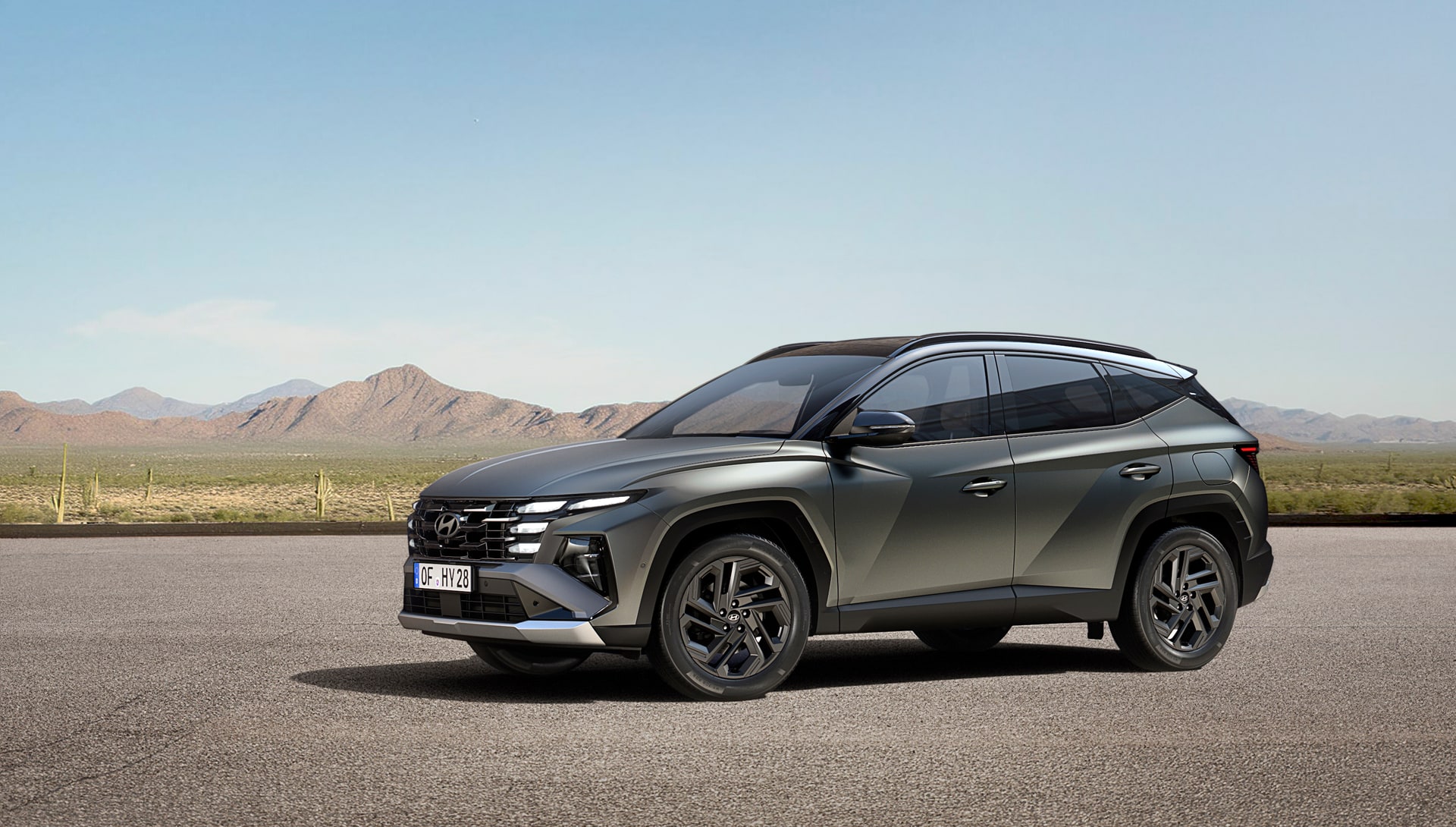
We compare the Hyundai Tucson 1.6 TGDi 150 Klass and the KIA Sportage PHEV 252 CV Drive 4×4, two platform cousins that in 2026 target completely different buyers. Price, environmental label and equipment, head to head.
Few comparisons generate as much confusion as this one. The Tucson and Sportage share a platform, even a factory in some markets, and much of the engineering DNA of Hyundai Motor Group. Yet in their most relevant 2026 configurations they do not compete with each other: they are cars for different buyers, with powertrains that have nothing in common and a price gap of around 12,000 euros. Let’s debunk the myth that “they are the same car with a different badge”.
Hyundai Tucson 1.6 TGDi 150 Klass: from 35,500 €
The Tucson in its entry-level Klass trim opts for a simple formula: a turbocharged 150 CV petrol engine, with no electrification involved, aimed at drivers who cover few kilometres a year or prefer not to deal with charging plugs. It is the entry-level Tucson, the one that appears in adverts with the lowest price in the range, and it fulfils its role well: enough pull for urban and interurban use, reasonable consumption and an environmental label C that still allows it to circulate without restrictions in most scenarios.
| Model | Power (CV) | Power (kW) | Consumption | CO₂ emissions | Label | Fuel | Price from |
|---|---|---|---|---|---|---|---|
| Hyundai Tucson 1.6 TGDi 150 Klass | 150 CV | 110 kW | ≈7 l/100 km | ≈160 g/km | C | Petrol | ≈35,500 € |
What it lacks is surprises: there is no battery, no pure electric mode, no EV range to claim. Which, honestly, is part of its charm. For a buyer seeking a reliable and affordable compact SUV, without depending on a charging point, this remains the most sensible entry point into the Korean segment.
KIA Sportage PHEV 252 CV Drive 4×4: from 47,500 €
The Sportage in its Hybrid PHEV 1.6 T-GDi 252 Drive 4×4 version plays in a completely different league. Here we are talking about 252 combined CV, standard all-wheel drive, a 13.8 kWh battery and an electric range of about 70 km which, for the daily use of many drivers, can mean entire weeks without visiting a petrol station. The homologated consumption drops to figures close to one litre per 100 km, although that figure must be read with nuances: it depends entirely on how much the battery is recharged and how often.
| Model | Power (CV) | Power (kW) | Top speed | Electric range | Consumption | CO₂ emissions | Label | Fuel | Price from |
|---|---|---|---|---|---|---|---|---|---|
| KIA Sportage PHEV 1.6 T-GDi 252 Drive 4×4 | 252 CV | 185 kW | ≈190 km/h | ≈70 km | ≈1 l/100 km | ≈30 g/km | ZERO | Plug-in hybrid | ≈47,500 € |
The ZERO label opens doors that the Tucson Klass is directly denied: free parking in regulated zones of many cities, exemption from restrictions during high-pollution episodes and, for those using it as a company car, not inconsiderable tax advantages.
Mechanics: why they do not share a propulsion platform
Here is the key that many people overlook. The Tucson and Sportage come from a common platform, yes, but each brand electrifies (or not) its versions independently. The Tucson Klass we are comparing is purely thermal. The Sportage PHEV adds an electric motor, a 13.8 kWh battery and four-wheel drive. They are not the same car with a different grille: they are two propulsion proposals that do not even compete for the same type of buyer.
Equipment: what each version includes as standard
The Tucson Klass sticks to the essentials: air conditioning, a multimedia system with a central screen, and the basic driver-assistance systems required by regulation. The Sportage Drive, sitting on a higher trim level and with a much higher starting price, adds larger-diameter alloy wheels, more refined interior finishes and a more complete set of driver-assistance features. This is one of the reasons, alongside the mechanics, why the RRP difference is less surprising than it seems at first glance.
Environmental label: Tucson with label C, Sportage with label ZERO
This is probably the variable that should weigh most in the decision of many urban buyers. If you live in a large city with traffic restrictions, the ZERO label of the Sportage PHEV is not a whim: it is guaranteed access where the Tucson with label C may be kept out during certain pollution episodes.
Price and RRP: a 12,000-euro difference that must be properly understood
The 35,500 € of the Tucson Klass versus the 47,500 € of the Sportage PHEV Drive 4×4 are not fixed prices: they are the manufacturer’s recommended retail price, without dealer discounts, one-off campaigns or purchase aids such as the Plan Auto+, which can significantly reduce the final outlay in the case of the Sportage PHEV because it is a plug-in vehicle. It is always advisable to check the official website for the current amount.
Comparative summary table
| Model | Fuel | Power | Label | Price from | Score |
|---|---|---|---|---|---|
| Hyundai Tucson 1.6 TGDi 150 Klass | Petrol | 150 CV | C | ≈35,500 € | 7.5/10 |
| KIA Sportage PHEV 252 CV Drive 4×4 | Plug-in hybrid | 252 CV | ZERO | ≈47,500 € | 8.5/10 |
The Tucson scores highly for accessibility and simplicity; it loses points against the Sportage on label and equipment. The Sportage dominates in performance and urban access, but requires a notably larger initial investment.
Verdict: which to buy according to real use
If your annual mileage is moderate, you do not depend on low-emission zones and you prioritise the entry price, the Tucson Klass meets the brief without reproach. If you drive daily in a large city, can charge at home or at work, and value all-wheel drive and extra power, the Sportage PHEV more than justifies its extra cost. There is no absolute winner: there are two cars for two different ways of understanding mobility. For those torn between the two, it is also worth reviewing how to choose a family SUV for less than 38,000 euros, which analyses similar running-cost variables.
Frequently asked questions
Do the Hyundai Tucson and the KIA Sportage share an engine?
No. The Tucson Klass analysed uses a turbocharged 150 CV petrol engine with no electrification, whereas the Sportage PHEV Drive 4×4 combines a combustion engine with an electric motor and a 13.8 kWh battery, totalling 252 CV.
Which Korean SUV has the better environmental label?
The KIA Sportage PHEV obtains the ZERO label thanks to its electric range of about 70 km. The Tucson Klass, being purely thermal, stays at label C.
Is it worth paying 12,000 euros more for the Sportage PHEV?
It depends on use. For daily urban driving with traffic restrictions and the possibility of regular charging, yes, it pays off. For occasional or interurban use, the Tucson Klass offers a tighter cost-to-value ratio.
Do the prices include discounts or the Plan Auto+?
No. They are the manufacturer’s recommended retail prices, without dealer promotions or public aid. The final amount may vary and it is advisable to check the official website for the current Plan Auto+ amount.
Technical specifications of the cars in this article
 Kia offers an electric range of 10 models, 50 versions and 400 possible combinations
 The seven finalists for the 2027 European Car of the Year (COTY) are exclusively electric
 Peugeot E-208 GTi: a battery-powered toy that revives the spirit of the 1980s sports cars
Deja un comentario