KIA Sportage Hybrid Cars Crossovers Review SUV
Review KIA Sportage Hybrid: why the Korean compact SUV still sets the benchmark for value for money in 2026
 Iván Navarro
14 November 2026
6 min.
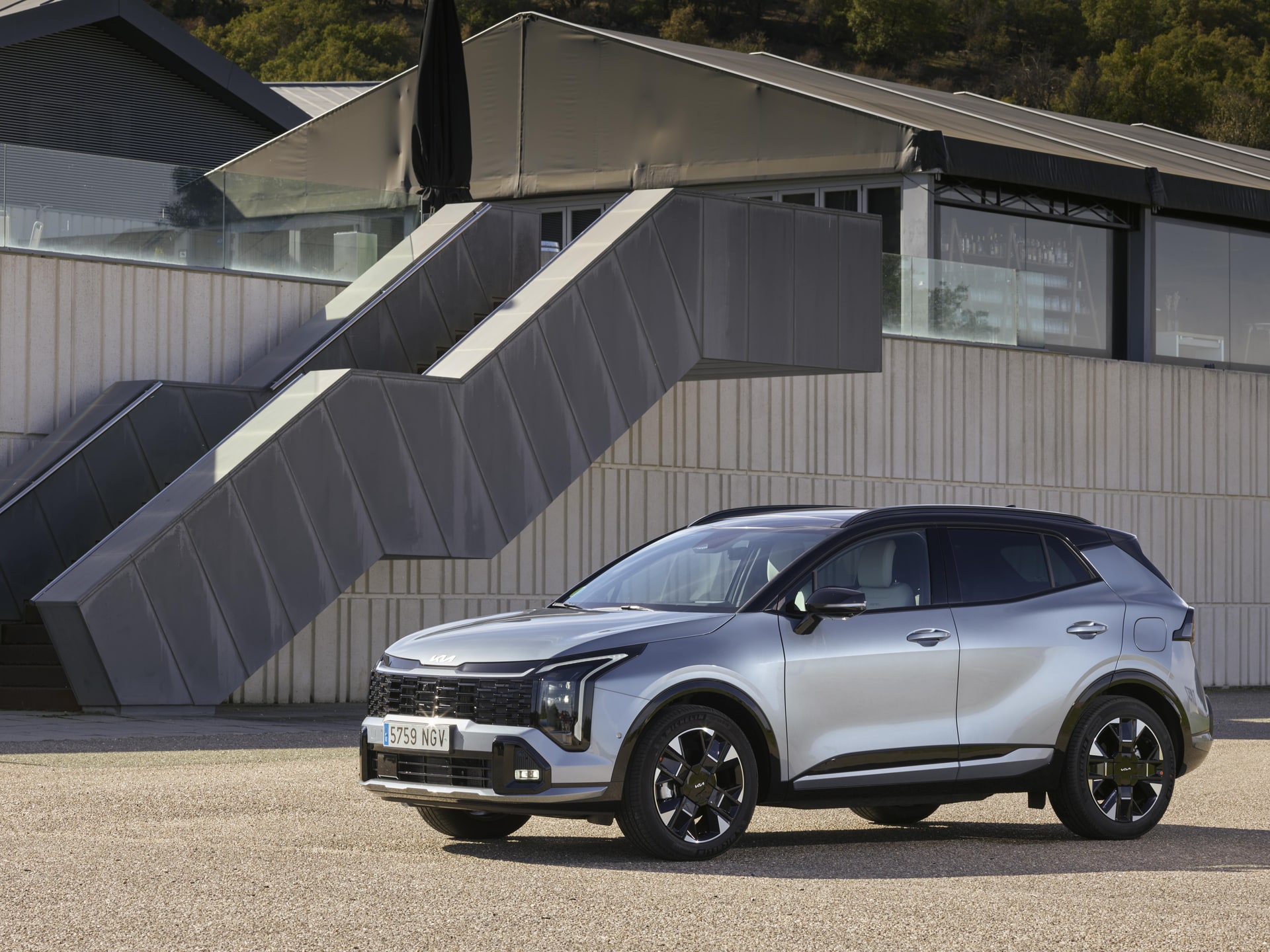
We analyse the KIA Sportage Hybrid PHEV, with 252 CV combined and 70 km of electric range, against its direct rivals in the compact SUV segment. A technical and price review of why it remains the most sensible choice of 2026.
There are cars that win on enthusiasm and cars that win on arithmetic. The KIA Sportage Hybrid clearly belongs to the second group, and in the compact SUV segment that counts for more than it seems. We have spent several weeks with the PHEV variant, the most interesting in the range, and the question we asked ourselves when we first drove it was not whether it is a good car. It was whether, in 2026, it is still the best option once price, equipment and taxation are weighed together.
KIA Sportage Hybrid review 2026: technical specifications and first impressions (from 47,465 €)
The variant in question is the Sportage Hybrid PHEV 1.6 T-GDi 252 Drive 4×4, with standard all-wheel drive and a starting price of 47,465 euros recommended retail price set by the manufacturer, excluding offers and dealer discounts. It is worth saying upfront: this figure is a starting price, and you should check it on the official website before signing anything.
| Model | Power | Top speed | Electric range | Consumption | Battery | Emissions | Fuel |
|---|---|---|---|---|---|---|---|
| KIA Sportage Hybrid PHEV | 185 kW / 252 CV | 186 km/h | 66 km | 1.1 l/100 km | 13.8 kWh | 26 g/km CO₂ | PHEV |
On paper, these numbers place the Sportage ahead of much of its direct competition in real-world electric range. And for someone who makes short urban journeys during the week and the occasional long trip at the weekend, that shows up on the fuel bill.
Design and equipment: what the Sportage Hybrid offers across the range
The exterior has not changed its philosophy: taut lines, a pronounced wheel arch, and a grille that is already the brand’s signature. Inside there is a generational leap: a dual curved screen, climate control with separate physical controls (much appreciated when it rains and you drive with gloves on), and a sense of perceived quality that a few years ago would have been unthinkable in a Korean car at this price. It is not a Q3 inside, let us be honest, but it comes closer than any earlier Korean rival.
Mechanics: 1.6 T-GDi 252 CV and the plug-in that delivers real range
The set-up combines the 1.6 T-GDi turbo with an electric motor and a 13.8 kWh battery, delivering 252 CV combined and 185 kW. In practice this means agile response in town and enough punch for overtaking on country roads, without ever feeling sporty: the Sportage is not chasing that, it is chasing efficiency with power in reserve.
Consumption and electric range: the 66 km that change everyday life
With the homologated 66 km of electric range and a combined consumption of 1.1 l/100 km according to the data sheet, a driver who charges daily at home or at work can cover much of their week without visiting a petrol station. This is the PHEV’s great advantage over the conventional hybrid: it does not replace a pure electric car, but it covers 80% of real use for many families without range anxiety.
CERO label and Plan Auto+: practical advantages beyond the dealership
The DGT’s CERO label opens the door to free parking in regulated zones in many Spanish capitals, BUS-VAO lanes and discounts on some insurance policies. Add to this that vehicles of this type may benefit from the Plan Auto+, the current public aid for buying electrified vehicles; check the updated amount on the official website before calculating the final price, as it changes fairly often.
The competition: Hyundai, Toyota, Peugeot and Cupra
The Hyundai Tucson PHEV shares the group platform with the Sportage and offers a very similar approach, although its price positioning is usually a step higher in top trims. The Toyota RAV4 Plug-in, for its part, is the most powerful of the group and the one that best defends the brand’s historical reliability, but it also starts from a higher price. The Peugeot 3008 Hybrid opts for a bolder interior design, with its i-Cockpit cluster, although its real electric range lags somewhat behind the Korean. And the Cupra Formentor e-Hybrid plays a different game: it pursues sporty character before pure efficiency, something paid for in consumption once the battery runs out.
None of the four matches, today, the combination of combined power, electric range and entry price that the Sportage offers. That does not mean they are worse cars: it means they compete on a different priority.
| Model | Segment | Type | Highmotor score |
|---|---|---|---|
| KIA Sportage Hybrid PHEV | Compact SUV | PHEV | 8.7 |
| Hyundai Tucson PHEV | Compact SUV | PHEV | 8.3 |
| Toyota RAV4 Plug-in | Compact SUV | PHEV | 8.2 |
| Peugeot 3008 Hybrid | Compact SUV | PHEV | 7.8 |
| Cupra Formentor e-Hybrid | Compact SUV | PHEV | 7.9 |
This score is editorial, the result of cross-referencing starting price, electric range, equipment and warranty; it does not replace a dynamic test of each rival, which we will expand in future reviews. It is also worth looking at what generalist brands such as Skoda do in this same segment, although with different mechanical approaches and without a plug-in option as developed.
7-year warranty: the argument few can match
KIA maintains its warranty of 7 years or 150,000 km, a figure that in 2026 still has no direct rival among European generalist manufacturers. For anyone thinking about the car in the long term, and not just the initial outlay, this figure weighs as much as the consumption data. We already noted this when analysing the KIA Stonic: the brand’s long warranty changes the total cost of ownership calculation, not just the entry cost.
Highmotor verdict: why it remains the benchmark
It is not the most luxurious compact SUV, nor the fastest, nor the one that boasts most about its interior design. But it adds up everything else better than anyone: sufficient power, electric range that is genuinely used, the CERO label, a long warranty and an entry price its direct rivals cannot match without cutting equipment. If your budget is around 47,500 euros and you want a compact SUV that works in town as well as on the open road, the Sportage Hybrid remains, with nuances, the most sensible choice on the Spanish market. Anyone looking for something more, as we already saw when comparing family SUVs for under 38,000 euros, will have to accept a considerable jump in budget.
Frequently asked questions
How much does the KIA Sportage Hybrid PHEV cost in Spain?
The official starting price of the Drive 4×4 version is 47,465 euros recommended retail price set by the manufacturer, excluding offers, dealer discounts and public aid such as the Plan Auto+.
What electric range does the Sportage Hybrid have?
According to the WLTP homologated data sheet, it offers 66 km of range in electric mode thanks to its 13.8 kWh battery, enough to cover daily urban journeys without using petrol.
What warranty does the KIA Sportage Hybrid have?
KIA offers 7 years or 150,000 km of warranty, one of the longest coverages in the generalist market in Spain.
Is it better than the Hyundai Tucson PHEV or the Toyota RAV4 Plug-in?
It is not necessarily superior in every area, but it offers a tighter balance between entry price, electric range and equipment, which makes it a benchmark for value for money within the plug-in hybrid compact SUV segment.
Technical specifications of this car


 Kia offers an electric range of 10 models, 50 versions and 400 possible combinations
 The seven finalists for the 2027 European Car of the Year (COTY) are exclusively electric
 Peugeot E-208 GTi: a battery-powered toy that revives the spirit of the 1980s sports cars
Deja un comentario