Hyundai Ioniq 5 Electric Cars Review SUV
In-depth analysis of the Hyundai Ioniq 5: is it still the most balanced electric SUV on the Spanish market?
 Iván Navarro
21 May 2026
6 min.
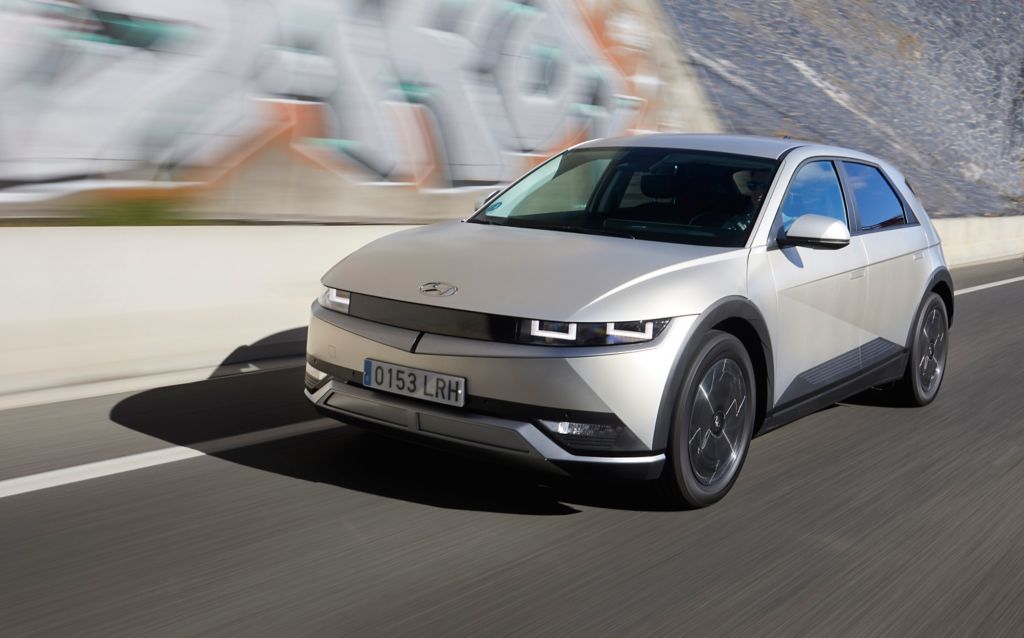
We put the Hyundai Ioniq 5 2025 through a thorough test and pitted it against its direct rivals in Spain. WLTP range, 800V ultra-fast charging, RWD, AWD and N versions, official prices and technical verdict.
Four years after its launch, the Hyundai Ioniq 5 remains one of those uncomfortable benchmarks for the competition. It is not the fastest, it is not the cheapest, and it does not offer the most range on paper, but the sum of its strengths keeps it at the top of the segment.
The 2024-2025 update has polished what was missing: a larger battery, revised suspension, a rear windscreen wiper and an interior finish that finally matches the exterior design. The question is a fair one: is the Hyundai Ioniq 5 still the most balanced electric SUV you can buy today in Spain?
Design and E-GMP platform: why does the Ioniq 5 still set the trend?
The Ioniq 5 was born with a structural advantage that is hard to match: the 800-volt E-GMP platform. That architecture, shared with the Kia EV6 and Genesis GV60, is what enables real ultra-fast charging and an exemplary weight distribution. Aesthetically it remains a brilliant exercise in retro-futurism, with those pixelated headlights that have become the brand’s signature.
The bodywork measures 4.65 metres, but the 3-metre wheelbase is saloon-class for the E segment. This translates into a huge cabin, a flat floor and a sliding centre console that remains one of the market’s smartest solutions.
Versions available in Spain: RWD, AWD and Ioniq 5 N
The 2026 range is simplified into three clear groups: entry level with a 63 kWh battery and rear-wheel drive, Long Range versions with 84 kWh (RWD or AWD), and the radical 650 CV Ioniq 5 N. All share the platform, but the character changes completely between the urban entry model and the track-focused performance version.
Real-world WLTP range and measured consumption
The homologated range of the Hyundai Ioniq 5 reaches up to 570 km WLTP in the RWD Long Range version with 19-inch wheels. In real use, on the motorway at 120 km/h and with mild temperatures, we measured between 420 and 450 km, a very honest figure. Average consumption sits around 16.5-17.5 kWh/100 km, in line with its direct rivals.
800V charging: real times at ultra-fast chargers
This is where the Ioniq 5 continues to play in another league. With a 350 kW charger, it goes from 10 to 80% in approximately 18 minutes, with sustained peaks close to 230 kW. On 150 kW chargers, common on the Spanish network (Ionity, Iberdrola, Repsol), the time stretches to around 30-32 minutes, still competitive.
Equipment, interior and on-board technology
The Ioniq 5’s equipment starts at a high level: dual 12.3-inch screens, wireless charger, dual-zone climate control, heated and ventilated seats in top trims, V2L (bidirectional charging to power appliances from the car) and a complete Highway Driving Assist 2 package. The update has brought better materials, physical climate control buttons and a redesigned steering wheel.
Hyundai Ioniq 5 N: the electric car that really excites
The N version delivers 650 CV in overboost mode, accelerates from 0 to 100 km/h in 3.4 seconds and features an N e-Shift system that simulates gear changes. It is, without qualification, the most fun electric car made by a mainstream manufacturer. Its price exceeds €75,000, but it defines where Hyundai electric performance can go.
Price in Spain and positioning within the range
The Ioniq 5 price in Spain starts at €44,900 for the 63 kWh RWD version, before deducting the MOVES III Plan incentives. The Long Range RWD sits at around €49,900, the AWD at about €54,900, and the N exceeds €75,000. Competitive prices for a car with a CERO label and premium performance.
| Power kW | Power CV | Top speed | Range | Consumption | Label | Fuel |
|---|---|---|---|---|---|---|
| 168 kW | 229 CV | 185 km/h | 570 km WLTP | 16.7 kWh/100 km | CERO | Electric |
Direct rivals on the Spanish market
The segment has filled with serious contenders. These are the three rivals that pressure the Ioniq 5 most on the dealer floor.
Kia EV6 — from €47,700
A mechanical sibling under the skin, but with a more sporty and dynamic approach. Same 84 kWh batteries and 800V architecture.
| Power kW | Power CV | Top speed | Range | Consumption | Label | Fuel |
|---|---|---|---|---|---|---|
| 168 kW | 229 CV | 185 km/h | 582 km WLTP | 16.5 kWh/100 km | CERO | Electric |
Tesla Model Y — from €45,970
Europe’s best-selling electric car. Best proprietary charging network (Supercharger), superior software, but a more austere interior and charging that is not as fast (250 kW peak).
| Power kW | Power CV | Top speed | Range | Consumption | Label | Fuel |
|---|---|---|---|---|---|---|
| 220 kW | 299 CV | 217 km/h | 600 km WLTP | 15.7 kWh/100 km | CERO | Electric |
Volkswagen ID.4 — from €43,290
More conservative in design, with improved software after the latest updates and very solid build quality, although charging is clearly lower (175 kW maximum).
| Power kW | Power CV | Top speed | Range | Consumption | Label | Fuel |
|---|---|---|---|---|---|---|
| 210 kW | 286 CV | 180 km/h | 550 km WLTP | 16.2 kWh/100 km | CERO | Electric |
Ford Mustang Mach-E — from €49,500
Dynamic character and good range in the Extended Range version, but a 400V architecture that limits charging speed compared with the Korean car.
| Power kW | Power CV | Top speed | Range | Consumption | Label | Fuel |
|---|---|---|---|---|---|---|
| 216 kW | 294 CV | 180 km/h | 600 km WLTP | 17.1 kWh/100 km | CERO | Electric |
Comparison table: overall score
| Model | Range | Fast charging | Price from | Equipment | Score /10 |
|---|---|---|---|---|---|
| Hyundai Ioniq 5 | 570 km | 230 kW (800V) | €44,900 | Very high | 9.2 |
| Kia EV6 | 582 km | 233 kW (800V) | €47,700 | High | 9.0 |
| Tesla Model Y | 600 km | 250 kW | €45,970 | Medium | 8.7 |
| Volkswagen ID.4 | 550 km | 175 kW | €43,290 | High | 8.2 |
| Ford Mustang Mach-E | 600 km | 150 kW | €49,500 | High | 8.3 |
Highmotor verdict: the most balanced electric SUV of 2025?
Yes, with caveats. The Ioniq 5 remains the most balanced electric SUV on the Spanish market for one very specific reason: it combines the best charging architecture in the segment with a design that does not age, a comfortable and versatile interior, and a range broad enough to cover everyone from the rational buyer to the enthusiast. Tesla offers better software and network, Kia is sportier and Volkswagen more affordable, but none of them brings together so many virtues at once.
Frequently asked questions
How much does the Hyundai Ioniq 5 cost in Spain?
The Ioniq 5 starts at €44,900 in its 63 kWh RWD version, rises to €49,900 in Long Range RWD, exceeds €54,900 in AWD, and the N variant sits above €75,000. These prices do not include MOVES III Plan incentives or brand discounts.
What is the real-world range of the Hyundai Ioniq 5?
The Long Range RWD version is homologated at 570 km WLTP. In real use, at 120 km/h on the motorway and mild temperatures, it achieves between 420 and 450 km. In the city it can easily exceed 500 real km.
How long does the Ioniq 5 take to charge at a fast charger?
Thanks to its 800V architecture, it goes from 10 to 80% in about 18 minutes at a 350 kW charger. At 150 kW chargers, the most common in Spain, the time rises to around 30 minutes.
Is the Hyundai Ioniq 5 N worth it compared with a combustion sports car?
For those seeking extreme performance with a CERO label, yes. With 650 CV, 0 to 100 km/h in 3.4 s and the N e-Shift system that simulates gear changes, it is the most fun electric car from a mainstream manufacturer. Its price pits it against sports cars such as the BMW M3, but it offers a unique proposition in its segment.
Technical specifications of this car
 Kia offers an electric range of 10 models, 50 versions and 400 possible combinations
 The seven finalists for the 2027 European Car of the Year (COTY) are exclusively electric
 Peugeot E-208 GTi: a battery-powered toy that revives the spirit of the 1980s sports cars
Deja un comentario