EBRO s700 PHEV vs MG HS PHEV: the rise of affordable plug-in hybrid SUVs
 Dani Montesinos
21 May 2026
7 min.
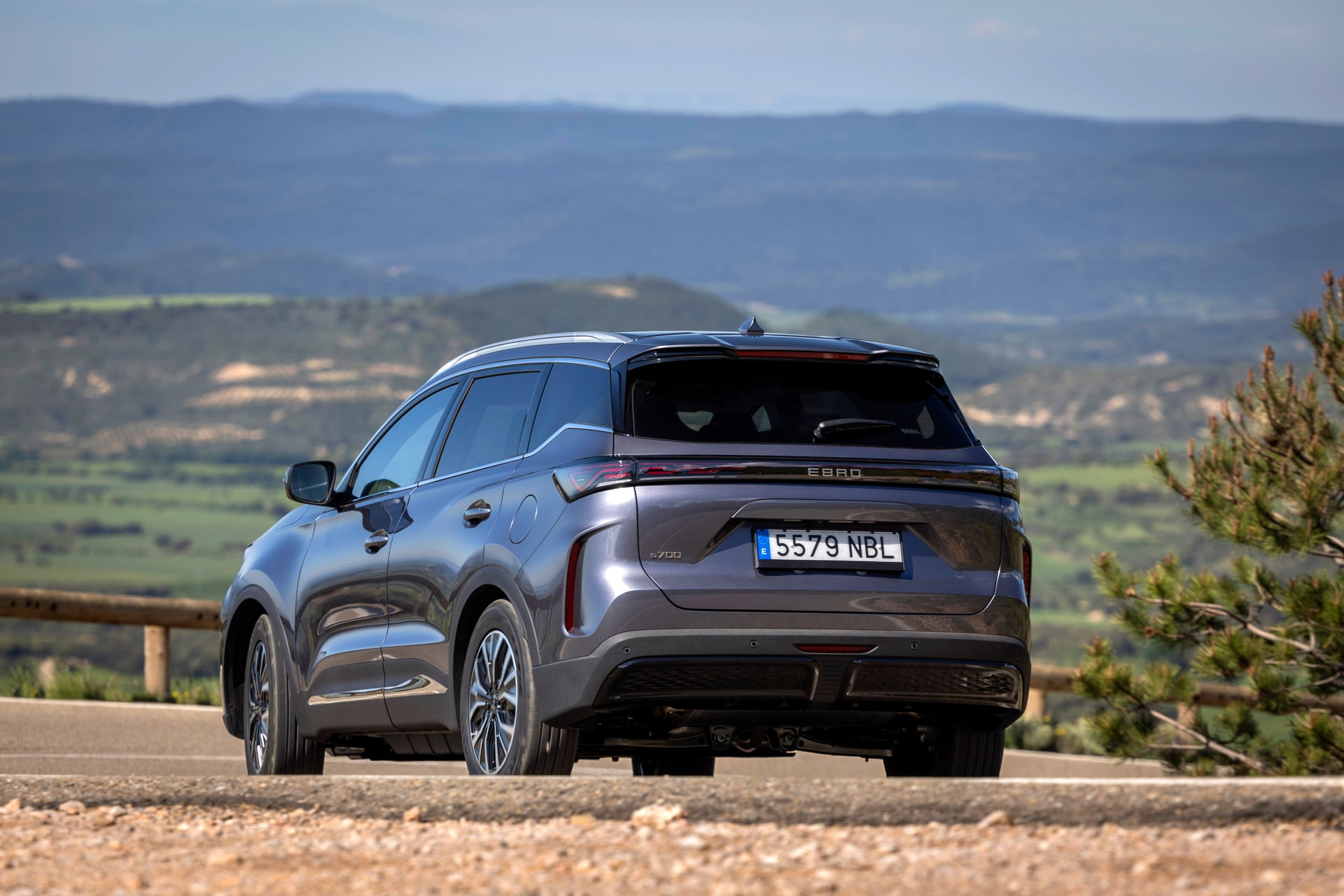
We compare the EBRO s700 PHEV and the MG HS PHEV, two plug-in hybrid SUVs that are redefining value for money in Spain with electric ranges of 90 and 103 km WLTP.
The plug-in hybrid SUV segment is going through a boom in Spain. Until recently, choosing a mid-size PHEV meant spending between 45,000 and 55,000 euros with established brands. The simultaneous arrival of the EBRO s700 PHEV—manufactured in Barcelona under technology licence from Chery—and the updated MG HS PHEV has shaken things up: two offers promising triple-digit electric ranges for less than the psychological threshold of 40,000 euros. The EBRO s700 PHEV vs MG HS PHEV comparison has become, almost by default, the obvious conversation for any rational buyer looking at 2024.
Context: why affordable PHEVs dominate the conversation in 2024
The DGT CERO label, unrestricted access to ZBE low-emission zones and a homologated consumption of less than one litre per 100 km are arguments too powerful to ignore. Affordable PHEV SUVs in Spain have gone from rarities to occupying the front line of the showroom, driven by manufacturers that have industrialised higher-density batteries without pushing prices up. The result: a 2024 plug-in hybrid SUV comparison in which emerging brands are challenging Hyundai, Volvo or Citroën.
EBRO s700 PHEV: the return of a historic name with Chery technology
EBRO has revived itself in the former Nissan plant in the Zona Franca with an offer that combines Spanish industrial nostalgia and Chinese engineering. The s700 PHEV features a 205 kW (279 CV system) powertrain with a 1.5 turbo petrol engine supported by a significant electric motor, powered by a battery that delivers 90 km WLTP of electric range. The EBRO s700 PHEV price and range sit at a sweet spot: from approximately 35,545 € in Luxury trim and around 35,551 € in Premium, according to the manufacturer’s recommended retail price without discounts or aid.
| Power kW | Power CV | Top speed | Electric range | Consumption | Label | Fuel |
|---|---|---|---|---|---|---|
| 205 kW | 279 CV | 180 km/h | 90 km WLTP | 2.4 L/100km | CERO | PHEV (petrol/plug-in) |
MG HS PHEV: the second generation fine-tunes its aim
The second-generation MG HS PHEV is one of SAIC’s most aggressive moves in Europe. The package delivers 249 kW (339 CV system) and a 21.4 kWh battery homologated for 103 km WLTP, one of the best figures in the segment below 45,000 euros. The MG HS PHEV features underpin a combined consumption of just 0.54 L/100km and CO₂ emissions of 14 g/km.
| Power kW | Power CV | Top speed | Electric range | Consumption | Label | Fuel |
|---|---|---|---|---|---|---|
| 200 kW | 268 CV | 200 km/h | 90 km WLTP | 0.54 L/100km | CERO | PHEV (petrol/plug-in) |
The Comfort trim starts from approximately 37,340 € and the Luxury around 40,340 €, base RRP figures without discounts or aid.
Technical head-to-head: power, battery and electric range
On paper, the EBRO has a slightly higher system output (279 versus 268 CV), but both maintain the same electric range which, in everyday urban use, translates into one fewer recharge per week for many drivers. The top speed falls in the MG’s favour (200 km/h versus 180 km/h), although it is a more symbolic than practical figure.
Dimensions, interior space and boot
Both measure around 4.65 metres in length, playing in the same league as the Hyundai Tucson PHEV or the Citroën C5 Aircross Hybrid. The HS opts for a sharper design and a dashboard dominated by a dual screen; the s700 cultivates a more restrained language, with materials that feel surprisingly good to the touch for their price bracket.
Charging technology and real-world electric use
Both accept DC fast charging, something unusual in PHEVs of this bracket. It is a key detail: being able to plug in at 40–50 kW during a coffee break turns a PHEV into a tool that is usable away from home too.
The shadow of Hyundai: the Tucson PHEV as the established reference
The Hyundai Tucson PHEV remains the mirror in which newcomers look. With a plug-in hybrid system of about 288 CV and an electric range close to 70 km, the Korean model plays the card of network, warranty and technological maturity. Hyundai also maintains a coherent range running from the compact Bayon to the family SUV, something EBRO and MG still have to prove over the long term.
| Power kW | Power CV | Top speed | Electric range | Consumption | Label | Fuel |
|---|---|---|---|---|---|---|
| 212 kW | 288 CV | 191 km/h | ~70 km WLTP | 5.9 L/100km | CERO | PHEV (petrol/plug-in) |
The French alternative: Citroën C5 Aircross Hybrid
Citroën brings its Advanced Comfort philosophy to the equation. The C5 Aircross Hybrid takes a different approach: fewer horsepower, more comfortable ride and an already established image. For many Citroën customers, the transition to a PHEV is about keeping the DNA of progressive hydraulic suspension rather than winning the numbers game.
| Power kW | Power CV | Top speed | Electric range | Consumption | Label | Fuel |
|---|---|---|---|---|---|---|
| 165 kW | 225 CV | 225 km/h | ~55 km WLTP | 2.5 L/100km | CERO | PHEV (petrol/plug-in) |
The Chinese factor on the way: Changan Deepal and Geely
Beyond the EBRO–MG duel, the Chinese wave keeps growing. Changan Deepal is preparing its arrival with EREV and PHEV proposals promising competitive electric ranges, while Geely is consolidating its European strategy by relying on platforms shared with premium brands. The next chapter of affordable PHEV SUVs in Spain will almost certainly be written by Changan Deepal and Geely alongside the current protagonists. Changan Deepal’s strong commitment to the range-extender format adds an interesting technological nuance to the debate.
The premium counterpoint: Volvo and European electrification
At the opposite end of the map, Volvo has taken the pure electric route with the EC40, almost leaving the PHEV behind in its range. Volvo reminds us that the ceiling of the segment remains European in terms of perceived quality, even though the price multiplies. It is the useful contrast for understanding why an EBRO or a MG for less than 40,000 € are so disruptive.
Summary table and score
| Model | Power CV | Electric range | Consumption | Price from | Score /10 |
|---|---|---|---|---|---|
| EBRO s700 PHEV | 279 | 90 km | 2.4 L | 35,545 € | 8.4 |
| MG HS PHEV | 268 | 90 km | 0.54 L | 37,340 € | 8.7 |
| Hyundai Tucson PHEV | 288 | 70 km | 5.9 L | 33,315 € | 8.2 |
| Citroën C5 Aircross Hybrid | 225 | ~55 km | 2.5 L | 39,590 € | 7.8 |
Verdict: the best value-for-money plug-in hybrid SUV
If the criterion is the best value-for-money plug-in hybrid SUV, the MG HS PHEV wins by a nose thanks to its 103 km electric range and unbeatable homologated consumption. The EBRO s700 PHEV responds with a Spanish industrial proposition and a very complete Premium equipment level. Hyundai and Citroën retain the advantage of network and residual value; Volvo sets the aspirational ceiling; Changan Deepal and Geely threaten to shake up the board within a few months.
Note: all prices mentioned are the manufacturer’s recommended retail price, without dealer discounts, one-off campaigns or purchase aid.
Frequently asked questions
What DGT label do both models have?
Both the EBRO s700 PHEV and the MG HS PHEV obtain the CERO emissions label by exceeding 40 km of homologated electric range, which allows them unrestricted access to ZBE low-emission zones.
How much does an affordable PHEV SUV cost in Spain in 2024?
The entry bracket sits between 37,000 and 42,000 € RRP, with the MG HS PHEV and the EBRO s700 PHEV marking the floor of the segment ahead of the Hyundai Tucson PHEV or Citroën C5 Aircross Hybrid.
Is it worth waiting for the Changan Deepal or Geely offerings?
If there is no urgency, it is advisable to watch the arrival of Changan Deepal and Geely during 2024–2025, as they could press prices down even further. If the purchase is immediate, EBRO and MG already offer a value for money that is hard to match.

 Peugeot E-208 GTi: a battery-powered toy that revives the spirit of the 1980s sports cars
 New Lexus ES: luxury grows and goes electric
 First contact with the Dacia Sandero Hybrid 155: power and efficiency from €19,890
Deja un comentario