Arona Juke KIA Nissan SEAT Stonic Comparisons Crossovers Tests
KIA Stonic vs SEAT Arona: which urban SUV-B offers the best overall value under 25,000 euros
 Iván Navarro
20 November 2026
5 min.
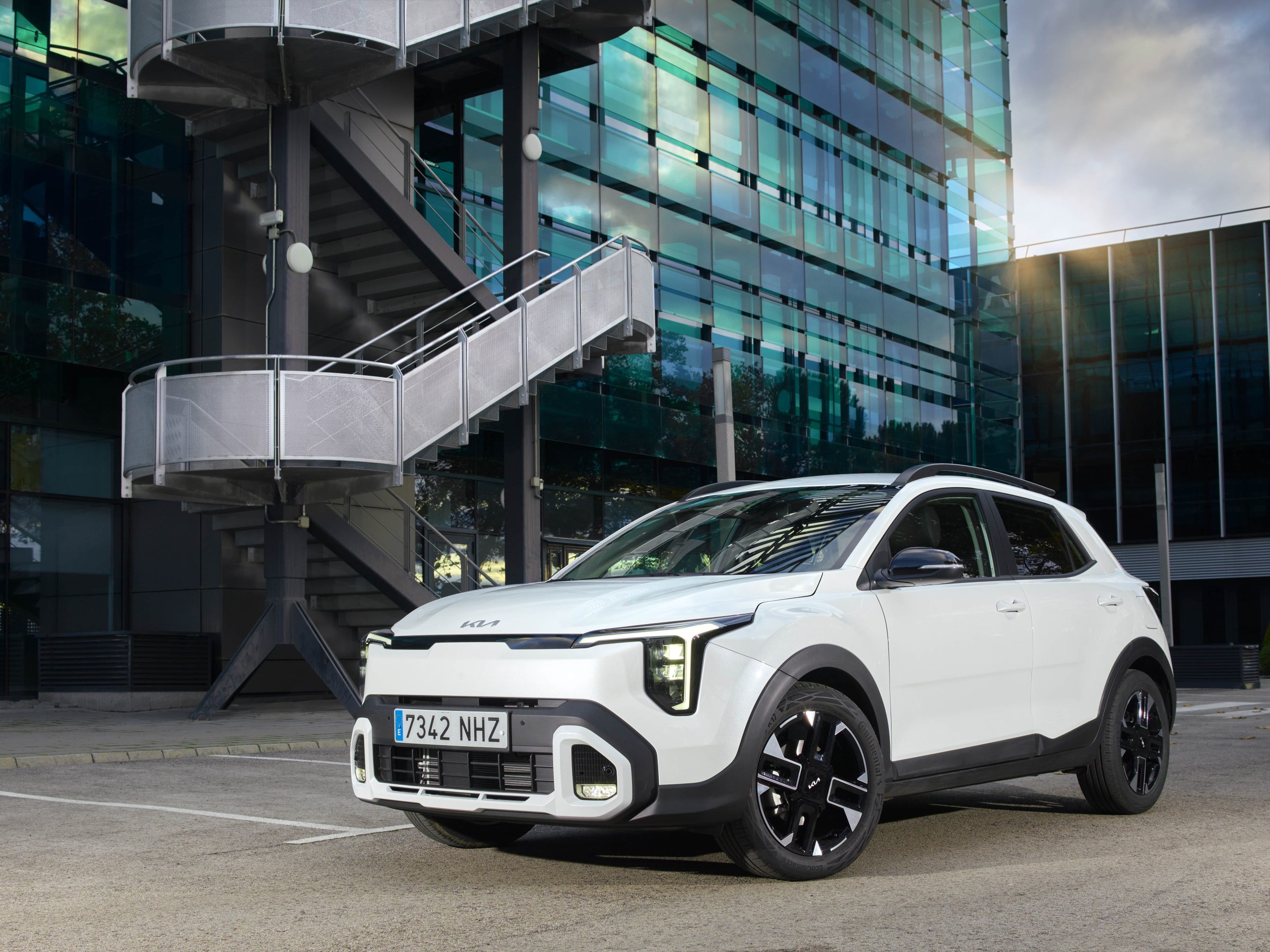
We compare the KIA Stonic and the SEAT Arona, two entry-level urban SUV-Bs with 100 CV petrol engines, to find out which offers the best overall value under 25,000 euros. Power, consumption, emissions and price, head to head.
Choosing an urban SUV-B on a tight budget means looking beyond the power figures. The Kia Stonic and the SEAT Arona compete in the same space, entry-level SUVs under 25,000 euros, and both share the same mechanical layout: a turbocharged three-cylinder petrol engine producing around 95 to 100 CV. The question that really matters is not which accelerates better, but which spreads each euro most effectively across consumption, emissions and long-term warranty cover.
Kia Stonic, from approximately 24,200 €: specs and character
In Spain the Kia Stonic is sold in its 1.0 T-GDi 100 Concept 5p ISG version, with 74 kW (100 CV) and a top speed of around 180 km/h. It is not a car that aims to surprise with any single figure, but it performs competently in everyday use: city driving, ring-road commutes and the occasional weekend trip. Its main selling point, one that Kia has emphasised across generations, is the extended warranty, which makes the Stonic a sensible choice for buyers who want to keep the car for many years without surprises.
| Version | Power (kW) | Power (CV) | Top speed | Consumption | CO₂ emissions | Fuel | Price from |
|---|---|---|---|---|---|---|---|
| 1.0 T-GDi 100 Concept 5p ISG | 74 kW | 100 CV | ≈180 km/h | ≈5.5 l/100 km | ≈130 g/km | Petrol | ≈24,200 € |
SEAT Arona, from approximately 23,100 €: specs and character
The SEAT Arona offers its entry version in the 1.0 TSI 95 Arona+ 5p S/S, with its engine rated at 70 kW (95 CV), just 5 CV below the Korean model, and a top speed of 182 km/h. Where it pulls ahead is in its homologated combined consumption: around 5 l/100 km compared with the Stonic’s 5.5, a difference that over 15,000 kilometres a year amounts to several fewer tanks of fuel annually.
| Version | Power (kW) | Power (CV) | Top speed | Consumption | CO₂ emissions | Fuel | Price from |
|---|---|---|---|---|---|---|---|
| 1.0 TSI 95 Arona+ 5p S/S | 70 kW | 95 CV | ≈182 km/h | ≈5 l/100 km | ≈120 g/km | Petrol | ≈23,100 € |
Engine and performance: 100 CV versus 95 CV
In practice this is a technical tie. Both use a turbocharged three-cylinder petrol engine with a minimal power difference (100 CV in the Kia against 95 CV in the SEAT) and an almost identical top speed, so on a motorway acceleration test there would barely be a noticeable difference between the two. The sense of pulling power, however, depends more on acoustic insulation and gearbox calibration than on those five horses of difference, and at that point we are dealing with personal preference rather than figures.
Consumption and emissions: the real difference
This is where the Arona scores its best point. A combined consumption of 5 l/100 km against the Stonic’s 5.5 does not look like much on a spec sheet, but multiplied across intensive urban use it starts to show on the fuel bill. Emissions follow the same logic: 120 g/km of CO₂ in the SEAT against 130 g/km in the Kia, a gap that does not change the environmental badge (both carry the DGT C label), but does allow the Spanish model to be exempt from the Registration Tax by staying below the 120 g/km threshold.
Price and equipment: where is the value?
The Arona enters the market from around 23,100 euros, roughly 1,100 euros below the Stonic, which starts at around 24,200 euros. Both figures are the manufacturer’s recommended retail price, excluding dealer offers and one-off campaigns. That initial gap favours SEAT, but it does not tell the whole story: you also need to look at what each includes in terms of warranty and medium-term maintenance costs.
Warranty and cost of ownership
And this is where the Stonic makes up ground. Kia offers a warranty considerably longer than the segment average, a point that carries weight for anyone planning to keep the car for seven or eight years without replacing it. The SEAT Arona, for its part, competes with a very widespread workshop network and historically affordable maintenance, something we already examined when reviewing the SUV-Bs with lower maintenance costs over 5 years. There is no absolute winner on this point: it depends on whether you prioritise the cost of an occasional workshop visit or the peace of mind of long-term cover.
Summary comparison table
| Model | Power | Top speed | Consumption | Emissions | Price from | Overall score |
|---|---|---|---|---|---|---|
| Kia Stonic | 100 CV | 180 km/h | 5.5 l/100 km | 130 g/km | 24,200 € | 7.8/10 |
| SEAT Arona | 95 CV | 182 km/h | 5 l/100 km | 120 g/km | 23,100 € | 8/10 |
Verdict: which one to buy?
If the criterion is purely economic, the SEAT Arona comes out ahead: it costs less, consumes less and emits less. But the Kia Stonic is not far behind, and its extended warranty is a point many buyers value more than half a litre of savings per hundred kilometres. For someone who changes cars every three or four years, the Arona is the more rational choice. For someone who wants to keep their car for a decade, the Stonic starts to make more sense than it first appears. We already applied this same logic when comparing the Kia Stonic against the Nissan Juke in terms of everyday running costs, and the conclusion points in a similar direction.
Frequently asked questions
Which urban SUV-B offers better value for under 25,000 euros, the Kia Stonic or the SEAT Arona?
It depends on your priorities. The SEAT Arona starts from a lower indicative price, around 23,100 euros, and has better consumption and emissions. The Kia Stonic, from around 24,200 euros, makes up for it with a longer warranty that often translates into lower long-term cost of ownership.
Do the Kia Stonic and the SEAT Arona have the same power?
Almost: in their entry versions, the Kia Stonic delivers 100 CV (74 kW) and the SEAT Arona offers 95 CV (70 kW), with a practically identical top speed of around 180-182 km/h.
How much does each consume on the combined cycle?
The Kia Stonic is homologated at around 5.5 l/100 km, while the SEAT Arona sits at around 5 l/100 km, a difference that shows up on the fuel bill with intensive use.
Technical specifications of the cars in this article


 Kia offers an electric range of 10 models, 50 versions and 400 possible combinations
 The seven finalists for the 2027 European Car of the Year (COTY) are exclusively electric
 Peugeot E-208 GTi: a battery-powered toy that revives the spirit of the 1980s sports cars
Deja un comentario