Mazda CX-5 2.2 SKYACTIV-D 150 CV AUT 4WD, road test (Engine and performance)
 Diego G. Moreira
30 October 2012
5 min.
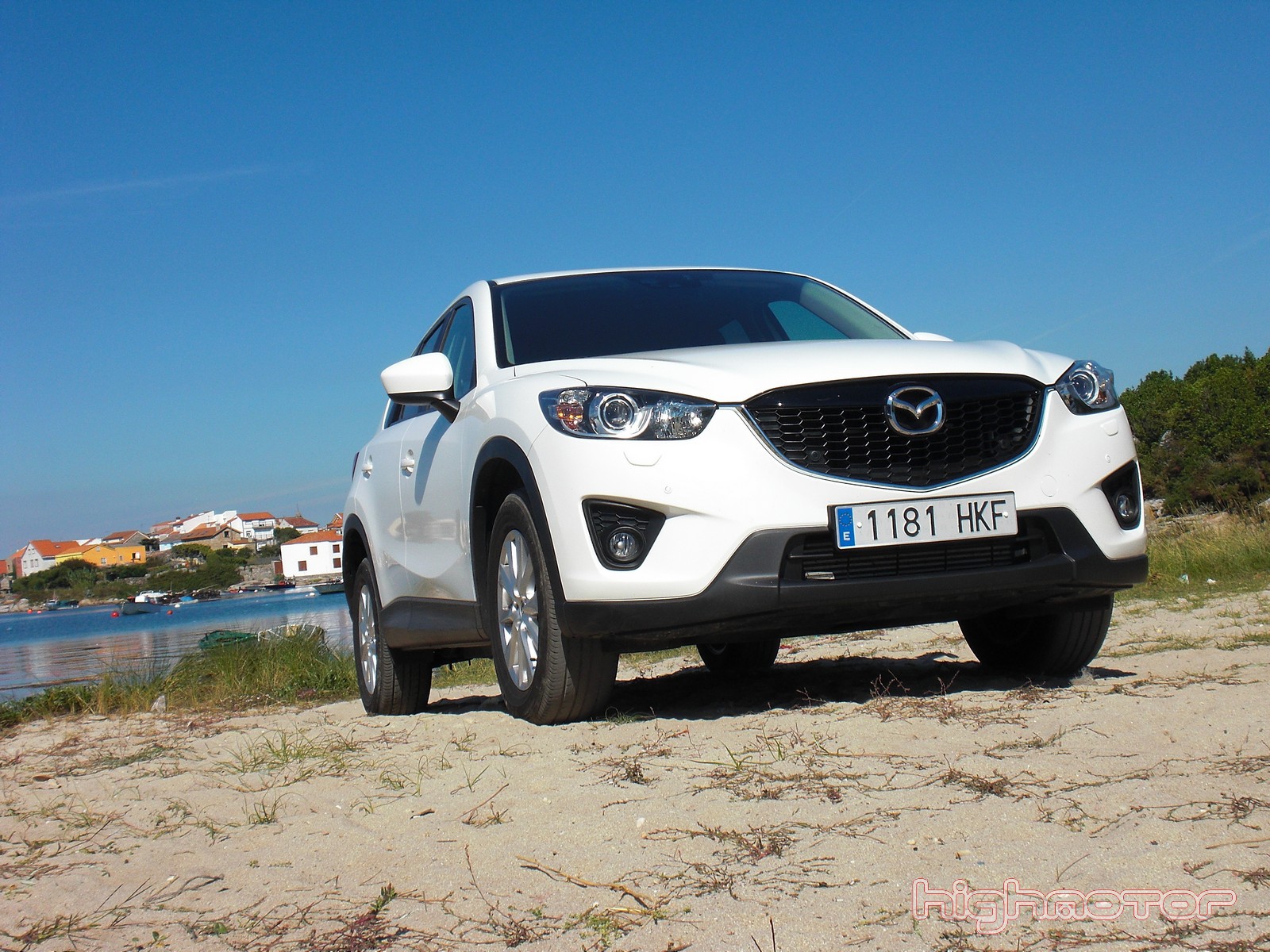
Behind the wheel of the Mazda CX-5 2.2 SKYACTIV-D 150 CV with six-speed automatic gearbox and all-wheel drive. We put this diesel version to the test and tell you everything about the engine, performance and consumption.
We continue with our tests at Highmotor and with this brief comparison between two SUVs with plenty to say. The first is a veteran of the segment, the Volkswagen Tiguan, while we now turn to a newcomer that arrives making a strong impression. We take the wheel of the Mazda CX-5 with the 150 CV diesel engine paired with the six-speed automatic gearbox and all-wheel drive.
SKYACTIV technology is already well known to our test team, and on two occasions we have been able to delve into the Japanese firm’s new bet. In theory, we saw that it aims to raise efficiency to the maximum level, with a series of multiple improvements to the engines and to the vehicle itself. Now we will see in practice the results of this technology applied to the Mazda CX-5.
I cannot begin the test without a brief mention of the strong commitment Mazda has made to this car, the CX-5 debuts the new SKYACTIV engines (diesel and petrol), a new gearbox (manual and automatic), a milestone in weight reduction (around 1,615 kg), a focus on safety with new equipment, a new design language and, finally, new interiors with higher quality.
Engine and performance
Now yes, we start the test by analysing the 2.2-litre diesel engine with 150 CV. The engine features SKYACTIV technology, meaning combustion has been optimised to seek maximum efficiency and, at the same time, a reduction in emissions and consumption.
In this diesel engine, work has been done to reduce the compression ratio and thus cut consumption, settling at 14:1. It also features a twin-turbo system, thanks to a two-stage turbocharger, and a variable valve lift system. All of this contributes to lower emissions and allows the engine to already exceed the future Euro VI standard.
How does it respond? The first thing we notice is a smooth engine, with a firm response when pressing the accelerator (after all, it is 2.2 litres and 150 CV), a response that is felt from 1,800 rpm up to 4,500 rpm. The area for improvement is the engine’s noise, somewhat high in our view, although inside the cabin the noise is barely noticeable thanks to excellent cabin insulation.
One of the strong points is the new six-speed automatic gearbox. It is true that it is not as quick as the DSG fitted to the VW Tiguan, but for a gearbox that is not dual-clutch, it delivers an operation that is simply excellent. We rarely find a gearbox that is so quick or that holds the car in the way this one does.
After several years testing cars, many of them automatics, almost all gearboxes falter on engine braking: they let the car roll freely and do not hold back like a manual gearbox does. That does not happen in the CX-5. When we lightly press the brake on a long hill or descent, the gearbox downshifts and holds the CX-5 back.
There is one notable absence behind the wheel: paddle shifters. They would be an ideal complement to this six-speed automatic gearbox.
Handling
On the road the CX-5 is a comfortable car with good insulation. However, it is still an SUV, meaning that its agility is compromised by its size, height and even its tyres. As always, the ESP takes care of correcting any problem, and on the plus side it does not have the typical soft suspension that models in this segment often have.
The steering is indeed soft and not very communicative, but it fulfils its task correctly. The braking system stands out for the spongy feel of the pedal (common in Japanese brands), but beyond this detail, it performs its function without problems.
The unit we tested had all-wheel drive, fully automatic, which engages when it detects a loss of grip at any of the wheels. We have tested this system in the field, on sand and on low-grip surfaces, and the results have been positive, especially in how quickly it shifts traction to the other wheels in difficult terrain.
For more off-road use, it would be advisable to fit mixed-use tyres (something the VW Tiguan does fit), at least on these all-wheel-drive versions, which greatly improve the car’s behaviour and grip, which already has a good traction system despite being fully automatic.
Consumption
As we already mentioned, SKYACTIV technology seeks savings in emissions and fuel, and it is precisely in consumption that the figures stand out. An automatic 4×4 with 150 CV and all-wheel drive that consumes 5.9 litres on the motorway. This figure rises slightly to 6.2 litres on country roads.
In urban driving, on our usual route of about 50 km around the hilly city of Vigo, consumption came to 8 litres per 100 km. The CX-5 also comes standard with the Stop&Start system, a quick system in combination with the automatic gearbox, although some manufacturers beat it in this respect.
These figures are better than those of the Tiguan, which, under almost identical conditions and with slightly less power, consumes half a litre more on country roads. The best figures, and the ones that surprise most, belong to the petrol version of the Mazda CX-5, which we briefly tried a few months ago.
In the second part we continue with the analysis of the exterior design, interior and finishes of the Mazda CX-5.
Photos | Diego G. Moreira


 Peugeot E-208 GTi: a battery-powered toy that revives the spirit of the 1980s sports cars
 New Lexus ES: luxury grows and goes electric
 First contact with the Dacia Sandero Hybrid 155: power and efficiency from €19,890
Deja un comentario