Mercedes-Benz wants its vehicles to be manufactured with 40% recycled materials
 Mónica Redondo @MonicaRedondoD
17 March 2022
3 min.
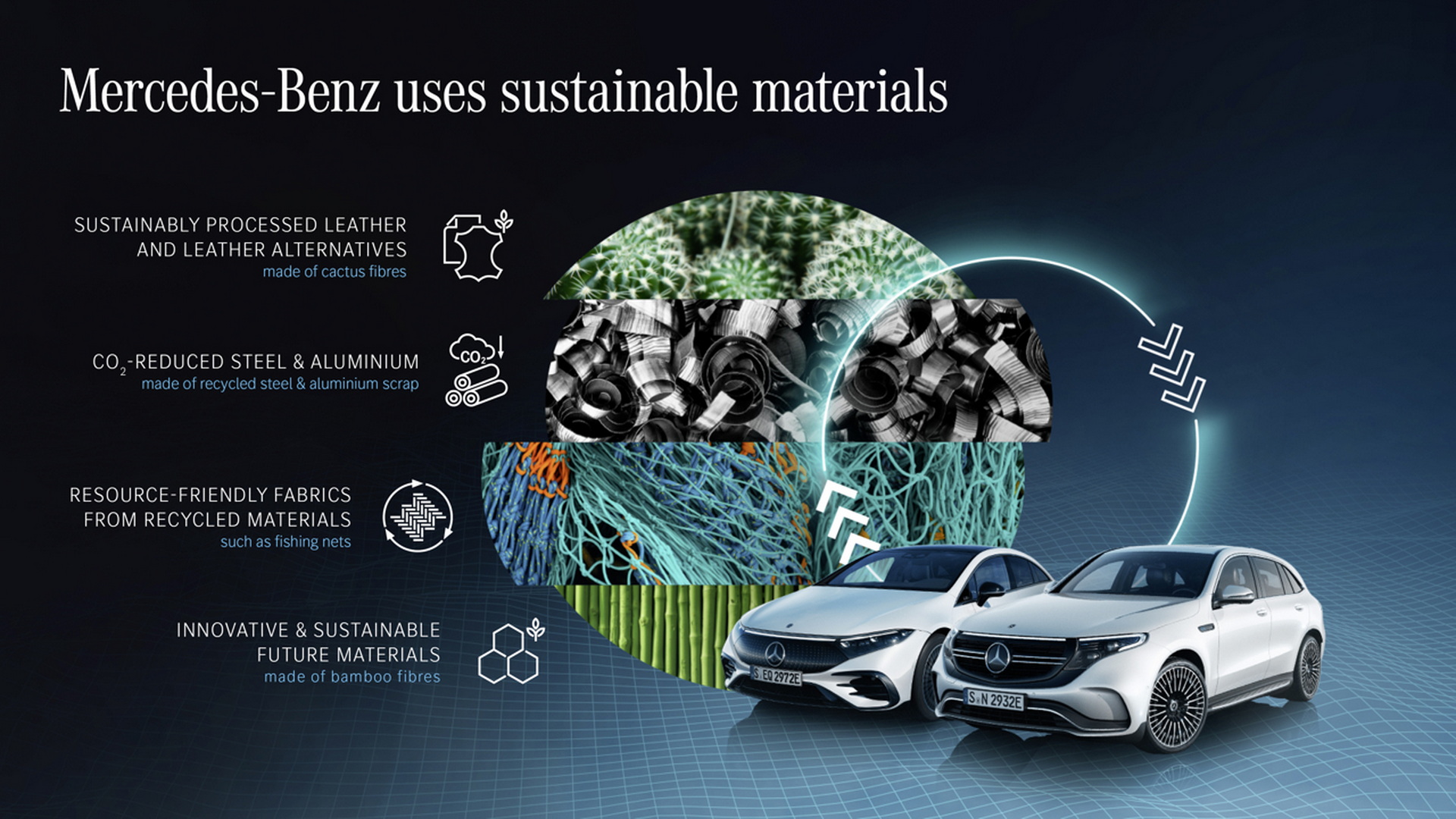
The star brand wants its vehicles to be manufactured with 40% recycled materials by 2039.
Mercedes-Benz has described a series of new processes and materials it is introducing into its vehicle production line as part of its goal of having a fleet of new passenger vehicles with zero CO2 emissions by 2039. As part of that ambition, its range will be manufactured with an average of 40% recycled materials. Markus Schäfer, Chief Technology Officer of Mercedes-Benz, has pointed out that “our vision is to transform our entire value chain into a circuit that is as closed as possible.”
“Our series production vehicles already contain a large amount of recycled materials. Over the next ten years, we will increase the proportion of secondary raw materials in our passenger car fleet to an average of 40 percent.” The star brand will use materials made from fishing nets and PET bottles, but will also use chemically recycled materials. This allows used tires and plastics that are difficult to recycle to be broken down into their chemical components so that they can be turned into new materials.
Mercedes-Benz will use recycled materials in its models
In addition, the star brand is also exploring the use of UBQ, a material made from converted mixed household waste, and a partially CO2-based foam. Known as polyol, automotive-grade polyurethane foam could be used in rear seat cushions, and up to 20 percent of it by weight is chemically bound carbon dioxide that would otherwise go into the atmosphere.
The carmaker is also seeking to use new renewable materials, such as mats made from bamboo fibers and a silk-like material that is completely free of animal products. It is also working to reduce CO2 consumption in the production of steel for its vehicles. Working with Salzgitter Flachstahl GmbH, Mercedes-Benz is introducing manufactured steel that consumes 60 percent less carbon dioxide in initial applications in the current A-Class, the current E-Class, the new C-Class and the EQE. Meanwhile, the structural castings of the Mercedes-AMG SL are made from die-cast alloys made from up to 100 percent recycled aluminum scrap, which reduces CO2 emissions by more than 90 percent, as the German carmaker has pointed out.
Similarly, Mercedes-Benz is looking for leather alternatives made from cactus fibers powder and fungal mycelium, which can help customers avoid the use of leather in their vehicles. However, if a customer wants leather, the carmaker will begin offering exclusively sustainably sourced leather. To achieve that, Mercedes-Benz will look at everything from livestock rearing to tanning. It will only source leather from suppliers that comply with animal welfare standards, and the supply chain must be free of any form of illegal deforestation. The tanning processes will also have to be chrome-free.
“Sustainability is the foundation of all of Mercedes-Benz’s research and development activities. Our goal is to be the technological leader in environmental engineering by achieving more with less. To this end, we are accelerating our pace of innovation and incorporating new, sustainable technologies into series production as quickly as possible.”


 Kia offers an electric range of 10 models, 50 versions and 400 possible combinations
 The seven finalists for the 2027 European Car of the Year (COTY) are exclusively electric
 Peugeot E-208 GTi: a battery-powered toy that revives the spirit of the 1980s sports cars
Deja un comentario