Nicola Tesla and his battery-less electric car
 Rubén Herrera @http://twitter.com/fleky95
25 February 2013
4 min.
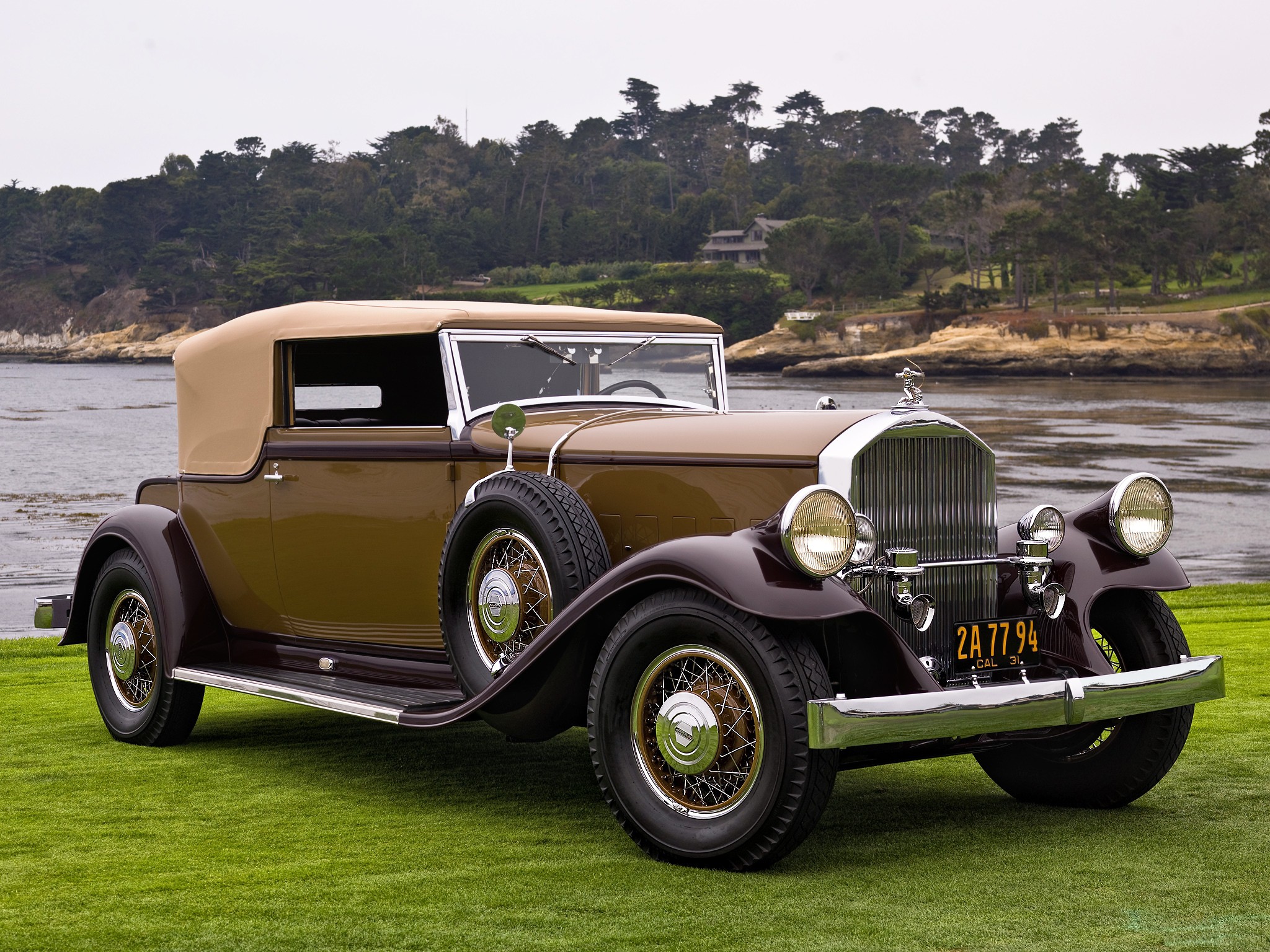
It seems that electric cars and electric motorcycles are a recent development, from just a few years ago. But quite the opposite is true: vehicles powered by electricity date back many years, to the early last century. As early as 1931, a certain Nikola Tesla was seen on the streets of Buffalo in an electric car built by himself. But that car had something unusual: it had no batteries.
Nikola Tesla, the inventor of alternating electric current, which Edison took care to discredit, built a vehicle in the 1930s that would still seem avant-garde even in our own era. While wireless charging systems are being perfected today, the American inventor managed to create an electric car that did not need batteries.
How was this possible?
Edison’s most fierce rival acquired a Pierce-Arrow. He removed the combustion engine from this legendary car, leaving the clutch, gearbox and four-wheel transmission exactly as they were. He fitted a 57 kW electric motor and, instead of mounting batteries to make it run, installed an electrical system powered wirelessly; Wi-Fi or Bluetooth almost 100 years ago.
Mounted in front of the instrument panel was a 60x25x15 centimetre converter with 12 vacuum tubes. From this “box” emerged a rather heavy 1.8-metre antenna, along with a pair of thick bars of about 10 cm. The antenna’s sole function was to receive energy from a tower and transmit it to the electric motor, which was roughly 1.65 metres long.
Today we pay exorbitant prices for fossil fuels and for electricity, while at the same time polluting our planet more and more. Curiously, Tesla invented a system through which he obtained completely clean and free energy, and without cables. The antenna that sent electricity to the converter I mentioned earlier was self-sufficient: it obtained energy through electromagnetic waves, something totally unlimited, clean, free and, believe it or not, cable-free.
People were astonished and “racked their brains” wondering how anyone could have built a car that made no noise and did not use petrol as fuel. Even now, in 2013, it surprises us that an electric car could move without batteries.
Fast, and with kilometres to its name
It seems the car reached a speed of 144 km/h, which is still remarkable today; its performance was easily comparable with that of a petrol car. It was driven for a week of tests, covering an enormous distance: about 1,500 kilometres, apparently.
George Westinghouse
, the investor
Nikola Tesla always had his own patron at his side, an investor who believed in him from the moment he handed in his irrevocable resignation to Thomas Edison. Thanks to George Westinghouse, Tesla was able to supply alternating current to many homes and also to develop his electric Pierce Arrow.
But you will all know that those years were practically the worst the United States had ever experienced: a severe recession followed the crash of ’29, when Wall Street collapsed. This, together with the discrediting of alternating current and, consequently, of Tesla that Edison’s pressure had brought about, is what halted the possible production of the model we are discussing.
The legend goes…
There are always enigmas and legendary details in these stories. According to some accounts, the car ended up on a farm near Buffalo, where it has remained stored for 80 years. Collectors, treasure hunters and followers of Tesla are still searching for it like madmen, knowing that if they find it they will uncover an object worth its weight in gold… or even more.
Can you imagine what would have happened had this model been sold? Would we now be talking about vehicles powered by an electric motor without batteries? Anything can be dreamed.
A documentary from the History Channel about this:
http://www.youtube.com/watch?v=pgQWq4cl3q4
Sources | Forococheselectricos, loqueignoras, bolindodecarlos.


 The seven finalists for the 2027 European Car of the Year (COTY) are exclusively electric
 Peugeot E-208 GTi: a battery-powered toy that revives the spirit of the 1980s sports cars
 New Lexus ES: luxury grows and goes electric
5 comentarios
Deja un comentario
ES UNA PENA QUE LOS GOBIERNOS NO APOYEN A ESTAS ALTURAS, ENERGIAS “NO” PROCEDENTES DEL PETROLEO…(NO SEA QUE LES TACHEN DE “ANTISISTEMA”…Y LA PROXIMA REMESA DE “DONANTES ANONIMOS”, NO SEA DE LA MAGNITUD DESEADA, COMO PARA GANAR LAS PROXIMAS ELECCIONES Y POR SUPUESTO QUE SI NO, TAMBIEM OLVÍDENSE DE JUBILARSE EN UNA GRAN MULTINACIONAL ENERGETICA, QUIMICA, O ALIMENTICIA, DESPUES DE SU LEGISLATURA…) ” ESPAÑA!! VA BIEN!!
NO EXISTE LA PANACEA! LA ENERGIA ELECTRICA O BIEN SE GENERA A PARTIR DE LA ENERGIA POTENCIAL DEL AGUA(DIQUES) O MEDIANTE LA QUEMA DE COMBUSTIBLES FOSILES O NUCLEARES…TODOS DAÑAN AL AMBIENTE…UNA CIUDAD CON AUTOS ELECTRICOS CAMBIA LA UBICACION D ELA CONTAMINACION…PASA D ELA CIUDAD A LA CENTRAL PERO LA CONTAMINACION TOTAL ES LA MISMA!
no has comprendido nada, es una pena.-
El tema está en leer, es bien sencillo, puedes creerlo o no, pero la información está en el articulo, la energía no sabia de centrales …
Lo primero es que no hay ninguna evidencia de que el coche existiera ni documentación. Éstas son las palabras de su sobrino en 1967 “Tesla, according to the story, had the stock gasoline engine removed and replaced with a brushless AC electric motor. The motor was said to have been run by a “cosmic energy power receiver” consisting of a box measuring about 25 inches long by 10 inches wide by 6 inches high, containing 12 radio vacuum tubes and connected to a 6-foot-long (1.8 m) antenna. The car was said to have been driven for about 50 miles at speeds of up to 90 mph during an eight-day period.”
Muy científico no parece