Citroen Ducato E-Transit Fiat Ford Jumper Master Punto Renault Tipo Transit Electric Cars Furgonetas Rankings
Ranking 2026: the 5 large electric vans with the greatest cargo volume on the Spanish market
 Iván Navarro
23 November 2026
6 min.
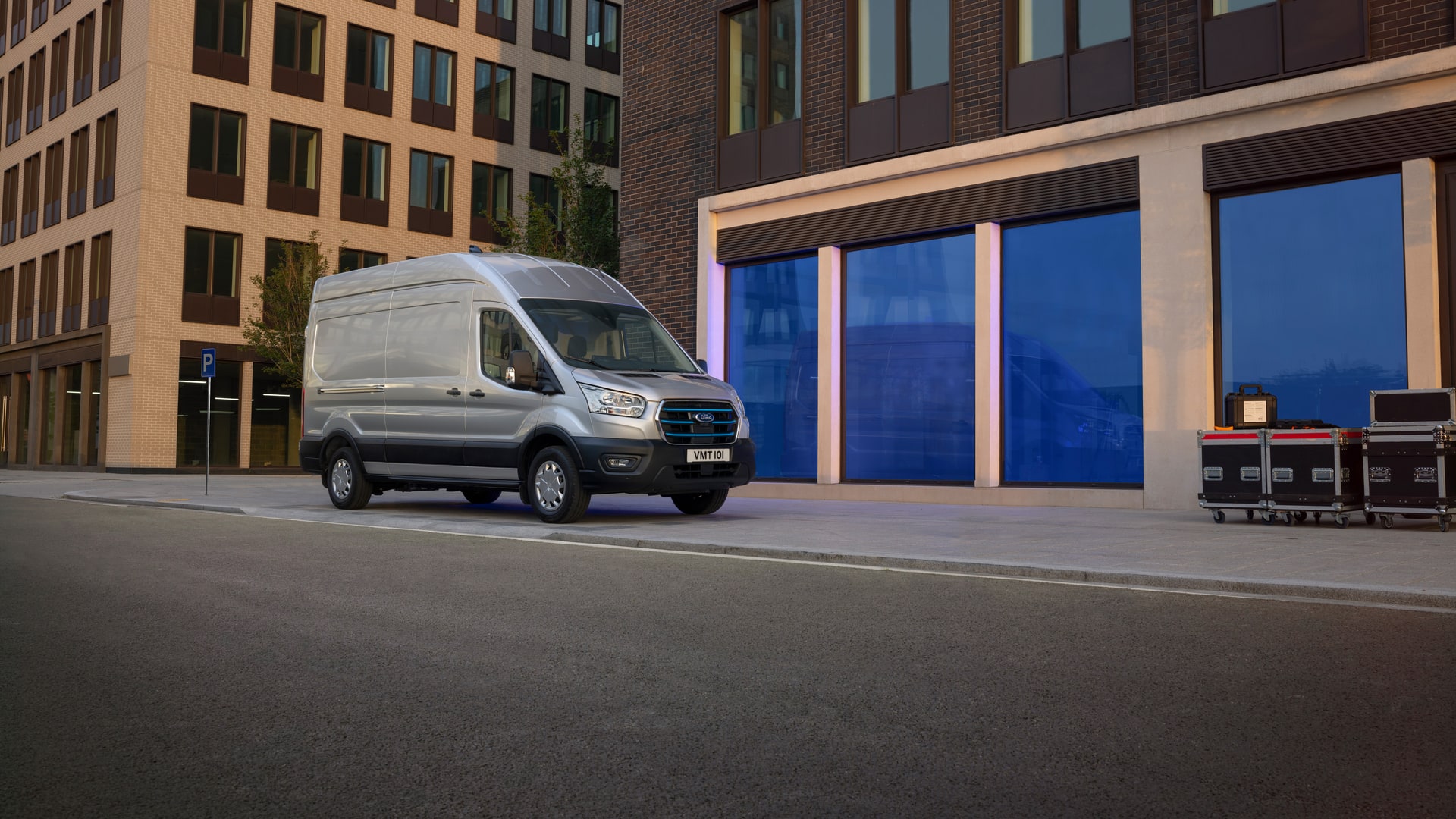
We analyse the large electric vans with the greatest cargo volume on sale in Spain in 2026, using official data on m³, WLTP range and prices. A ranking designed for fleets and self-employed drivers who need real capacity, not catalogue promises.
The shift from large vans to electric is no longer a trade-show promise. In 2026, any delivery company, installer or last-mile fleet can choose between several models with cargo capacity comparable to their diesel equivalents. The question is no longer whether they exist, but which one offers the most real cubic metres for the price it asks.
What a delivery company asks of a large electric van in 2026
Volume, payload and sufficient range to avoid breaking the route halfway through the day. These are the three variables that really matter when a fleet decides to electrify, and they don’t always go hand in hand. A bigger battery adds weight, and that weight reduces payload. That is why the volume figure must be read together with the range figure, not separately.
The Spanish market now has enough track record to compare with real homologation data, not trade-show figures. That is what we do here: a ranking of large electric vans ordered by available cargo volume in panel-van bodywork, with the versions and configurations that can actually be ordered at a Spanish dealership today.
Ranking 2026: the 5 large electric vans with the most cargo volume
1. Iveco eDaily, up to 19.6 m³ and prices from €68,000
The Iveco eDaily tops the list of factory-built vans without argument, thanks to its ladder frame chassis inherited from the commercial vehicle world. It plays in a different price league, but its capacity of up to 19.6 m³ largely justifies it. Iveco offers up to four modular battery packs depending on the configuration, which allows range and payload to be adjusted to the type of route without giving up space.
| Engine | Power | WLTP range | Cargo volume | Label | Fuel |
|---|---|---|---|---|---|
| 140 kW | 190 CV | Up to 400 km | Up to 19.6 m³ | Electric |
2. Fiat E-Ducato, up to 17 m³ and prices from €56,500
Of the five, the E-Ducato offers the best price-to-volume ratio today. After its thorough mechanical update within the Stellantis group, it incorporates a 110 kWh battery and a far more capable motor than its first generation, reaching up to 424 km of WLTP range without sacrificing a single litre of its load box of up to 17 m³.
| Engine | Power | WLTP range | Cargo volume | Label | Fuel |
|---|---|---|---|---|---|
| 200 kW | 272 CV | Up to 424 km | Up to 17 m³ | Electric |
3. Mercedes-Benz eSprinter, up to 17 m³ and prices from €62,500
The eSprinter ties with the E-Ducato for maximum van cargo volume, but arrives with a trim level and driver-assistance electronics one step above, something that is especially noticeable on long days at the wheel. Mercedes expanded its battery range to 113 kWh usable, which translates into a WLTP range reaching 478 km in the highest-capacity version, the highest in the segment.
| Engine | Power | WLTP range | Cargo volume | Label | Fuel |
|---|---|---|---|---|---|
| 100 kW / 150 kW | 136 / 204 CV | Up to 478 km | Up to 17 m³ | Electric |
4. Ford E-Transit, up to 15.1 m³ and prices from €56,000
The E-Transit sits at a very balanced point in both volume and dynamic behaviour. Ford offers two power levels and two battery options (68 kWh and 89 kWh extended range), which allows up to 402 km WLTP in the longest-range versions, making it suitable not only for urban delivery but also for demanding intercity routes.
| Engine | Power | WLTP range | Cargo volume | Label | Fuel |
|---|---|---|---|---|---|
| 135 kW / 198 kW | 184 / 269 CV | Up to 402 km | Up to 15.1 m³ | Electric |
5. Renault Master E-Tech, up to 14.8 m³ and prices from €57,500
Closing the ranking in closed panel-van bodywork is the Renault Master E-Tech, which reaches 14.8 m³ in the L3H3 configuration (although on a bodied cab-chassis it can reach 20 m³). Renault has redesigned its aerodynamics and multi-energy platform from scratch, which allows it to squeeze its 87 kWh battery to up to 460 km of WLTP range with very moderate consumption.
| Engine | Power | WLTP range | Cargo volume | Label | Fuel |
|---|---|---|---|---|---|
| 96 kW / 105 kW | 130 / 143 CV | Up to 460 km | Up to 14.8 m³ | Electric |
Other alternatives worth keeping an eye on: Peugeot e-Boxer, Citroën ë-Jumper and Maxus eDeliver 9
The Peugeot e-Boxer and the Citroën ë-Jumper share a platform, a 200 kW motor and a 110 kWh battery with the Fiat E-Ducato, so their volume figures (up to 17 m³) and range (up to 424 km) are practically identical; the choice between the three usually depends more on each brand’s after-sales network than on differentiating technical data. The Maxus eDeliver 9, for its part, falls somewhat short on volume (up to 12.3 m³) but competes with a more aggressive entry price, something to consider if budget matters more than space.
Summary table: comparison of the 5 large electric vans with the most cargo volume
| Model | Cargo volume | WLTP range | Price from | Score |
|---|---|---|---|---|
| Iveco eDaily | 19.6 m³ | 400 km | €68,000 | 8.5 |
| Fiat E-Ducato | 17 m³ | 424 km | €56,500 | 8.8 |
| Mercedes-Benz eSprinter | 17 m³ | 478 km | €62,500 | 9.0 |
| Ford E-Transit | 15.1 m³ | 402 km | €56,000 | 8.4 |
| Renault Master E-Tech | 14.8 m³ | 460 km | €57,500 | 8.9 |
Which electric van to choose depending on your fleet’s use
If the route is urban and the return to base every day is guaranteed, range stops being the problem and volume takes the lead: there the Iveco eDaily and the Fiat E-Ducato have a real advantage. If, on the other hand, the journeys are longer or recharging during the day is not assured, the Mercedes-Benz eSprinter and the Renault Master E-Tech make up for some volume with WLTP ranges of 478 and 460 km respectively, a margin that is noticeable in everyday practice.
The entry price remains the main barrier for many self-employed drivers and small fleets, something we already covered when discussing how to choose a small van for mixed city-and-motorway use. To cushion that outlay, it is advisable to check the current conditions of the Plan Auto+ on the official website before signing, because the amount and requirements change fairly often and nothing should be taken for granted when buying. For those managing a full fleet, the total cost of ownership calculation we outlined in how to choose a profitable vehicle for transfer companies remains the best starting point before deciding between volume, range and price.
Frequently asked questions
Which is the large electric van with the most cargo volume in Spain in 2026?
The Iveco eDaily, with up to 19.6 m³ in its most capable closed-van configuration, offers the greatest factory cargo capacity among the 100% electric large vans sold in Spain.
Which large electric van has the most homologated range?
The Mercedes-Benz eSprinter, in its 113 kWh battery version, reaches up to 478 km of WLTP range, the highest figure in this ranking.
Are large electric vans more expensive than equivalent diesel ones?
Yes, the initial extra cost remains notable, between €15,000 and €25,000 depending on the model, although fuel and maintenance savings narrow that gap over the vehicle’s useful life.
Are there public grants to buy an electric van in Spain?
Yes, through the Plan Auto+, whose amounts and conditions should be checked directly on the official website before completing the purchase, as they may vary depending on the autonomous community and the type of buyer.
Technical specifications of the cars in this article

 Kia offers an electric range of 10 models, 50 versions and 400 possible combinations
 The seven finalists for the 2027 European Car of the Year (COTY) are exclusively electric
 Peugeot E-208 GTi: a battery-powered toy that revives the spirit of the 1980s sports cars
Deja un comentario