Bayon Ford Hyundai i10 Kona Puma Toyota Yaris Hybrid Cars ECO Buying Guides SUV
How to Choose a Family Hybrid B-SUV for City and Long Trips in 2026: Space, Consumption and Comfort
 Iván Navarro
23 November 2026
7 min.
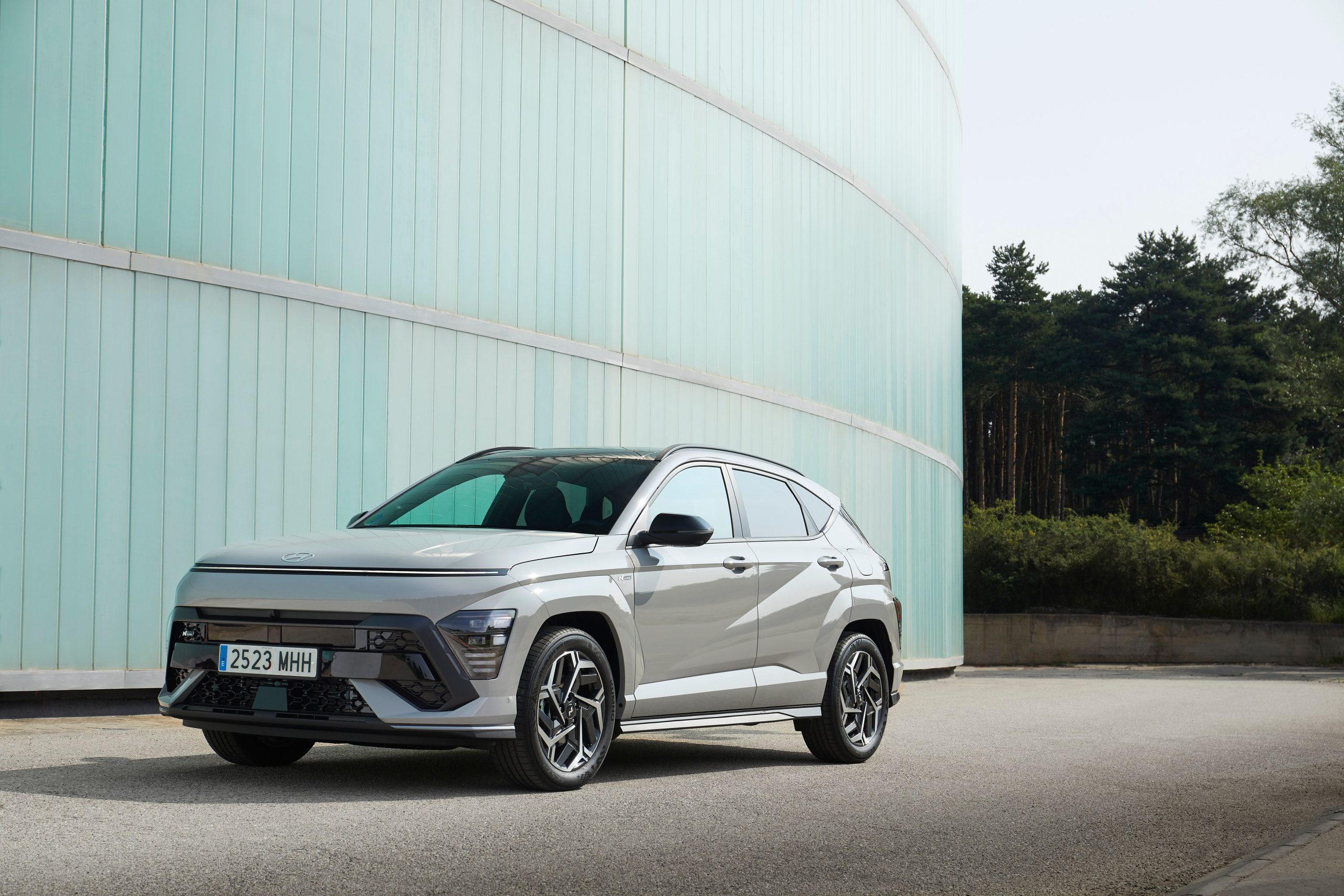
A practical guide to choosing the best family hybrid B-SUV 2026 in Spain, focusing on boot space, real-world consumption and the ECO label. We compare the Hyundai Kona, Bayon and i10 against their direct rivals in the segment.
Choosing a family car is no longer simple. In the past it was enough to look at the boot and the price; now you have to factor in the environmental label, standard ADAS and real-world consumption, which has little to do with what the technical specification promises. The hybrid B-SUV has become the compromise solution for anyone who drives in the city during the week and on the open road at weekends, and in 2026 the Spanish market is mature enough to compare with judgement, without being carried away by the design of the front end alone.
What a Spanish family asks of a hybrid B-SUV in 2026
The list of requirements has changed little at heart, but it has become more demanding in the details. Buyers want a boot that can swallow a baby seat and a weekend suitcase at the same time, consumption that doesn’t soar on motorways, and a driving height that makes it easy to get in and out with children in your arms. On top of that, the ECO label carries more and more weight: in many Spanish cities it already determines access to low-emission zones, which makes the sticker as real a purchasing argument as the price.
Space and boot: the first filter before looking at the engine
In a B-SUV, every centimetre counts. The difference between a 320-litre boot and a 400-litre one is noticeable when you come back from the supermarket with two shopping trolleys and a folded pushchair. It is worth testing access with the rear seats occupied, not just with an empty boot in the showroom: that is where you discover whether the legroom for a 1.75 m teenager is comfortable or falls short.
Real-world consumption in town and on the road: what the ECO label says and what the odometer shows
Here lies the catch with many light hybrids: they shine in town but fall short on sustained motorway driving, where the electric motor can hardly help. A homologated consumption of 5.8 l/100 km can become 6.5 or 7 on a 300 km trip at 120 km/h with the air conditioning at full blast. That is why, when we talk about real-world consumption of a hybrid B-SUV, we must distinguish between the laboratory figure and the one shown on the on-board computer after a Madrid–Toledo journey with three passengers and luggage.
Hyundai Kona: the segment benchmark for mixed use
If there is one model that has earned its place as the benchmark in this category, it is the Hyundai Kona. This is no coincidence: it combines a body that has grown compared with earlier generations (which translates into more rear space and boot capacity) with an interior finish that feels a step above the segment norm. In town it moves with the smoothness typical of a well-calibrated hybrid, and on the road it does not lose composure like other rivals that sacrifice comfort for efficiency. We have already analysed it in depth in our review of the Hyundai Kona Hybrid, where we found that its real-world consumption holds up well even on long journeys, something not all rivals achieve with the same consistency.
Alternatives for those who don’t need a full SUV: Hyundai Bayon and Hyundai i10
Not every family needs a full-size B-SUV. Hyundai offers two steps below the Kona that deserve a place in the conversation, especially if budget is the deciding factor.
Hyundai Bayon: the urban crossover with room for trips, from around €24,450
The Bayon is not a hybrid in the strict sense, but its 1.0 TGDi 66 kW (90 CV) engine is lively enough to move between town and open road without strain, with a homologated consumption of 5.8 l/100 km. It is the logical choice for those who want the presence of a B-SUV without paying the extra for the Kona.
| Version | Power | Top speed | Consumption | CO₂ | Fuel | Price from |
|---|---|---|---|---|---|---|
| Bayon 1.0 TGDi 90 Essence 5dr | 66 kW (90 CV) | 174 km/h | 5.8 l/100km | 132 g/km | Petrol | ~€24,450 |
| Bayon 1.0 TGDi 90 Tecno 7DCT | 66 kW (90 CV) | 172 km/h | 5.8 l/100km | 130 g/km | Petrol | ~€27,950 |
We compare it in detail against its most direct rival in Hyundai Bayon vs Ford Puma hybrid, where efficiency below €25,000 was the focus of the comparison.
Hyundai i10: the most affordable option in the range, from around €17,340
For those who need pure city size, the i10 remains a compelling argument. Its 1.0 MPI 46 kW (63 CV) is not designed for long journeys, but its consumption of 5.0 l/100 km and emissions of 114 g/km make it the most sensible entry point to the brand.
| Version | Power | Top speed | Consumption | CO₂ | Fuel | Price from |
|---|---|---|---|---|---|---|
| i10 1.0 MPI 63 Essence 5dr | 46 kW (63 CV) | 143 km/h | 5.0 l/100km | 114 g/km | Petrol | ~€17,340 |
| i10 1.0 MPI 63 Klass 5dr | 46 kW (63 CV) | 143 km/h | 5.0 l/100km | 114 g/km | Petrol | ~€18,490 |
Other B-SUVs in the segment to consider
For a complete 2026 hybrid B-SUV comparison you need to look beyond the Korean range. The Toyota Yaris Cross remains the historical benchmark for urban efficiency thanks to its full hybrid system, with a character that rewards stop-start traffic and traffic lights. The Ford Puma mild hybrid stands out for its driving dynamics, more fun than the segment average, although its MegaBox boot is noticeably narrower than the Kona’s. The Peugeot 2008 focuses on a bold digital interior design, with the i-Cockpit as its signature, although rear-seat space is not its strong point. And the Suzuki Vitara takes a more sober approach, available in both mild hybrid and full hybrid (Strong Hybrid) versions, with a good price-to-equipment balance, which we already analysed against its S-Cross sibling in terms of consumption and price.
ADAS and safety: what it should come with as standard in 2026
Autonomous emergency braking, lane departure warning and adaptive cruise control are now almost standard in this segment, but not all packages are the same. It is worth checking whether pedestrian and cyclist detection also works at night, which makes a real difference in town.
Indicative price and public aid: what it really costs
The prices mentioned are the manufacturer’s recommended retail prices (PVP), without dealer discounts, financing or special campaigns, so they should be taken as a starting point rather than a final figure. For non-plug-in hybrids and mild hybrids (ECO label), direct aid usually depends on regional or municipal fleet renewal and scrappage schemes (while the larger national subsidies are reserved for plug-in hybrids and pure electric cars); it is advisable to check the current calls in each region before closing the deal.
Comparative summary table
| Model | Power | Consumption | Fuel | Price from | Score |
|---|---|---|---|---|---|
| Hyundai Kona | 95 kW (129 CV) | 4.5 l/100km | Hybrid (HEV) | ~€32,740 | 9/10 |
| Hyundai Bayon | 66 kW (90 CV) | 5.8 l/100km | Petrol | ~€24,450 | 7.5/10 |
| Hyundai i10 | 46 kW (63 CV) | 5.0 l/100km | Petrol | ~€17,340 | 7/10 |
| Toyota Yaris Cross | 85-96 kW (116-130 CV) | 4.5-4.8 l/100km | Hybrid (HEV) | ~€27,750 | 8.5/10 |
| Ford Puma | 92-114 kW (125-155 CV) | 5.3-5.6 l/100km | Mild hybrid (MHEV) | ~€28,300 | 8/10 |
| Peugeot 2008 | 100-107 kW (136-145 CV) | 4.9-5.0 l/100km | Mild hybrid (MHEV) | ~€31,200 | 7.5/10 |
| Suzuki Vitara | 85-95 kW (116-129 CV) | 5.0-5.3 l/100km | Hybrid (MHEV / HEV) | ~€26,900 | 7.5/10 |
Note: the prices shown correspond to the official manufacturer’s recommended retail price, without promotional discounts or brand financing campaigns.
Frequently asked questions
Which is the best family hybrid B-SUV 2026 for mixed city and road use?
The Hyundai Kona stands out for its balance of space, comfort and sustained motorway consumption, which makes it the segment benchmark for anyone combining urban journeys with long trips.
Does a hybrid B-SUV for city and long trips really save money compared with a conventional petrol car?
In predominantly urban use, yes, noticeably so. On sustained motorway driving the difference shrinks because the electric motor contributes less, although the ECO label remains an advantage for access to cities.
What boot size does a small family hybrid B-SUV need for travelling with children?
Ideally not less than 350–400 real litres, enough for a folded baby seat, a pushchair and a medium suitcase without having to fold down the seats.
Is it worth paying more for the Hyundai Kona over a Bayon or an i10?
It depends on use: if long trips predominate and you need more space and comfort, the Kona justifies the difference; if use is almost exclusively urban, the Bayon or the i10 cover the need for considerably less outlay.
Technical specifications of the cars in this article

 Kia offers an electric range of 10 models, 50 versions and 400 possible combinations
 The seven finalists for the 2027 European Car of the Year (COTY) are exclusively electric
 Peugeot E-208 GTi: a battery-powered toy that revives the spirit of the 1980s sports cars
Deja un comentario