Hybrid Cars Tests Rankings SUV
Ranking 2026: the 6 hybrid SUVs with the best motorway efficiency according to homologated tests
 Dani Montesinos
21 July 2026
7 min.
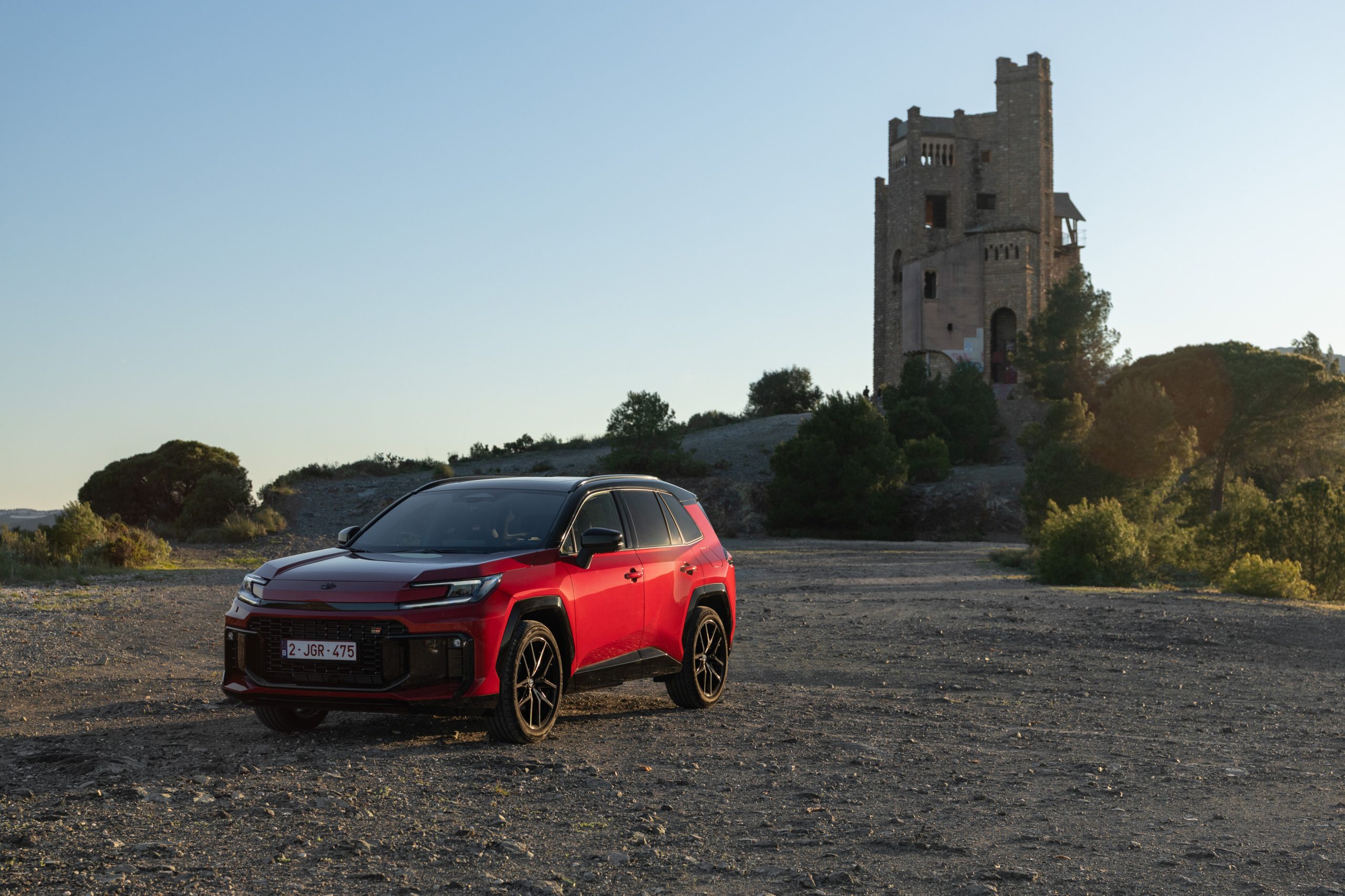
Analysis of the most fuel-efficient hybrid SUVs sold in Spain in 2026 on motorways, with verifiable WLTP data and a technical score for the HEV segment.
Motorway efficiency remains the real test for the full hybrid. In town almost any HEV shines — it regenerates, starts on electric power, and pushes consumption figures down without effort. But set the cruise control to 120 km/h for three hours and the character of the car changes: the combustion engine becomes the main actor, the battery takes a back seat, and the differences between hybrid architectures surface without filter.
This ranking is designed for that use. Long journeys, toll-road travellers, sales reps who do 40,000 km a year and need a car that won’t punish them at the pump when the asphalt stretches out. We have cross-referenced homologated WLTP data, independent benchmark tests and our own editorial experience to order six hybrid SUVs currently available at Spanish dealerships. One model per brand, no repeats, with a final score.
A note before we get into it: we have left BYD out of the analysis. In our view, the brand offers interesting proposals in other areas, but we believe its hybrid architectures — very oriented to the urban cycle and to markets with usage profiles different from long-distance European driving — do not perform on the motorway at the level of the Japanese, Korean and European alternatives that currently dominate the HEV segment in Spain. Other Chinese manufacturers are taking steps that are closer to the taste and needs of the continental driver; BYD, in this specific area, not yet.
Why the motorway separates the good from the mediocre
In an HEV, the battery is small and its role at 120 km/h is one of support rather than traction. There, the thermal efficiency of the petrol engine, the transmission ratio and — a factor that is too often overlooked — the aerodynamics of the SUV itself are what matter. A Cd near 0.30 makes the difference compared with one of 0.34, and that difference is paid for at every refuelling.
Mixed WLTP figures can be a little misleading. The cycle carries significant urban weighting, and some hybrids “inflate” their homologation thanks to spectacular performance in town. That is why we have weighted the extra-urban WLTP consumption and the real-world data published by European media in constant-speed cruise tests.
Toyota RAV4 Hybrid — from €44,250
The benchmark. Full stop. The fifth generation of the RAV4 remains, in practice, the most efficient hybrid in its segment on the motorway when driven with a clear head. Its HSD system has been refined for decades, and at 120 km/h the 2.5-litre Atkinson engine works in its zone of maximum efficiency without jolts.
That said, it is not as enjoyable to drive as one might wish. The e-CVT transmission still has that elastic behaviour that some drivers find uncomfortable during long overtaking manoeuvres. But on consumption — which is what this piece is about — few complain.
| Power kW | Power CV | Top speed | Range | Consumption | Label | Fuel |
|---|---|---|---|---|---|---|
| 136 kW | 185 CV | 180 km/h | ≈950 km | 5.2 l/100 km | ECO | Hybrid |
Honda CR-V e:HEV — from €46,645
The Honda arrived late to the hybrid party, but its two-electric-motor system with the combustion engine acting as a generator (with direct coupling on the motorway) is as clever as it is little understood by the general public. At cruising speed, the combustion engine connects directly to the wheels through a clutch, avoiding the “rubber band” effect of a traditional CVT.
The result: very competitive consumption on long journeys and a more natural driving feel than other HEVs. The price is high — it must be said — and the interior, correct without reaching premium level, leaves some room for improvement in materials.
| Power kW | Power CV | Top speed | Range | Consumption | Label | Fuel |
|---|---|---|---|---|---|---|
| 135 kW | 184 CV | 187 km/h | ≈870 km | 6.7 l/100 km | ECO | Hybrid |
Hyundai Tucson HEV — from €30,325
The Korean is probably the hybrid with the best balance of price, equipment and real-world efficiency in the entire ranking. Its parallel system with a conventional six-speed automatic gearbox — no CVT — feels more like a “normal car” behind the wheel and holds up surprisingly well on the motorway.
In practice, a well-driven Tucson HEV settles at 6.3–6.7 l/100 km in real conditions at legal speeds. It does not beat the Toyota, but it is hot on its heels for considerably less money.
| Power kW | Power CV | Top speed | Range | Consumption | Label | Fuel |
|---|---|---|---|---|---|---|
| 175 kW | 239 CV | 186 km/h | ≈830 km | 5.6 l/100 km | ECO | Hybrid |
Kia Sportage HEV — from €27,460
A mechanical sibling of the Tucson, but with its own character in chassis and interior presentation. It shares the powertrain, so the motorway figures are very similar — with nuances stemming from the suspension tuning and the slightly firmer setup of the Kia, which slightly improves high-speed stability.
In my view, the Sportage has a better-resolved cabin than the Tucson, with a curved screen that still impresses two years after its debut.
| Power kW | Power CV | Top speed | Range | Consumption | Label | Fuel |
|---|---|---|---|---|---|---|
| 175 kW | 239 CV | 193 km/h | ≈820 km | 5.5 l/100 km | ECO | Hybrid |
Renault Austral E-Tech full hybrid — from €36,909
The French model is the interesting outsider on the list. Its clutchless “multi-mode” transmission, with two electric motors and a toothed gearbox, is an unusual mechanical solution that on paper promises a lot and in practice delivers almost everything. On the motorway it loses some sparkle compared with the RAV4, but it stays below 6.5 l/100 km in real conditions without trouble.
That said, it remains to be seen whether Renault can maintain the reliability of such a complex system over the long term — it is the reasonable doubt that hangs over this architecture.
| Power kW | Power CV | Top speed | Range | Consumption | Label | Fuel |
|---|---|---|---|---|---|---|
| 147 kW | 200 CV | 175 km/h | ≈900 km | 4.7 l/100 km | ECO | Hybrid |
Nissan QashqaiNissan Qashqai e-Power — from €32,400
The e-Power is the great misunderstood one. Traction is always electric; the 1.5-litre petrol engine works as a generator. It sounds odd, but in town it is brilliant. On the motorway is where the system struggles most, because there is an additional energy conversion (petrol → electricity → motion) that penalises sustained high speeds.
Even so, its homologated figures are competitive and the driving experience is very distinctive — closer to an electric car than to a conventional hybrid. Interesting as a proposition, though not the most efficient in the ranking for the scenario we are dealing with.
| Power kW | Power CV | Top speed | Range | Consumption | Label | Fuel |
|---|---|---|---|---|---|---|
| 140 kW | 190 CV | 170 km/h | ≈780 km | 4.4 l/100 km | ECO | Hybrid |
Summary table and editorial score
| Model | CV | WLTP consumption | Range | Price from | Score /10 |
|---|---|---|---|---|---|
| Toyota RAV4 Hybrid | 185 | 5.2 l | 950 km | €44,250 | 9.3 |
| Renault Austral E-Tech | 200 | 4.7 l | 900 km | €36,909 | 8.7 |
| Hyundai Tucson HEV | 239 | 5.6 l | 830 km | €30,325 | 8.6 |
| Kia Sportage HEV | 239 | 5.5 l | 820 km | €27,460 | 8.5 |
| Honda CR-V e:HEV | 184 | 6.7 l | 870 km | €46,645 | 8.2 |
| Nissan Qashqai e-Power | 190 | 4.4 l | 780 km | €32,400 | 7.9 |
The RAV4 takes gold for consistency and system maturity. The Austral surprises on the podium thanks to exceptional homologated consumption and a very tight price. The Koreans share a virtual second place — the choice comes down to styling and feel. The Honda pays for its late arrival and its premium positioning, and the Qashqai e-Power finishes last in a ranking where its strong point (the city) does not score.
FAQ
Which hybrid SUV uses the least fuel on the motorway in 2026?
The Toyota RAV4 Hybrid remains the real benchmark on long journeys, with consumption ranging between 5.7 and 6.2 l/100 km at legal speeds, thanks to the maturity of the HSD system and an Atkinson engine that is especially efficient in cruise zone.
Is a hybrid worth it if I mostly drive on the motorway?
It depends. A well-chosen HEV saves 10–15% compared with an equivalent petrol car even on the motorway, but the difference narrows compared with town driving. If you drive more than 30,000 km a year mainly on the road, a modern diesel or a PHEV with a large battery could offer better value.
Why don’t Chinese models such as BYD appear in this ranking?
It is an editorial decision. We believe the hybrid architectures of BYD are more oriented to the urban cycle and to usage profiles different from long-distance European driving. Other options on the market today offer, in our view, better motorway performance.
What is the difference between an HEV and a PHEV on the road?
An HEV (self-charging) uses the battery as occasional support and relies on the combustion engine on the motorway. A PHEV (plug-in) can run on electric power until the battery is depleted, but once discharged it carries the extra weight without the benefit of the plug — and there, paradoxically, many consume more than a pure HEV.


 Kia offers an electric range of 10 models, 50 versions and 400 possible combinations
 The seven finalists for the 2027 European Car of the Year (COTY) are exclusively electric
 Peugeot E-208 GTi: a battery-powered toy that revives the spirit of the 1980s sports cars
Deja un comentario