Honda Toyota Hybrid Cars Rankings SUV
Ranking 2026: the 7 best hybrid SUVs for power-to-consumption ratio in segment C
 Dani Montesinos
16 July 2026
6 min.
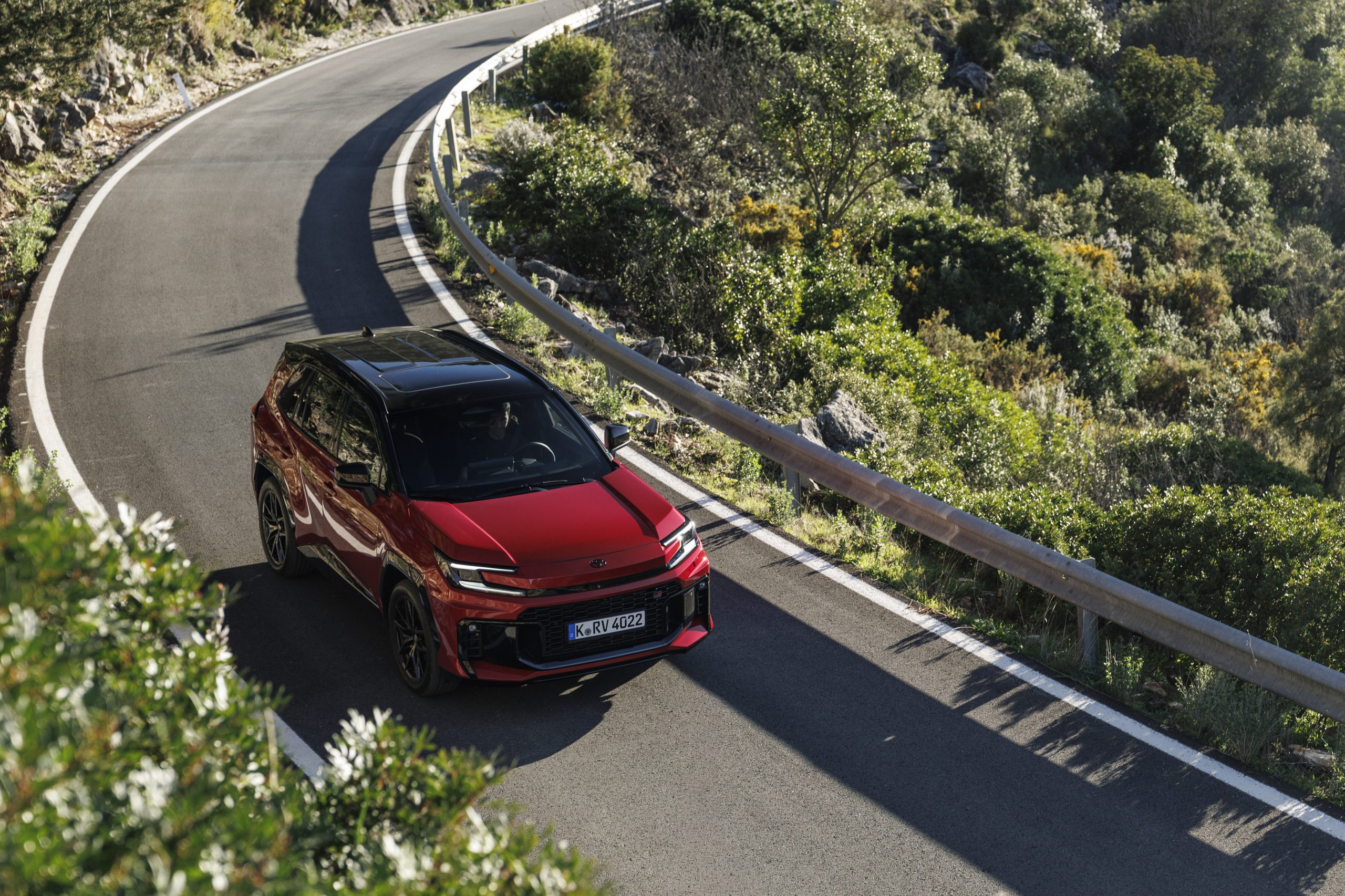
We analyse the seven hybrid SUVs in segment C that best balance power figures and real-world consumption in the Spanish market in 2026
Segment C remains the main battleground for conventional hybrids in Europe, and 2026 confirms it with a mature offer, far more refined than three years ago. We have picked the seven segment C hybrid SUVs 2026 we consider most relevant in Spain, put them side by side and ranked them by the only thing that, in our view, matters when you pay for a hybrid: how many horsepower the system delivers and how much fuel it actually gets through in everyday use.
A warning before we begin. We have left the hybrid proposal from BYD out of this comparison. This is not a question of reliability or price: in our editorial judgement, other Asian brands — starting with Toyota and Honda — offer mechanical layouts better suited to European tastes and, on paper and in practice, more efficient in daily use. We prefer to leave it out rather than force a comparison that does justice neither to them nor to the rest.
Methodology: WLTP plus real consumption, not just the brochure
WLTP homologation is a starting point, not a revealed truth. For this 2026 hybrid SUV ranking we have cross-checked the official figure with consumption measured on mixed Spanish roads — motorway at 120 km/h, dense urban driving in central Madrid and a mountain pass — and with the ratio between the system’s combined power and litres per 100 km. A 180 CV hybrid that uses 5.8 l/100 km in real driving scores better than a 200 CV one that settles at 6.9. Simple.
1. Toyota RAV4 — from €44,250
The RAV4 remains the benchmark. The fifth generation, with Toyota’s fourth-generation hybrid system, delivers 185 CV with front-wheel drive and its homologated consumption figures are matched by very few rivals when driven with a little care. In town is where it shines — there is no comparison there.
| Power kW | Power CV | Top speed | Range | Consumption | Label | Fuel |
|---|---|---|---|---|---|---|
| 136 kW | 185 CV | 180 km/h | ~950 km | 5.2 l/100 km | ECO | Hybrid |
2. Lexus NX 350h — from €54,050
The premium cousin of the RAV4 shares the platform and much of the powertrain, but refines soundproofing, feel and finish. It carries a weight penalty — noticeable in corners — and even so consumption stays contained. To my taste, the interior justifies the extra cost; the dynamic behaviour, less so.
| Power kW | Power CV | Top speed | Range | Consumption | Label | Fuel |
|---|---|---|---|---|---|---|
| 179 kW | 244 CV | 190 km/h | ~900 km | 5.7 l/100 km | ECO | Hybrid |
3. Honda CR-V e:HEV — from €46,645
Honda’s e:HEV system essentially works like an electric car with a combustion generator, and that shows in the feel: linear response, smooth thrust and an overall serenity that ages very well. It uses a little more than the Toyota on the motorway, but on mixed journeys it keeps up very well.
| Power kW | Power CV | Top speed | Range | Consumption | Label | Fuel |
|---|---|---|---|---|---|---|
| 135 kW | 184 CV | 187 km/h | ~850 km | 6.0 l/100 km | ECO | Hybrid |
4. Renault Austral E-Tech full hybrid — from €36,909
The French entry is probably the most ingenious of the group: a dog-clutch gearbox without a clutch, a 1.2 three-cylinder engine and a management system that, when it gets it right, is brilliant. When it hesitates — which it sometimes does on pull-aways — it asks for an extra prod of the throttle. Even so, it is the most efficient of the European mainstream hybrids.
| Power kW | Power CV | Top speed | Range | Consumption | Label | Fuel |
|---|---|---|---|---|---|---|
| 147 kW | 200 CV | 175 km/h | ~900 km | 4.7 l/100 km | ECO | Hybrid |
Nissan Qashqai5. Nissan Qashqai e-Power — from €32,400
Nissan’s e-Power system is a peculiar series-parallel setup: the combustion engine never drives the wheels, it only generates electricity. In town and on mixed routes it is a delight; on a sustained 120 km/h motorway run, consumption climbs and it loses ground to the RAV4 and the Austral.
| Power kW | Power CV | Top speed | Range | Consumption | Label | Fuel |
|---|---|---|---|---|---|---|
| 140 kW | 190 CV | 170 km/h | ~800 km | 4.4 l/100 km | ECO | Hybrid |
6. Kia Sportage HEV — from €27,460
The Korean arrives with a very sensible proposition: a 1.6 T-GDI plus electric assistance, 239 CV combined and real-world consumption that is decent for what it delivers. Conventional automatic gearbox, direct feel. It is not the most efficient of the group, but it is one of the most balanced in the hybrid SUV consumption power ratio equation.
| Power kW | Power CV | Top speed | Range | Consumption | Label | Fuel |
|---|---|---|---|---|---|---|
| 175 kW | 239 CV | 193 km/h | ~750 km | 5.5 l/100 km | ECO | Hybrid |
Hyundai Tucson7. Hyundai Tucson HEV — from €30,325
The mechanical twin of the Sportage with a more radical body and a slightly different setup. Same essential figures, same sensible behaviour. Choosing between the two comes down to aesthetic taste and the dealer discount.
| Power kW | Power CV | Top speed | Range | Consumption | Label | Fuel |
|---|---|---|---|---|---|---|
| 175 kW | 239 CV | 193 km/h | ~750 km | 5.6 l/100 km | ECO | Hybrid |
Summary table and editorial score
Score out of 10 weighting combined power, measured real consumption, theoretical range and overall coherence of the package — what we internally call the best hybrid SUVs power consumption factor.
| Model | CV | Real consumption | Range | Price from | Score /10 |
|---|---|---|---|---|---|
| Toyota RAV4 | 185 | 5.2 l | 950 km | €44,250 | 9.2 |
| Renault Austral E-Tech | 200 | 4.7 l | 900 km | €36,909 | 9.0 |
| Lexus NX 350h | 244 | 5.7 l | 900 km | €54,050 | 8.7 |
| Honda CR-V e:HEV | 184 | 6.0 l | 850 km | €46,645 | 8.4 |
| Nissan Qashqai e-Power | 190 | 4.4 l | 800 km | €32,400 | 8.2 |
| Kia Sportage HEV | 239 | 5.5 l | 750 km | €27,460 | 8.0 |
| Hyundai Tucson HEV | 239 | 5.6 l | 750 km | €30,325 | 7.9 |
Frequently asked questions
Which segment C hybrid SUV consumes least in 2026?
In real figures measured on mixed Spanish roads, the Renault Austral E-Tech full hybrid comes out on top with around 4.7 l/100 km, followed by the Nissan Qashqai e-Power on predominantly urban routes.
Is the extra cost of the Lexus NX 350h over the Toyota RAV4 worth it?
They share the same mechanical architecture, so the premium is paid in finish, soundproofing, network and equipment. If those factors weigh in your decision, yes; if you are looking for the best pure power-to-consumption ratio, the RAV4 is the more rational choice.
Why is BYD excluded from this hybrid SUV comparison?
It is an editorial decision: we consider that other market proposals offer hybrid layouts better suited to European use and more efficient day to day. It does not question the overall quality of the product, only its fit within this particular analysis.
Is the Kia Sportage HEV or the Hyundai Tucson HEV better?
Mechanically they are almost identical. The choice comes down to exterior design — the Tucson is more daring, the Sportage more restrained — to the equipment of the version on offer, and to the real discount you can get at the dealership.


 Kia offers an electric range of 10 models, 50 versions and 400 possible combinations
 The seven finalists for the 2027 European Car of the Year (COTY) are exclusively electric
 Peugeot E-208 GTi: a battery-powered toy that revives the spirit of the 1980s sports cars
Deja un comentario